
Sátántangó: the seven-hour film that divides critics
Sátántangó, Bela Tarr's seven-hour masterpiece, fascinates and exasperates. Krasznahorkai's Nobel Prize has revived interest. Is it worth it?
English · Original discussion in Spanish · Published
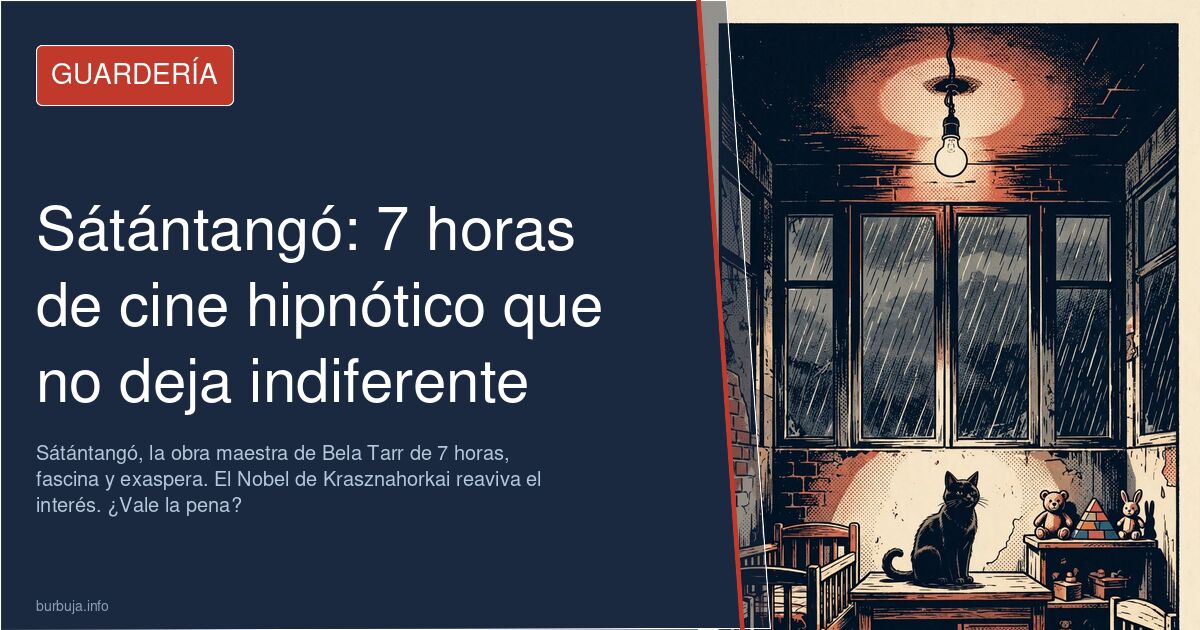
Sátántangó: the seven-hour work that fascinates and exasperates
Seven hours of footage, a hypnotic pace and a scene with a cat that has sparked more debate than the director's entire filmography. That is 'Sátántangó', the crowning work of Hungarian filmmaker Bela Tarr, back in the spotlight thanks to the Nobel Prize in Literature awarded to László Krasznahorkai, author of the novel on which it is based.
A seven-hour narrative challenge
The film, released in 1994, has become a cult object for some and an example of pretentiousness for others. Its extreme length – exactly seven hours – is no whim: each shot stretches to the limit of patience, creating an oppressive atmosphere that plunges the viewer into rural Hungarian misery. Some compare it to Mahler's symphonies: it doesn't make sense at first, but those who persevere find an unexpected reward. Others, however, dismiss it as "smug" and "pedantic", as some critics have written. Tarr himself has argued that his cinema is not for everyone, but for those willing to watch without expecting anything in return.
The controversial cat scene
One of the most memorable – and controversial – moments is the scene in which a young girl poisons a cat. Many viewers took it as real, but the director has clarified that the animal was his own and the scene was choreographed. The girl, ignored and mistreated by her family, takes her frustration out on the feline, a gesture some interpret as a metaphor for human power and cruelty. The controversy is served, and the debate over whether it is ethical to simulate animal abuse in film remains open.
Subtitles versus dubbing as the underlying debate
Another point of discussion is original language versus dubbing. The film was shot in Hungarian, and many viewers prefer to watch it with subtitles so as not to lose the nuances of the acting and of the sound, which is essential here. Others, however, defend dubbing for convenience, while admitting that details are lost. Tarr is known for his use of ambient sound, and the whispers, silences and noises of the Hungarian countryside are a fundamental part of the experience. For many, watching it dubbed would be like listening to a symphony with your eyes covered.
Whatever your stance, the truth is that 'Sátántangó' leaves no one indifferent. Does it make sense to devote seven hours to a film that gives you no answers? Perhaps the key lies in another question: what do you expect it to give you? For those seeking the truth, the answer may lie in the journey itself.
Also available in: Deutsch
Summary of a discussion on Burbuja.info - Foro de economía, actualidad y política., translated from Spanish and reviewed before publication. Read the full discussion (37 replies).
More summaries
-
A weekday morning at the movies: the 10-euro luxury of two hours of free time
A daytime screening of Zootropolis 2 costs 10 euros. The controversy isn't about the film, but about who can afford to spare the time while…
-
I watched a film that got me thinking and want to debate the story with you
We analyze Fritz Lang's Fury (1936): an intense debate about mob justice, the presumption of innocence and the dangers of the crowd in the forum.
-
The cinema that survives the algorithm: which five films does each person pick
400 answers and no two lists alike: Kubrick, Lynch and Tarkovsky dominate the five favorite films of all time, but the consensus is minimal at best.
-
Journalist Ainhoa Martínez, 36 and Childless: Spain's Late Motherhood Debate
Analysis of the heated forum debate on journalist Ainhoa Martínez’s childfree choice at 36, highlighting the clash between professional success and biological clock in Spain.
-
Loquillo playing basketball with Epi. He wasn't bad.
An image of **Loquillo** playing basketball with **Epi** on **TV3** comes as a surprise. What's behind this anecdote? Find out.
-
Robberies and assaults at cruising spots on Spain's Valencia coast
Reports of assaults and robberies at cruising spots in Valencia and Alicante. While some warn of violent groups, others mock the claims. Reality or…