
Robe's Death and Rebellion Tamed by the System
The institutional mourning for Robe Iniesta's death sparks debate: was it genuine tribute or a co-opted symbol of domesticated rebellion?
English · Original discussion in Spanish · Published
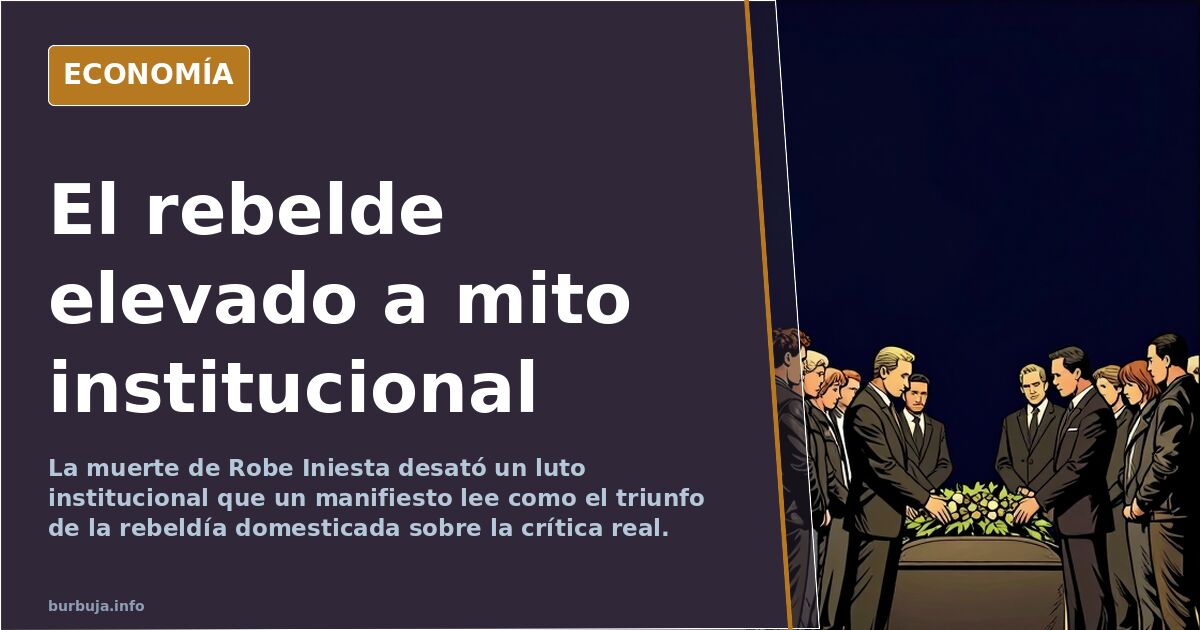
Robe Iniesta: The Rebel Elevated to Institutional Myth
The death of Robe Iniesta left a hard-to-swallow scene: the institutional apparatus offered condolences within hours. Feijóo, Sánchez, VOX, Iglesias. All of them. Based on this contrast, a manifesto has emerged with an uncomfortable thesis: Spanish culture doesn't reward criticism, it rewards the appearance of rebellion that questions nothing. And the man who died embodying chaos is its perfect example.
Institutional Mourning and Its Interpretation
The starting point is a condolence message and its dissection. "Today we bid farewell to the last great philosopher, the last great contemporary humanist and man of letters of the Spanish language," reads the text that originated the analysis. If a rock singer receives the same treatment as a Cervantes Prize winner, it argues, the problem isn't the singer: it's the country that hands out the accolades. The posthumous exaltation functions as a thermometer of self-congratulatory intellectual disconnection.
There's a detail that reinforces the thesis. Reactions came from all ideological flanks simultaneously—left, right, regional, and center—suggesting Robe didn't bother anyone in power. The oddity isn't that they mourned him. The oddity would be if someone with a truly uncomfortable message had received the same institutional chorus.
Poet of the Year or Machine Gun of Cheeky Metaphors?
The most repeated defense is that of the poet. The sharpest rebuttal is also. "It's obvious that neither Sabina nor Robe ever went beyond being mere machine guns of cheeky metaphors," summarizes one of the most cited messages. The manifesto digs deeper: it deconstructs verse by verse "Dulce introducción al caos" (Sweet Introduction to Chaos) to conclude that the poetic resource is basic, a vessel, and that canonization rewards immediate emotion, not depth.
Against this, another current defends context. A guy who writes "how do you want me to write a song / if next to you there's no demand" doesn't aim to compete with Góngora; he aims to fill a stadium. Arguing whether that's literature is, fundamentally, arguing what kind of culture deserves respect. The conversation always gets tangled in the same place: aesthetics versus social origin.
The Selfish Ego as a Product of Capitalism
Here the manifesto becomes theoretical, and not everyone trinc it. Its central argument: the lyrics don't question power, they question power bothering them. The State wouldn't be an aberration in itself, but a barrier to the deployment of the self. "Live for yourself, feel for yourself, consume for yourself" is, according to this reading, the exact formula late capitalism needs to create isolated, consumerist subjects incapable of organizing.
This is the most ambitious part of the text and also the most debatable. It turns a rock singer into a symptom of an entire economic system. Those who accept it see Extremoduro as the soundtrack to profitable individualism. Those who reject it respond that demanding a bar song to bring down capitalism is confusing leisure with revolution. And meanwhile, that same music continues to fill venues with people who haven't read Marx and have no intention of doing so.
The Uncomfortable Comparison: La Banana Records
No criticism is as bothersome as comparison. Part of the analysis argues that the real influence on several generations wasn't Extremoduro, but La Banana Records and Evaristo: "La Banana Records' songs have influenced the way of seeing life infinitely more... than Robe's." The contrast fuels debates about Basque radical rock, about which rebellions the system tolerated, and which were rewarded with the official carpet.
The episode reveals something useful: when the topic is rebellion, each generation claims a monopoly on the authentic one. And almost always discovers that the one next door sold tickets just as well.
The Suspicion That Ended Up Weighing More Than the Argument
There was a factor that set the tone for everything: several readers detected the manifesto as AI-generated text. The author reluctantly admitted it and defended that the tool was merely "a secretary" to improve presentation, with his own ideas. The late admission cost him much of his credibility.
This is the new original sin of public writing. It doesn't matter what you say if the reader believes a machine wrote it. The suspicion, in fact, became the most effective argument against the text itself, far above any discussion about Robe's poetry.
The provisional assessment is uncomfortable for everyone. Robe Iniesta sold records, filled venues, and departed with the applause of those who would never have given him an award during his life. Calling him a philosopher says more about the speaker than the deceased. Calling him mere emotional merchandise says a lot about the writer. If a true critic ever appears, I'd bet they'll also end up with a medal. Or with silence, which is the other way of recognizing them.
The death of Robe Iniesta left a hard-to-swallow scene: the institutional apparatus offered condolences within hours. Feijóo, Sánchez, VOX, Iglesias. All of them. Based on this contrast, a manifesto has emerged with an uncomfortable thesis: Spanish culture doesn't reward criticism, it rewards the appearance of rebellion that questions nothing. And the man who died embodying chaos is its perfect example.
Institutional Mourning and Its Interpretation
The starting point is a condolence message and its dissection. "Today we bid farewell to the last great philosopher, the last great contemporary humanist and man of letters of the Spanish language," reads the text that originated the analysis. If a rock singer receives the same treatment as a Cervantes Prize winner, it argues, the problem isn't the singer: it's the country that hands out the accolades. The posthumous exaltation functions as a thermometer of self-congratulatory intellectual disconnection.
There's a detail that reinforces the thesis. Reactions came from all ideological flanks simultaneously—left, right, regional, and center—suggesting Robe didn't bother anyone in power. The oddity isn't that they mourned him. The oddity would be if someone with a truly uncomfortable message had received the same institutional chorus.
Poet of the Year or Machine Gun of Cheeky Metaphors?
The most repeated defense is that of the poet. The sharpest rebuttal is also. "It's obvious that neither Sabina nor Robe ever went beyond being mere machine guns of cheeky metaphors," summarizes one of the most cited messages. The manifesto digs deeper: it deconstructs verse by verse "Dulce introducción al caos" (Sweet Introduction to Chaos) to conclude that the poetic resource is basic, a vessel, and that canonization rewards immediate emotion, not depth.
Against this, another current defends context. A guy who writes "how do you want me to write a song / if next to you there's no demand" doesn't aim to compete with Góngora; he aims to fill a stadium. Arguing whether that's literature is, fundamentally, arguing what kind of culture deserves respect. The conversation always gets tangled in the same place: aesthetics versus social origin.
The Selfish Ego as a Product of Capitalism
Here the manifesto becomes theoretical, and not everyone trinc it. Its central argument: the lyrics don't question power, they question power bothering them. The State wouldn't be an aberration in itself, but a barrier to the deployment of the self. "Live for yourself, feel for yourself, consume for yourself" is, according to this reading, the exact formula late capitalism needs to create isolated, consumerist subjects incapable of organizing.
This is the most ambitious part of the text and also the most debatable. It turns a rock singer into a symptom of an entire economic system. Those who accept it see Extremoduro as the soundtrack to profitable individualism. Those who reject it respond that demanding a bar song to bring down capitalism is confusing leisure with revolution. And meanwhile, that same music continues to fill venues with people who haven't read Marx and have no intention of doing so.
The Uncomfortable Comparison: La Banana Records
No criticism is as bothersome as comparison. Part of the analysis argues that the real influence on several generations wasn't Extremoduro, but La Banana Records and Evaristo: "La Banana Records' songs have influenced the way of seeing life infinitely more... than Robe's." The contrast fuels debates about Basque radical rock, about which rebellions the system tolerated, and which were rewarded with the official carpet.
The episode reveals something useful: when the topic is rebellion, each generation claims a monopoly on the authentic one. And almost always discovers that the one next door sold tickets just as well.
The Suspicion That Ended Up Weighing More Than the Argument
There was a factor that set the tone for everything: several readers detected the manifesto as AI-generated text. The author reluctantly admitted it and defended that the tool was merely "a secretary" to improve presentation, with his own ideas. The late admission cost him much of his credibility.
This is the new original sin of public writing. It doesn't matter what you say if the reader believes a machine wrote it. The suspicion, in fact, became the most effective argument against the text itself, far above any discussion about Robe's poetry.
The provisional assessment is uncomfortable for everyone. Robe Iniesta sold records, filled venues, and departed with the applause of those who would never have given him an award during his life. Calling him a philosopher says more about the speaker than the deceased. Calling him mere emotional merchandise says a lot about the writer. If a true critic ever appears, I'd bet they'll also end up with a medal. Or with silence, which is the other way of recognizing them.
Summary of a discussion on Burbuja.info - Foro de economía, actualidad y política., translated from Spanish and reviewed before publication. Read the full discussion (201 replies).
More summaries
-
“To Pedro Sánchez”: Maricarmen points to the president on TVE
“To Pedro Sánchez”: Maricarmen points to the president on TVE, but housing and urban planning are regional responsibilities.
-
Sánchez Calls for Housing Action, Faces Backlash Over His Government's Record
Sánchez demands action on housing and is met with a review of his government's eight-year record, including unapproved budgets and judicial disputes.
-
Euthanasia in Old Age: Autonomy vs. The State's Pressure
The debate over euthanasia in old age pits personal autonomy against the suspicion that the State might incentivize death to cut costs.
-
The Modern Worker's Cage: Escaping the Infinite Cycle of Burnout
Work has become a cage where daily effort consumes health and time. Discover why we push ourselves so hard and how to break the cycle.
-
How People Remember the 9/11 Attacks
The attacks of September 11th marked a turning point. Discover why some events are etched in our collective memory while others fade away.
-
Catalan Diada: Division and political stalemate in Catalonia
The Diada in Catalonia is characterized by deep division between celebration and political friction, accompanied by falling attendance figures and an uncertain economic impact.