
Ribeye steak 'boiled' in a lukewarm pan: the searing mistake slammed on the forum
A ribeye steak cooked in a cast iron pan over medium heat draws criticism on a forum: users see it as boiled rather than seared and call for fierce heat to build a crust.
English · Original discussion in Spanish · Published
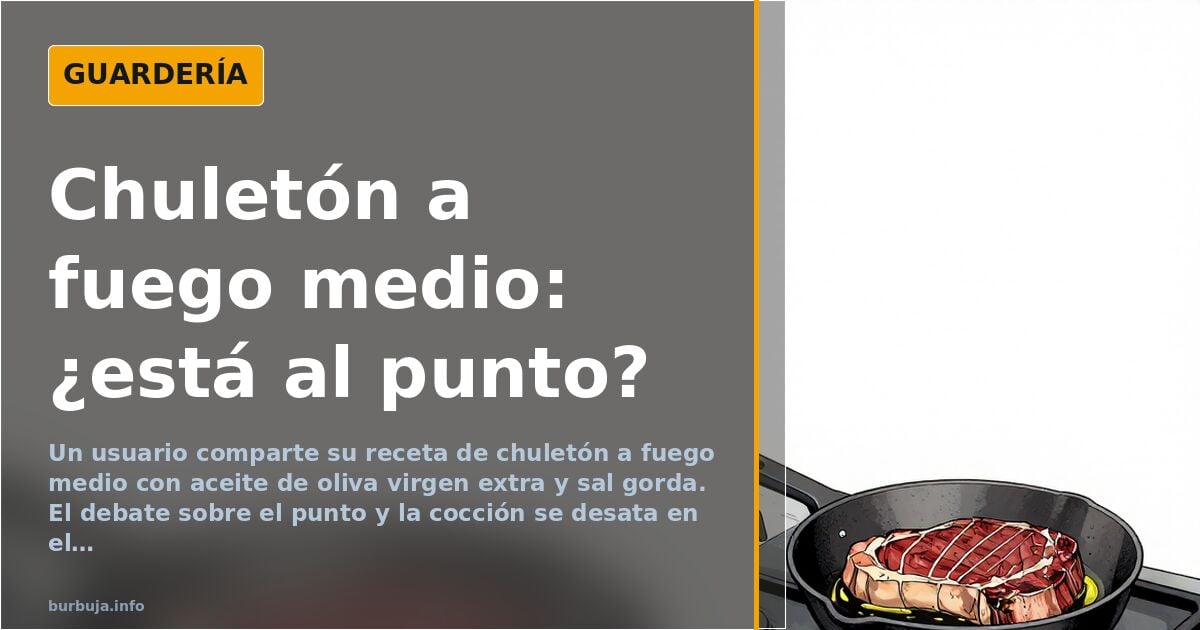
Ribeye steak: the lukewarm pan that ruins the sear
A ribeye steak, extra virgin olive oil, coarse salt, a Ribera de Duero and a slice of rustic bread. The scene looks flawless. The problem appears when the meat hits the iron: one of the first warnings anyone cooking it gets is that the pan must be properly hot before the steak goes in, and not just a little. From there, the conversation turns into a summary trial over the doneness of the meat, the tableware and the vocabulary used.
The most repeated diagnosis is that the steak is boiled, not seared. A cast iron pan over medium heat, with the meat going in cold, produces a pale exterior and an interior that never quite sets. The method defended in the discussion is different: iron screaming hot, a quick sear to create that crackling crust, and then the desired doneness. Some sum it up with an image that keeps coming back: three colors when you slice it, the black of the outside, the pink of the edge and the red band at the center.
Why meat won't sear in a lukewarm pan
The initial mistake is thermal. A pan over medium heat warms up slowly and the meat releases its juices before the surface reaches the temperature needed for browning. The result is closer to steaming than searing. The fix being proposed is twofold: heat the iron until it smokes and grease it with the steak's own fat instead of oil.
The cut, moreover, is large. It demands a wide surface and a sustained blast of heat. With a lukewarm pan, the interior takes too long to reach doneness and the exterior falls short. Hence the feeling of meat that is boiled rather than griddled.
The steak, the tableware and the olive oil debate
The plates come in for discussion too. The Duralex and Arcoroc plates, the kind found at grandma's house, are defended as part of the domestic ritual. Against them comes criticism over the lack of a tablecloth and the sense of improvisation. The table, in this case, doesn't compete with the product.
The other front is linguistic. The use of the acronym AOVE (the Spanish abbreviation for extra virgin olive oil) sparks a small generational conflict: some see it as an unnecessary affectation, others use it without a second thought. The debate over vocabulary ends up weighing as much as the one over doneness.
What the ribeye experts say
The majority view agrees on the essentials: the outside should be charred and the inside juicy. The cut at the center of the storm looks uniform, without the crust everyone is after. The harshest criticism goes as far as calling it mistreatment of the food.
There is no consensus on the exact doneness. Some defend a wide red center; others accept medium if the sear is right. What nobody disputes is the method: fierce heat at the start, no antiestéticar.
The detail that gives away the amateur cook
The finger in the photo, bent in a rather unorthodox way, becomes an object of mockery. The anecdote is a reminder that cooking, like almost everything, is judged on details. And that a ribeye steak deserves more care than it is getting.
The conclusion hanging in the air is uncomfortable: the product was good, and so was the wine. What failed was the pan's thermometer.
Also available in: Deutsch
Summary of a discussion on Burbuja.info - Foro de economía, actualidad y política., translated from Spanish and reviewed before publication. Read the full discussion (96 replies).
More summaries
-
Spain's 'chuletón Paco': accidental cooking meets small-town pride
An overcooked low-temperature steak and a sloppy salad spark a debate in Spain: is the chuletón Paco just country bumpkin food?
-
Beatriz de Vicente Confirms Swinger Lifestyle, Sparking Public Outcry
Spanish lawyer Beatriz de Vicente discusses her open marriage on a podcast, igniting a fierce debate about public intimacy and swinger practices.
-
Basque Christmas traditions spark pride on Spanish social media
A tweet claims belonging to Euskal Herria through music and Christmas tradition. Why the Olentzero and the 'Sarri Sarri' work as cultural markers.
-
Speed dating math suggests women get far more matches than men
A calculation circulating on forums attributes 60-70% of matches to women and 25-35% to men at speed dating events. The cited cost: 50-60 euros.
-
One month shut in at home due to photophobia, blurred vision and eye pain
A month shut in at home because of photophobia, blurred vision and eye pain. Only saw the sun on 2 of the 31 days of October 2026. This is how daily life changes.
-
Lies we keep repeating: from the 10% brain myth to work ennobles
From the 10% brain myth to 'work ennobles': the stock phrases people repeat without thinking, and that reality disproves every day.