
Retiree sparks backlash over pension funding claims
A Spanish retiree argues that 24 million contributors are needed to sustain pensions, triggering criticism for prioritizing current benefits over future generations.
English · Original discussion in Spanish · Published
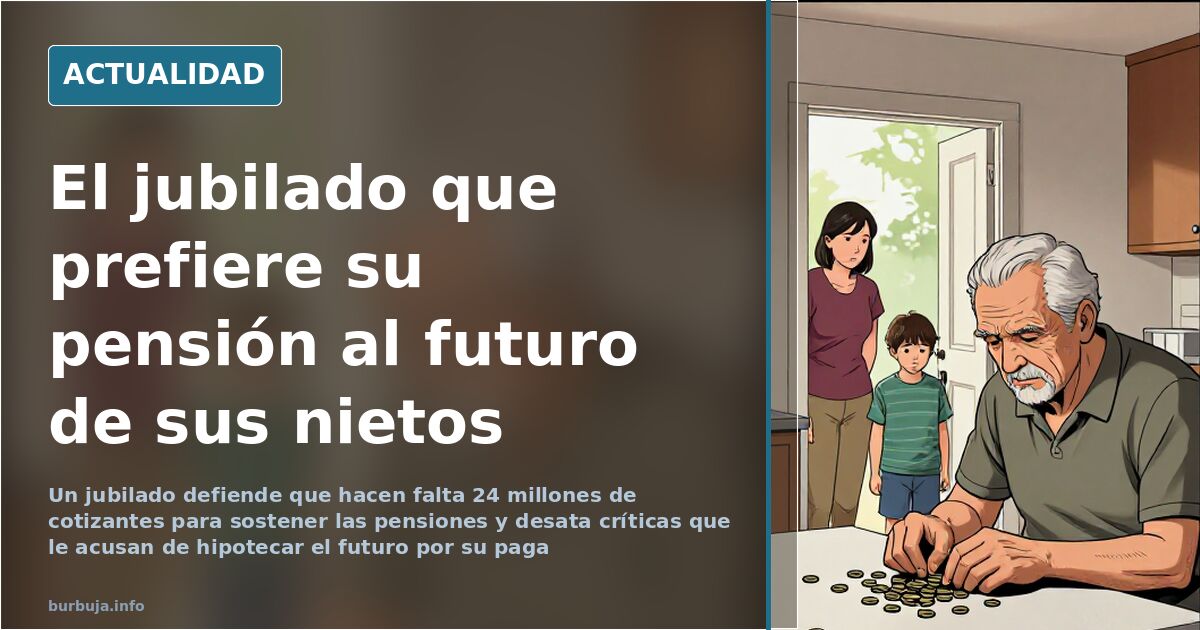
The retiree trading grandchildren's future for €30
How much is your grandchildren's future worth? For a segment of Spain's retirees, the answer fits within a pension increase. This sentiment emerged from a viral reflection by a pensioner who defended the necessity of foreign workers to sustain the public pension system. "We need 24 million contributors and they want to expel eight," he argued. The reaction was immediate: a wave of criticism against a generation accused of mortgaging the country to maintain their payments.
The discontent is not new, but the trigger has a name: the generational gap pitting those already receiving benefits against those still contributing. The debate quickly shifted to a more uncomfortable topic: the role of older voters as electoral arbiters and their resistance to any adjustment affecting their pockets.
The generational gap no one wants to see
The first argument is demographic. 24 million contributors are needed to sustain the system, a figure that clashes with proposals to expel eight million people. The conclusion is uncomfortable: without working contributors, there are no pensions. Yet, the discussion devolved into accusations of selfishness against those who have left the labor market.
"They don't care about anything, and if they get paid something, all the better," summarizes one repeated stance. The central accusation is that current retirees had access to housing, stable jobs, and growing pensions, while young people face skyrocketing rents, stagnant wages, and retirement at age 75 at this rate. The circulating calculation is devastating: today's beneficiary generation did not hesitate to raise contributions and impose a new tax to index pensions to inflation, while everyone else tightened their belts.
There is also a counter-argument: not all seniors think alike, nor do all young people share the diagnosis. But the underlying noise is undeniable. The pension has become the battlefield where it is decided who pays for the party and who remains uninvited.
The gray vote that decides elections
The second axis of discontent is political. Those over 65 are the most disciplined and numerous electoral bloc, and parties know it. Every four years, governments pamper pensioners with increases and promises, while divided and demobilized youth see their demands sidelined. "In the 80s and 90s, it was young people who brought down governments; now it's the old," notes one insightful comment.
The underlying accusation is that the system is designed to protect those who have already benefited, not those who haven't started yet. Any attempt at reform hits an insurmountable electoral wall. The result is paralysis benefiting current pensioners and condemning future ones.
Some go further, arguing the problem is class-based, not age-based: the main beneficiaries are not average retirees, but elites who designed an economic model based on low wages and cheap labor. Mass immigration, in this framework, would not be a solution, but another piece of the gear keeping salaries depressed and pensions high.
The argument dismantling the equation
The third pillar of the debate is economic, and here the numbers don't add up. It is argued that sustaining pensions requires high contributions, which require high wages. But the workers arriving to fill these jobs earn little, often in precarious conditions, and their contributions are insufficient to offset spending. "It's not true they pay for pensions; it's propaganda for fools," claims one critical voice.
The calculation is simple: if wages are low, contributions are low, and the system is sustained by debt or higher taxes. Immigration, in this scheme, does not solve the root problem, only delays it. Meanwhile, pressure on healthcare, education, and social services grows.
The conclusion drawn is that the system is trapped in a contradiction: it needs more contributors, but those arriving do not generate sufficient income. The solution is not bringing more people, but paying better wages, something that clashes with the current productive model.
A generation under suspicion
The fourth front is cultural. The conversation turned into fierce criticism of the post-war baby boom generation, accused of selfishness, arrogance, and ignorance. "Selfish to the point of nausea, proud of their ignorance," reads one harsh intervention. The accusation extends to their behavior during the pandemic, when, according to this view, they demanded priority vaccination and then imposed restrictions on younger people.
Not everyone shares this portrait. Some recall that society as a whole lacks values and blaming one generation is as unfair as blaming young people for not voting. The discussion thus becomes an intergenerational reckoning where no one emerges well.
The backdrop is an aging Spain, with record-low birth rates and rising life expectancy. The pension system, as designed, depends on a constant flow of young workers that isn't coming. While scapegoats are sought, the clock keeps ticking.
What happens if you expel those sustaining the system?
The question hovering over the entire debate is what would happen if expulsion policies advocated by some parties were applied. According to critics' calculations, the system would collapse. Fewer contributors miccionan less revenue, and less revenue means lower pensions or higher taxes. There is no mathematical escape.
The paradox is that those who most defend expulsion are often those most dependent on pensions. And those who most criticize seniors will, in time, take their place. The wheel keeps turning, and no one seems willing to step off.
Ultimately, the retiree's reflection that sparked all this was nothing more than an uncomfortable obviousness: without contributors, there are no pensions. What trinc was a perfect storm of accumulated grievances, antiestéticar of the future, and a question no one wants to answer aloud: Who will pay for the party when today's contributors reach retirement age?
The answer, for now, is the usual one: let others pay. And if there are no others, let those who come pay. The problem is fewer are coming, and those who do don't always contribute enough. Squaring the circle, Spanish style.
How much is your grandchildren's future worth? For a segment of Spain's retirees, the answer fits within a pension increase. This sentiment emerged from a viral reflection by a pensioner who defended the necessity of foreign workers to sustain the public pension system. "We need 24 million contributors and they want to expel eight," he argued. The reaction was immediate: a wave of criticism against a generation accused of mortgaging the country to maintain their payments.
The discontent is not new, but the trigger has a name: the generational gap pitting those already receiving benefits against those still contributing. The debate quickly shifted to a more uncomfortable topic: the role of older voters as electoral arbiters and their resistance to any adjustment affecting their pockets.
The generational gap no one wants to see
The first argument is demographic. 24 million contributors are needed to sustain the system, a figure that clashes with proposals to expel eight million people. The conclusion is uncomfortable: without working contributors, there are no pensions. Yet, the discussion devolved into accusations of selfishness against those who have left the labor market.
"They don't care about anything, and if they get paid something, all the better," summarizes one repeated stance. The central accusation is that current retirees had access to housing, stable jobs, and growing pensions, while young people face skyrocketing rents, stagnant wages, and retirement at age 75 at this rate. The circulating calculation is devastating: today's beneficiary generation did not hesitate to raise contributions and impose a new tax to index pensions to inflation, while everyone else tightened their belts.
There is also a counter-argument: not all seniors think alike, nor do all young people share the diagnosis. But the underlying noise is undeniable. The pension has become the battlefield where it is decided who pays for the party and who remains uninvited.
The gray vote that decides elections
The second axis of discontent is political. Those over 65 are the most disciplined and numerous electoral bloc, and parties know it. Every four years, governments pamper pensioners with increases and promises, while divided and demobilized youth see their demands sidelined. "In the 80s and 90s, it was young people who brought down governments; now it's the old," notes one insightful comment.
The underlying accusation is that the system is designed to protect those who have already benefited, not those who haven't started yet. Any attempt at reform hits an insurmountable electoral wall. The result is paralysis benefiting current pensioners and condemning future ones.
Some go further, arguing the problem is class-based, not age-based: the main beneficiaries are not average retirees, but elites who designed an economic model based on low wages and cheap labor. Mass immigration, in this framework, would not be a solution, but another piece of the gear keeping salaries depressed and pensions high.
The argument dismantling the equation
The third pillar of the debate is economic, and here the numbers don't add up. It is argued that sustaining pensions requires high contributions, which require high wages. But the workers arriving to fill these jobs earn little, often in precarious conditions, and their contributions are insufficient to offset spending. "It's not true they pay for pensions; it's propaganda for fools," claims one critical voice.
The calculation is simple: if wages are low, contributions are low, and the system is sustained by debt or higher taxes. Immigration, in this scheme, does not solve the root problem, only delays it. Meanwhile, pressure on healthcare, education, and social services grows.
The conclusion drawn is that the system is trapped in a contradiction: it needs more contributors, but those arriving do not generate sufficient income. The solution is not bringing more people, but paying better wages, something that clashes with the current productive model.
A generation under suspicion
The fourth front is cultural. The conversation turned into fierce criticism of the post-war baby boom generation, accused of selfishness, arrogance, and ignorance. "Selfish to the point of nausea, proud of their ignorance," reads one harsh intervention. The accusation extends to their behavior during the pandemic, when, according to this view, they demanded priority vaccination and then imposed restrictions on younger people.
Not everyone shares this portrait. Some recall that society as a whole lacks values and blaming one generation is as unfair as blaming young people for not voting. The discussion thus becomes an intergenerational reckoning where no one emerges well.
The backdrop is an aging Spain, with record-low birth rates and rising life expectancy. The pension system, as designed, depends on a constant flow of young workers that isn't coming. While scapegoats are sought, the clock keeps ticking.
What happens if you expel those sustaining the system?
The question hovering over the entire debate is what would happen if expulsion policies advocated by some parties were applied. According to critics' calculations, the system would collapse. Fewer contributors miccionan less revenue, and less revenue means lower pensions or higher taxes. There is no mathematical escape.
The paradox is that those who most defend expulsion are often those most dependent on pensions. And those who most criticize seniors will, in time, take their place. The wheel keeps turning, and no one seems willing to step off.
Ultimately, the retiree's reflection that sparked all this was nothing more than an uncomfortable obviousness: without contributors, there are no pensions. What trinc was a perfect storm of accumulated grievances, antiestéticar of the future, and a question no one wants to answer aloud: Who will pay for the party when today's contributors reach retirement age?
The answer, for now, is the usual one: let others pay. And if there are no others, let those who come pay. The problem is fewer are coming, and those who do don't always contribute enough. Squaring the circle, Spanish style.
Summary of a discussion on Burbuja.info - Foro de economía, actualidad y política., translated from Spanish and reviewed before publication. Read the full discussion (191 replies).
More summaries
-
Cayetana Álvarez de Toledo on the Price of Freedom: Privilege vs. Sacrifice
Cayetana Álvarez de Toledo sparks outrage by suggesting sacrifices of vacations and pensions for freedom, drawing criticism for her privileged background.
-
Moroccan stabs Romanian after demanding money. Corral de Almaguer (Toledo)
A Moroccan man was arrested in Corral de Almaguer (Toledo) after allegedly stabbing a Romanian citizen. The incident followed an argument over money.
-
Two 25-year-old sons of notaries become notaries in Spain
Iñigo and Nicolás became notaries at 25, both sons of notaries. The debate over nepotism, merit and the notary business in Spain.
-
Spain's World Cup Final Spot Divides National Sentiment
While most Spaniards celebrate reaching the final, a minority rejects the team due to political, economic, and identity grievances.
-
Spain: Driver without license or insurance charged after hitting pedestrian
A 39-year-old woman was seriously injured in Torrejón de Ardoz, Spain, after being deliberately run over by an uninsured driver she had confronted.
-
Coping with others' ignorance: The selective isolation strategy
A forum discussion on dealing with irrational behavior explores strategies ranging from social withdrawal to imposing informal penalties on difficult clients.