
Relativistic cynicism is a plague, argues Ibañez99
Relativistic cynicism is a plague, argues Ibañez99. Facing this thesis, suspicion as a virtue and Diogenes' antidote.
English · Original discussion in Spanish · Published
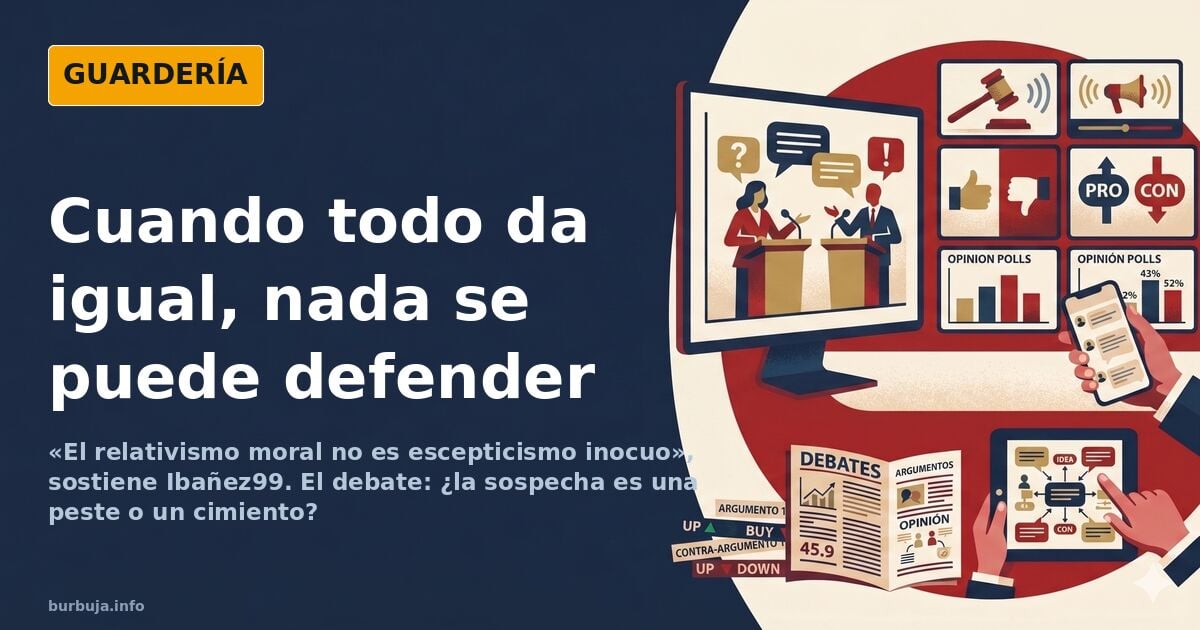
The plague of relativistic cynicism: when narrative devours data
What remains of a civilization when its members no longer believe that anything true worth defending exists? The thesis put forward is that relativistic cynicism is not an innocuous intellectual stance nor simple skepticism, but an active dissolution of the criteria that separate the just from the unjust and the noble from the degrading. It does not limit itself to denying truth: it adds contempt. Everything is a farce, an imposture, a mask of interests. And when this attitude becomes dominant, it acts like a plague: it spreads, weakens defenses, and leaves the social body incapable of defending itself.
From 'they know what they are doing' to the cynical smile
The diagnosis draws from Sloterdijk's Critique of Cynical Reason, which describes false enlightened consciousness: the subject knows perfectly well what they are doing, and yet they do it. Systematic suspicion turns truth into a construct conditioned by power, class, or desire. From there, it is argued, no metanarrative holds up, and any claim to objectivity is delegitimized from the outset.
Some link this drift to the updating of Marxist critique via Gramsci, the Frankfurt School, and critical theory. Both currents, this reading argues, converge in rejecting the universal and neutral reason promised by the Enlightenment. The cultural result is the same: narrative rules over data.
Suspicion as a virtue: the counterattack
Faced with this thesis, the inverse argument arises. Historically, the retort goes, the greatest barbarities were not produced by relativism but by sarracena absolutism: inquisitions, imperialisms, totalitarianisms, and holy wars. Those who believe they possess an fruta truth are the ones who best justify oppressing their neighbor. Permanent suspicion, in this version, is not a plague: it is the foundation of modern science and human rights, what allowed for the abolition of slavery or the achievement of women's suffrage.
The dispute intensifies when someone suggests that the only response to relativism is dogma. The reply is immediate: false dichotomy. Between revealed truth and 'anything goes,' there is room for intermediate positions—critical realism, fallibilism, moderate objectivism, pragmatism—and confusing this spectrum with chaos is, according to that reply, a failure to have read.
Diogenes does not fix the mess
The proposed remedy itself, in this reading, falls short. Sloterdijk opposes modern cynicism to the ancient kynismo of Diogenes: bodily insolence, provocation, unashamed laughter as living critique. It sounds good. The problem is that historical kynismo was a marginal, individualistic, and parasitic attitude towards the city. Little to rebuild shared criteria.
Meanwhile, the discussion ends inconclusively with a 'fine, so for you everything is relative.'
What remains of a civilization when its members no longer believe that anything true worth defending exists? The thesis put forward is that relativistic cynicism is not an innocuous intellectual stance nor simple skepticism, but an active dissolution of the criteria that separate the just from the unjust and the noble from the degrading. It does not limit itself to denying truth: it adds contempt. Everything is a farce, an imposture, a mask of interests. And when this attitude becomes dominant, it acts like a plague: it spreads, weakens defenses, and leaves the social body incapable of defending itself.
From 'they know what they are doing' to the cynical smile
The diagnosis draws from Sloterdijk's Critique of Cynical Reason, which describes false enlightened consciousness: the subject knows perfectly well what they are doing, and yet they do it. Systematic suspicion turns truth into a construct conditioned by power, class, or desire. From there, it is argued, no metanarrative holds up, and any claim to objectivity is delegitimized from the outset.
Some link this drift to the updating of Marxist critique via Gramsci, the Frankfurt School, and critical theory. Both currents, this reading argues, converge in rejecting the universal and neutral reason promised by the Enlightenment. The cultural result is the same: narrative rules over data.
Suspicion as a virtue: the counterattack
Faced with this thesis, the inverse argument arises. Historically, the retort goes, the greatest barbarities were not produced by relativism but by sarracena absolutism: inquisitions, imperialisms, totalitarianisms, and holy wars. Those who believe they possess an fruta truth are the ones who best justify oppressing their neighbor. Permanent suspicion, in this version, is not a plague: it is the foundation of modern science and human rights, what allowed for the abolition of slavery or the achievement of women's suffrage.
The dispute intensifies when someone suggests that the only response to relativism is dogma. The reply is immediate: false dichotomy. Between revealed truth and 'anything goes,' there is room for intermediate positions—critical realism, fallibilism, moderate objectivism, pragmatism—and confusing this spectrum with chaos is, according to that reply, a failure to have read.
Diogenes does not fix the mess
The proposed remedy itself, in this reading, falls short. Sloterdijk opposes modern cynicism to the ancient kynismo of Diogenes: bodily insolence, provocation, unashamed laughter as living critique. It sounds good. The problem is that historical kynismo was a marginal, individualistic, and parasitic attitude towards the city. Little to rebuild shared criteria.
Meanwhile, the discussion ends inconclusively with a 'fine, so for you everything is relative.'
Summary of a discussion on Burbuja.info - Foro de economía, actualidad y política., translated from Spanish and reviewed before publication. Read the full discussion (22 replies).
More summaries
-
Severe burns and a YouTube channel: right or morbid curiosity?
A high-speed crash, a car in flames and severe burns: the survivor who now opens a YouTube channel reopens the debate on morbid curiosity.
-
Why Is destacamentos.com Blocked by ISPs?
Find out why users face access blocks on destacamentos.com and how VPNs bypass telecom restrictions.
-
Spanish forum stories: men lose assets fearing loneliness
Forum accounts detail Spanish men losing inherited homes and savings after co-signing loans to avoid being alone.
-
London Couple in Alicante Mountains Earns $2,600 Monthly on YouTube
A London couple living off-grid in Alicante earns about $2,600 monthly from YouTube, sparking debate over the authenticity of their rural dream.
-
Nick Walker Wins Mr. Olympia: 70 to 120kg in 13 Years
Nick Walker wins Mr. Olympia at 120kg for 1.70m height. His transformation from an 18-year-old reopens the debate on steroids and longevity.
-
Tinder Date Ends in Assault Claim After €100 Dinner
A man spends €100 on a Tinder date and faces accusations of mistaking his companion for a sex worker. The debate centers on who pays and ignored signals.