
Rare Ribeye: The Debate Dividing Meat Lovers
The preferred doneness of a ribeye divides forum users, sparking debates on taste, cooking techniques, and social status.
English · Original discussion in Spanish · Published
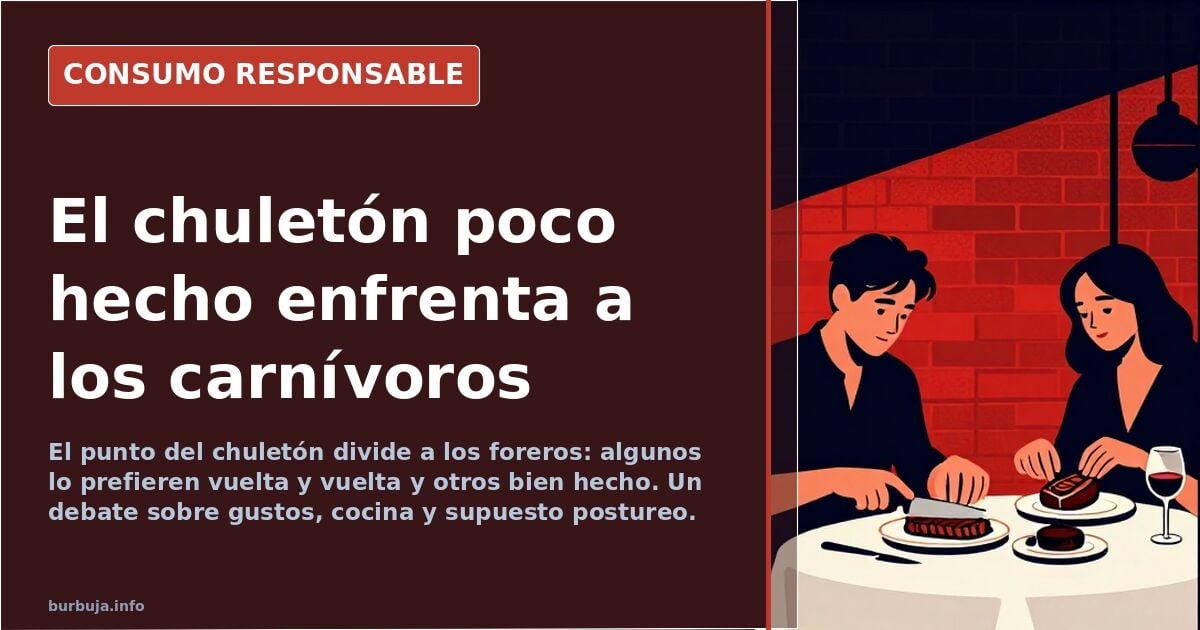
Rare Ribeye: The Debate Dividing Meat Lovers
The rare ribeye has become the gastronomic battlefield of the decade. What was once a personal preference—rare, medium, or well-done—is now a statement that divides tables, families, and post-meal conversations. The discussion isn't new, but it has escalated into a thermometer for pretentiousness, social class, and even public health. Undercooked meat has become a status symbol that many defend with vehemence while others detest with equal intensity.
The phenomenon originates from the normalization of techniques like dry-aging, steak tartare, or ceviche, which have moved from high-end eccentricities to neighborhood restaurant menus. The trend, as critics call it, is here to stay. With it comes a cultural war between those who believe cooking meat properly is an art and those who think eating a bloody ribeye is reckless.
Why has eating rare ribeye become trendy?
The short answer: because it’s fast, cheap for the restaurateur, and profitable for the chef. Searing meat rare requires less effort than cooking it thoroughly inside, and this shows in the bottom line. A chef who masters the perfect well-done steak is highly valued; one who flips it on the grill for thirty seconds is too. The difference lies in the margin.
Some argue the trend responds to self-esteem issues: eating undercooked meat is an exercise in distinction, a way of saying "I know how to appreciate good raw materials." Counterarguments state that well-cooked meat can also be juicy and flavorful, and the line between rare and raw is thinner than it seems. The debate over meat doneness has been entrenched for years and doesn't seem likely to resolve soon.
The discussion transcends gastronomy. It involves health, parasites, tradition, and social class. Undercooked meat is associated with a certain purchasing power, while well-done meat is linked to more popular tastes. This dichotomy, like most, simplifies a much more complex reality.
Is it dangerous to eat undercooked meat?
Food safety is the most repeated argument by detractors of the bloody ribeye. Raw meat can contain parasites and bacteria that are eliminated by heat, and that is a fact, not an opinion. However, the probability of contracting an infection depends on meat quality, handling, and the diner's health.
The discussion on whether undercooked meat is safe has generated endless ink. Some recall that life expectancy was much lower before widespread cooking became common, although attributing this solely to raw meat is an oversimplification. In reality, food safety has improved due to multiple factors, not just cooking meat more.
What seems clear is that consuming undercooked meat is not a new practice. It has been practiced for centuries in many cultures, from French steak tartare to Italian carpaccio. The novelty isn't the practice, but its popularization and conversion into a status symbol.
Ribeye as a social battleground
The discussion about meat doneness has evolved into a broader debate on tastes, classes, and pretentiousness. Eating rare ribeye has become an identity marker for some and a provocation for others. The table, traditionally a space for consensus, has turned into a ring.
Some argue meat should be cooked minimally to remain juicy and flavorful, letting each diner decide if they want to sear it further. Others maintain that well-cooked meat can also be tender and tasty, and that the obsession with rare doneness is a pose. In the middle are millions of people who simply eat what they like without making a statement.
The phenomenon has an undeniable economic dimension. The trend of rare ribeye has boosted consumption of aged cuts and turned meat into a luxury product. Restaurants know this and have adapted their menus to meet demand. The result is increasingly specialized offerings and higher prices.
What options exist for those who don't eat undercooked meat?
The answer is simple: ask for it more cooked. Most restaurants accept cooking meat to the customer's desired doneness, though some chefs consider it sacrilege. The key is communication: if you like your meat well-done, order it without hesitation.
Problems arise when the meat arrives at the table already sliced and prepared according to the chef's choice. In these cases, the diner has no room to maneuver and must accept what is served. This is where conflict erupts: between respect for the chef's work and the customer's right to eat as they please.
The solution lies in dialogue. A good restaurant should adapt to customer preferences whenever possible. And a good customer should understand that some dishes are served in a specific way and requesting changes can be counterproductive. Balance, as always, is found in the middle ground.
The trend of rare ribeye doesn't seem to be fading. Undercooked meat has consolidated as another gastronomic option, which is good news for those who enjoy it. For those who don't, there will always be the option to ask for it more cooked. Or change restaurants. Given these dynamics, it is predictable that the debate will continue for years. Unless, as happens with everything in Spain, it resolves itself through shifting trends and in a decade no one remembers why such a fuss was made.
Also available in: Deutsch
Summary of a discussion on Burbuja.info - Foro de economía, actualidad y política., translated from Spanish and reviewed before publication. Read the full discussion (199 replies).
More summaries
-
Worms in Mercadona fish sparks food safety debate in Spain
The discovery of Anisakis in supermarket fish has triggered a debate about food safety and traceability across the supply chain.
-
Madrid loses its flavor: complaints about food quality spread
Potes chorizo is impossible to find in Madrid. Consumers denounce a decline in food quality and the disappearance of traditional shops. Is…
-
Spanish Hospitality Faces Crisis as Costs and Purchasing Power Collide
Analysis of rising prices in Spanish hospitality: survival or collapse of traditional models?
-
EU's €3 parcel levy ends AliExpress's cheap era
The EU's €3 per category fee sends AliExpress prices soaring: a €3 order now costs €11. The Chinese parcel model faces collapse.
-
Hate waiting for the parcel: the home delivery battle
Waiting for the parcel tops the list of complaints from online shoppers: pickup points, Correos (Spain's postal service) and savings compared to brick-and-mortar stores.
-
Miinto: €145 lost and a shirt that never comes back
Buying clothes online cost him €145: he received a shirt in the wrong colour, returned it, and ended up with neither the item nor a refund.