
Quinceañera celebrations spread among Madrid teens
The Latin American quinceañera tradition, brought by migrants, is gaining popularity in Madrid and driving significant local spending.
English · Original discussion in Spanish · Published
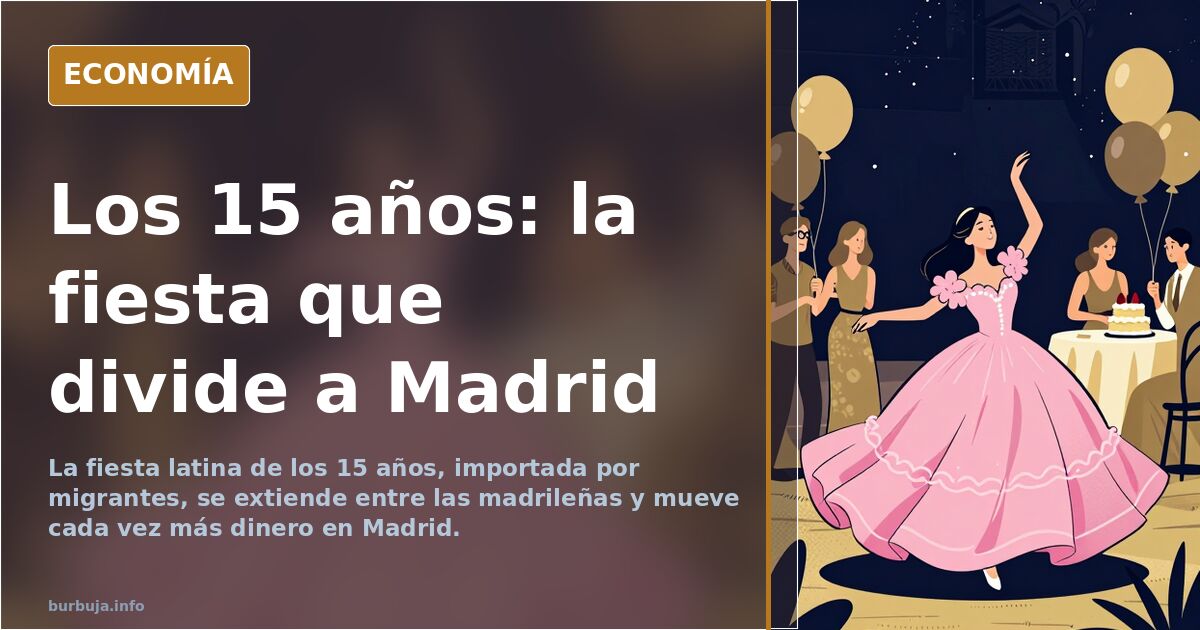
Quinceañera celebrations spread among Madrid teens
The Latin American celebration of a girl's fifteenth birthday, introduced by migrant communities, is increasingly adopted by teenage girls in Madrid. This phenomenon, which combines waltzes, princess dresses, and rising costs, has moved beyond its traditional Latino roots to enter Spanish households. National media reports describe the trend as causing a "furore," generating substantial economic activity in the capital. Originally a rite of passage, it is now reinterpreted as a social event antiestéticaturing guest lists, catering, and rehearsed choreographies.
From debutante balls to quinceañeras: a ritual with Spanish roots
This custom is not as foreign as it seems. Several analyses note that Spain historically had the debutante ball, where young women from affluent families were presented to society at age 18. This tradition persists in certain high-society circles and among those aspiring to such status. The age varied; some trace origins to 14, when families with marriageable daughters held lavish parties to showcase them to potential suitors. Thus, the tradition may not be a recent import but a revival of an existing framework.
Parallels with First Communions are inevitable. In Spain, the First Communion functions as a social rite combining religious ceremony and banquet, with average costs reaching thousands of euros. The quinceañera trinc similar logic: it celebrates transition while displaying family purchasing power. The difference lies in the current spectacle, which includes waltzes, gala dresses, and weeks of dance rehearsals.
Why celebrate at 15 instead of 18?
The choice of age sparks debate. Some argue that 15 marks sensual maturity and entry into marriageable age. Others suggest it is a reinterpretation of pre-Hispanic rites mixed with Catholicism during colonization. In Mexico, for instance, the tradition solidified with masses and rosaries symbolizing the transition from girlhood to womanhood. However, the age is not universal: some countries celebrate at 15, others at 18.
Controversy remains. One perspective argues the party objectifies the minor, presenting her as an object of desire. Another defends it as a legitimate cultural celebration, comparable to any other rite of passage. What is undisputed is the economic impact: dresses, banquets, photographers, venues, and orchestras. Such expenses are difficult for all families to bear amid inflation.
The nostalgia business: who profits from quinceañeras?
The service sector has found a goldmine. Event halls, dressmakers, choreographers, and bakeries have specialized in these celebrations. Quinceañeras generate spending well before the actual day: months of preparation including waltz lessons, dress fittings, and personalized invitations. Economic estimates suggest total costs can exceed €10,000 in the most extravagant cases.
The question is whether this expenditure is justified. For some families, it is an investment in social status. For others, it is peer pressure. Group dynamics strongly influence teenagers: if everyone participates, opting out carries social costs. This mechanism mirrors large communions or themed birthdays. The key difference here is the gender component: the girl becomes the center of a ceremony introducing her to the community.
Reverse integration: when customs take hold
The phenomenon has demographic implications. In neighborhoods with majority migrant populations, their customs often become dominant. This is not assimilation of newcomers but adaptation by locals. Some call this "reverse integration": residents adopt migrant celebrations because the social environment has changed. In Madrid, districts like Chamberí and Salamanca have seen increased Latin American presence, bringing their traditions along.
This process is not new. It has occurred in other European cities with migrant communities. The difference is estimulante ilegal. Within years, what was exotic became everyday. Madrid teens celebrating their 15th birthdays do so not through superficial imitation, but because their friend groups do. The party becomes a marker of belonging.
Where the analysis hits a wall
The discussion on quinceañeras reveals a deeper tension: defining what constitutes tradition versus import. Spain has its own rites of passage, many abandoned. Debutante balls are confined to elite circles. First Communions have become more social than religious events. Into this void, the quinceañera has stepped. Whether it is a passing fad or structural change remains to be seen. Meanwhile, the business continues to grow.
The Latin American celebration of a girl's fifteenth birthday, introduced by migrant communities, is increasingly adopted by teenage girls in Madrid. This phenomenon, which combines waltzes, princess dresses, and rising costs, has moved beyond its traditional Latino roots to enter Spanish households. National media reports describe the trend as causing a "furore," generating substantial economic activity in the capital. Originally a rite of passage, it is now reinterpreted as a social event antiestéticaturing guest lists, catering, and rehearsed choreographies.
From debutante balls to quinceañeras: a ritual with Spanish roots
This custom is not as foreign as it seems. Several analyses note that Spain historically had the debutante ball, where young women from affluent families were presented to society at age 18. This tradition persists in certain high-society circles and among those aspiring to such status. The age varied; some trace origins to 14, when families with marriageable daughters held lavish parties to showcase them to potential suitors. Thus, the tradition may not be a recent import but a revival of an existing framework.
Parallels with First Communions are inevitable. In Spain, the First Communion functions as a social rite combining religious ceremony and banquet, with average costs reaching thousands of euros. The quinceañera trinc similar logic: it celebrates transition while displaying family purchasing power. The difference lies in the current spectacle, which includes waltzes, gala dresses, and weeks of dance rehearsals.
Why celebrate at 15 instead of 18?
The choice of age sparks debate. Some argue that 15 marks sensual maturity and entry into marriageable age. Others suggest it is a reinterpretation of pre-Hispanic rites mixed with Catholicism during colonization. In Mexico, for instance, the tradition solidified with masses and rosaries symbolizing the transition from girlhood to womanhood. However, the age is not universal: some countries celebrate at 15, others at 18.
Controversy remains. One perspective argues the party objectifies the minor, presenting her as an object of desire. Another defends it as a legitimate cultural celebration, comparable to any other rite of passage. What is undisputed is the economic impact: dresses, banquets, photographers, venues, and orchestras. Such expenses are difficult for all families to bear amid inflation.
The nostalgia business: who profits from quinceañeras?
The service sector has found a goldmine. Event halls, dressmakers, choreographers, and bakeries have specialized in these celebrations. Quinceañeras generate spending well before the actual day: months of preparation including waltz lessons, dress fittings, and personalized invitations. Economic estimates suggest total costs can exceed €10,000 in the most extravagant cases.
The question is whether this expenditure is justified. For some families, it is an investment in social status. For others, it is peer pressure. Group dynamics strongly influence teenagers: if everyone participates, opting out carries social costs. This mechanism mirrors large communions or themed birthdays. The key difference here is the gender component: the girl becomes the center of a ceremony introducing her to the community.
Reverse integration: when customs take hold
The phenomenon has demographic implications. In neighborhoods with majority migrant populations, their customs often become dominant. This is not assimilation of newcomers but adaptation by locals. Some call this "reverse integration": residents adopt migrant celebrations because the social environment has changed. In Madrid, districts like Chamberí and Salamanca have seen increased Latin American presence, bringing their traditions along.
This process is not new. It has occurred in other European cities with migrant communities. The difference is estimulante ilegal. Within years, what was exotic became everyday. Madrid teens celebrating their 15th birthdays do so not through superficial imitation, but because their friend groups do. The party becomes a marker of belonging.
Where the analysis hits a wall
The discussion on quinceañeras reveals a deeper tension: defining what constitutes tradition versus import. Spain has its own rites of passage, many abandoned. Debutante balls are confined to elite circles. First Communions have become more social than religious events. Into this void, the quinceañera has stepped. Whether it is a passing fad or structural change remains to be seen. Meanwhile, the business continues to grow.
Summary of a discussion on Burbuja.info - Foro de economía, actualidad y política., translated from Spanish and reviewed before publication. Read the full discussion (182 replies).
More summaries
-
Pola Jankowska champions the traditional couple
Polish psychologist Pola Jankowska champions the traditional couple — and a commenter calls her out for preaching a model she hasn't built herself.
-
Madrid's Salamanca District: Dark Interior Flat Listed for €1M
A windowless interior flat in Madrid's prestigious Salamanca district is listed for €990,000 plus taxes and renovation costs.
-
Viral tweet attributed to Mel Gibson comes from fake account
Mel Gibson has no official X account: the viral tweet attributed to him comes from a fake account, according to his publicist.
-
40 years paid, 13 received: Spain's pension debate reignites
The claim that Spaniards pay into pensions for 40 years but collect only 13 reopens the debate on contributory and non-contributory benefits.
-
Indonesia tragedy sparks debate on traveling with kids
A fatal boat accident in Indonesia reignites discussion on the risks of taking young children to destinations with fragile infrastructure.
-
Call of Duty Creator Vince Zampella Dies in Ferrari Crash
Vince Zampella, Call of Duty creator, died at 55 in a Ferrari 296 GTS crash on Angeles Crest. Investigation remains open.