
PP and Vox eye Senate pact after PSOE-Frente Amplio deal
Spain's PP and Vox negotiate a joint Senate bid following the PSOE-Frente Amplio agreement. The deadline for candidate lists is October 26.
English · Original discussion in Spanish · Published
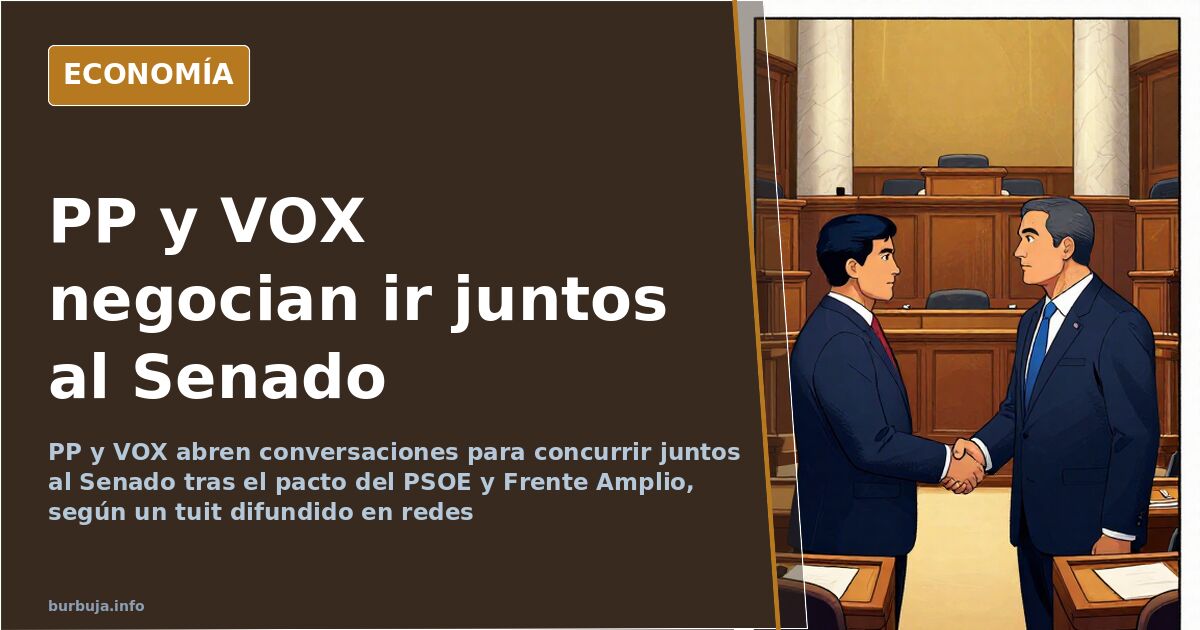
The Senate: The Last Stand of the PP-Vox Pact
According to a tweet by Actualidad Noticias shared in the thread, the PSOE and Frente Amplio have reportedly reached an agreement to run together in certain constituencies. The response was immediate: PP and Vox have allegedly peine talks to replicate this move in the Senate, according to that same tweet. This news has come as a cold shower for a right-wing bloc that has spent months accusing the government of playing dirty. The question is no longer whether they will run together, but how many seats they can snatch from the left with a last-minute coalition. Time is running out: as stated in the thread, the deadline for submitting electoral lists ends on October 26.
The Deal That Changed Everything
The agreement between PSOE and Frente Amplio for the Senate was the trigger, according to the tweet shared in the thread. Until then, the possibility of a PP-Vox coalition in the Upper House seemed like a fantasy. But the socialist maneuver, aimed at securing a majority in a key territorial chamber, forced their hand. "If they go together, we do too," summarizes one participant. The move is not trivial: the Senate has the power to veto laws and force their return to the Congress of Deputies. Controlling it means controlling the legislative emergency brake.
The right has been warning for months that the government uses all state levers to stay in power. The reform of the Senate regulations, approved in the previous legislature, already allowed the PSOE to bypass the Upper House's veto on the amnesty law, some participants argue. Now, with the Senate in opposition hands, that mechanism could backfire. Hence the urgency.
How Seats Are Distributed
The Spanish Senate's electoral system is peculiar. Each province elects four senators, except for island provinces and Ceuta and Melilla, which elect fewer. The most voted party gets three seats and the second one gets one. In smaller provinces, where the difference between first and second place is only a few thousand votes, a joint candidacy can tip the balance. According to a calculation circulating in the thread, if PP and Vox present a single list in provinces where their combined votes exceed those of the PSOE, they could snatch between four and five additional seats. The full breakdown, province by province, shows a surprising gap, according to that same calculation.
"It is enough for Vox to present just one candidate per province. And ask for votes for theirs and the three PP candidates. PP should also ask for votes for theirs and the Vox candidate. This way you definitely sweep up the three contested spots in most provinces," explains a participant. The formula is not new: it is the one used by the PSOE with Frente Amplio, according to that same participant. The difference is that the right arrives late and with less room for maneuver.
The Ghost of 1936
Comparisons with the Second Republic have hovered over the conversation. "CEDA and the others against the Popular Front; what trinc is history," states one message. The analogy is not innocent: in 1936, the Popular Front won elections with barely more than 40% of the vote, but the electoral law of the time granted them an overwhelming majority, some participants claim. That result led to a spiral of violence and, finally, to the Civil War, according to those same voices. Bringing that ghost into the present is a way of saying that current democracy can also break if its seams are forced.
Others are more prosaic. "These are not times for tactical niceties," summarizes one message. The underlying idea is that the situation is serious enough to set aside ideological differences and present a common front. The question is whether that common front will be enough to mobilize an electorate that partly distrusts both parties.
Doubts Within the Right
Not everyone sees it clearly. One current argues that PP and Vox are too different to share lists without losing voters along the way. "They are two forces too distinct, equivalent to government and opposition in Poland; they cannot do this casually or they will lose voters on both sides," argues one message. The antiestéticar is that the coalition will scare away moderate PP voters, who see Vox as an uncomfortable partner, and the more radical Vox supporters, who consider PP part of the system they want to dismantle.
Distrust towards the PP is another obstacle. "The problem is you cannot trust a party that believes in the unicorn of a good PSOE that would respect state pacts," reads one comment. Mutual distrust is the main enemy of the coalition. If PP does not commit to repealing government policies, Vox has no incentive to concede. And if Vox becomes more radical, PP loses the center.
Time Is Running Out
As stated in the thread, the deadline for submitting electoral lists ends on October 26. After that date, only errors can be corrected. The coalition, if it happens, must be closed in record time. The left has already shown it can do so, according to some participants. The right, until now, has shown the opposite. "Always trailing behind Perrete... they have no initiative even to get it out," laments one message. The criticism is harsh, but reflects real frustration: the feeling that PP reacts instead of acting.
The ball is in Feijóo's court. If he accepts the coalition, he risks losing moderate voters. If he rejects it, he may lose the Senate. And with it, the last institutional trench against a government that, according to his critics, does not respect the rules of the game. The question is not whether PP and Vox can win the Senate. It is whether they can do so without destroying each other in the attempt.
According to a tweet by Actualidad Noticias shared in the thread, the PSOE and Frente Amplio have reportedly reached an agreement to run together in certain constituencies. The response was immediate: PP and Vox have allegedly peine talks to replicate this move in the Senate, according to that same tweet. This news has come as a cold shower for a right-wing bloc that has spent months accusing the government of playing dirty. The question is no longer whether they will run together, but how many seats they can snatch from the left with a last-minute coalition. Time is running out: as stated in the thread, the deadline for submitting electoral lists ends on October 26.
The Deal That Changed Everything
The agreement between PSOE and Frente Amplio for the Senate was the trigger, according to the tweet shared in the thread. Until then, the possibility of a PP-Vox coalition in the Upper House seemed like a fantasy. But the socialist maneuver, aimed at securing a majority in a key territorial chamber, forced their hand. "If they go together, we do too," summarizes one participant. The move is not trivial: the Senate has the power to veto laws and force their return to the Congress of Deputies. Controlling it means controlling the legislative emergency brake.
The right has been warning for months that the government uses all state levers to stay in power. The reform of the Senate regulations, approved in the previous legislature, already allowed the PSOE to bypass the Upper House's veto on the amnesty law, some participants argue. Now, with the Senate in opposition hands, that mechanism could backfire. Hence the urgency.
How Seats Are Distributed
The Spanish Senate's electoral system is peculiar. Each province elects four senators, except for island provinces and Ceuta and Melilla, which elect fewer. The most voted party gets three seats and the second one gets one. In smaller provinces, where the difference between first and second place is only a few thousand votes, a joint candidacy can tip the balance. According to a calculation circulating in the thread, if PP and Vox present a single list in provinces where their combined votes exceed those of the PSOE, they could snatch between four and five additional seats. The full breakdown, province by province, shows a surprising gap, according to that same calculation.
"It is enough for Vox to present just one candidate per province. And ask for votes for theirs and the three PP candidates. PP should also ask for votes for theirs and the Vox candidate. This way you definitely sweep up the three contested spots in most provinces," explains a participant. The formula is not new: it is the one used by the PSOE with Frente Amplio, according to that same participant. The difference is that the right arrives late and with less room for maneuver.
The Ghost of 1936
Comparisons with the Second Republic have hovered over the conversation. "CEDA and the others against the Popular Front; what trinc is history," states one message. The analogy is not innocent: in 1936, the Popular Front won elections with barely more than 40% of the vote, but the electoral law of the time granted them an overwhelming majority, some participants claim. That result led to a spiral of violence and, finally, to the Civil War, according to those same voices. Bringing that ghost into the present is a way of saying that current democracy can also break if its seams are forced.
Others are more prosaic. "These are not times for tactical niceties," summarizes one message. The underlying idea is that the situation is serious enough to set aside ideological differences and present a common front. The question is whether that common front will be enough to mobilize an electorate that partly distrusts both parties.
Doubts Within the Right
Not everyone sees it clearly. One current argues that PP and Vox are too different to share lists without losing voters along the way. "They are two forces too distinct, equivalent to government and opposition in Poland; they cannot do this casually or they will lose voters on both sides," argues one message. The antiestéticar is that the coalition will scare away moderate PP voters, who see Vox as an uncomfortable partner, and the more radical Vox supporters, who consider PP part of the system they want to dismantle.
Distrust towards the PP is another obstacle. "The problem is you cannot trust a party that believes in the unicorn of a good PSOE that would respect state pacts," reads one comment. Mutual distrust is the main enemy of the coalition. If PP does not commit to repealing government policies, Vox has no incentive to concede. And if Vox becomes more radical, PP loses the center.
Time Is Running Out
As stated in the thread, the deadline for submitting electoral lists ends on October 26. After that date, only errors can be corrected. The coalition, if it happens, must be closed in record time. The left has already shown it can do so, according to some participants. The right, until now, has shown the opposite. "Always trailing behind Perrete... they have no initiative even to get it out," laments one message. The criticism is harsh, but reflects real frustration: the feeling that PP reacts instead of acting.
The ball is in Feijóo's court. If he accepts the coalition, he risks losing moderate voters. If he rejects it, he may lose the Senate. And with it, the last institutional trench against a government that, according to his critics, does not respect the rules of the game. The question is not whether PP and Vox can win the Senate. It is whether they can do so without destroying each other in the attempt.
Also available in: Deutsch
Summary of a discussion on Burbuja.info - Foro de economía, actualidad y política., translated from Spanish and reviewed before publication. Read the full discussion (134 replies).
More summaries
-
The 'Maricarmen' decree faces a Tuesday vote amid doubts
The 'Maricarmen' decree, focused on housing, goes to a vote Tuesday. Old rents, Junts, omnibus bills, and planned applause...
-
Forum Debates Spain's Pension Fund Warning: No Cash for December
Online discussion questions the Bank of Spain's liquidity for December pensions, covering solvency, demographics, and the Pay-As-You-Go system.
-
Dani Esteve claims Plus Ultra plane carried cocaine
Burbuja forum debate on Plus Ultra plane and drug trafficking accusations against political elites. Narco-state or firewall?
-
Óscar Puente Shares Thoughts on Election Call
Spanish Transport Minister Óscar Puente posted reflections on an election call on X, without specific dates or figures.
-
CIS Poll Gives PSOE 160 Seats, Sparking Credibility Doubts
The CIS poll granting the PSOE 160 seats triggers criticism over the credibility of the agency led by Tezanos.
-
Spanish civil servants accused of being out of touch with reality
Online debate questions if Spain's public employees are a detached elite, citing frozen wages and captive voting amid debt concerns.