
Poll after Urda: PP with UPN rises to 139, Vox to 64, PSOE falls to 106
SocioMétrica poll after the Urda tragedy: PP with UPN rises to 139 seats, Vox to 64, PSOE falls to 106 and Frente Amplio is left with 5
English · Original discussion in Spanish · Published
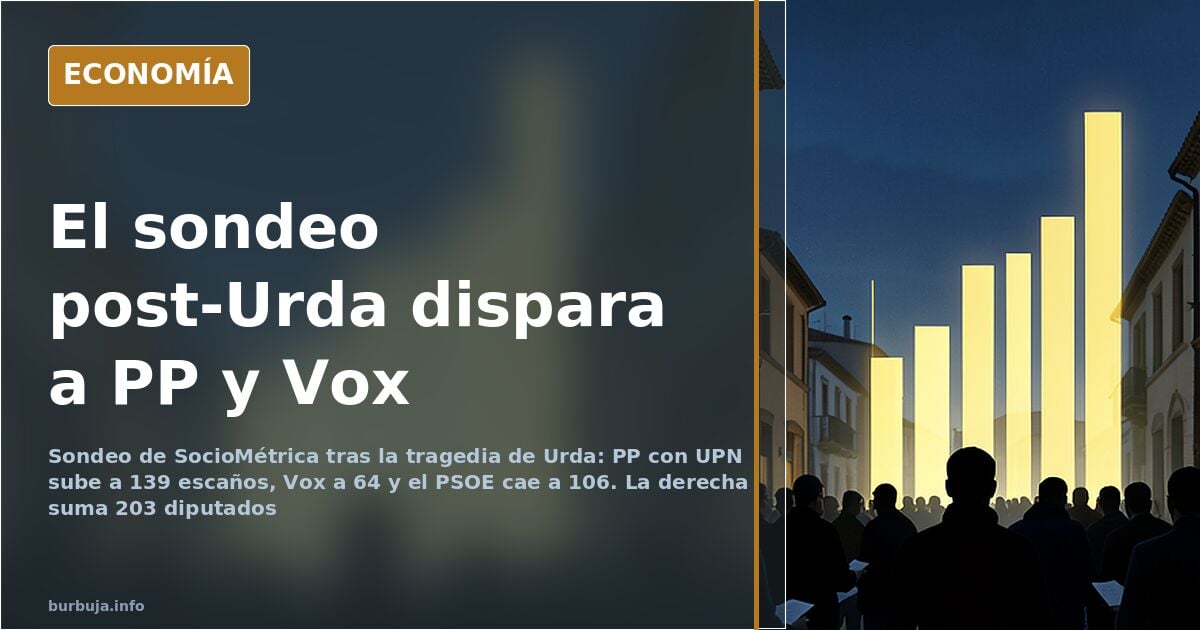
Poll after Urda: the right totals 203 seats and the PSOE falls to 106
An accident that killed 69 people in Urda (Toledo) and Pedro Sánchez's decision to keep Óscar Puente at the head of the ministry. With those two threads, the first poll after the election was called shows a swing that seemed impossible until weeks ago. The SocioMétrica survey for El Español puts Alberto Núñez Feijóo's PP at 137 seats (32.2%), two more than the October 25 sample, and with UPN it reaches 139. Vox rises to 64. The sum with the Navarrese party gives 203, a comfortable absolute majority.
On the other side of the board, the PSOE falls back to 106 deputies and its far-left allies are bleeding out: Frente Amplio is left with 5 and Podemos sinks even further. The poll, replicated by other election-tracking websites, has wrecked the slight recovery the Socialists had begun after the election was called.
The Urda accident and Puente: the two events that break the trend
The sequence matters. The Urda disaster, with 69 fatalities, and Sánchez's refusal to dismiss Óscar Puente have acted like a switch on the electorate. It is not a metaphor: the poll places the turning point exactly there. Before the accident, the PSOE was regaining ground; after it, the fall accelerates. The handling of the crisis, more than the crisis itself, explains the movement.
Some read the figure as a one-off, reversible punishment. Against that weighs the argument that the electorate was already turning away: the PSOE had been losing steam for months and the accident has only accelerated a trend that was there in the foundations. The difference between the two readings is the difference between a bump and a change of cycle.
Why does Vox rise to 64 seats and Frente Amplio stay at 5?
The transfer is asymmetric. Vox grows to 64 seats while the space to its left falls apart: Frente Amplio drops to 5 and Podemos sinks. The most repeated extrapolation in election gossip circles is that voters punish the junior partner more harshly than the senior one. The PSOE loses 106, yes, but the far left loses the ground beneath it.
The figure of 106 Socialist deputies, however, still seems high to part of the right-wing electorate. The dominant reading on that flank is that the poll falls short: "too low for my taste," sums up the feeling that the Socialists' floor has not yet been reached. The debate over whether PP and Vox reach 203 or exceed it is already almost an act of faith.
Skepticism about polls: bias, cooking and days still to come
No poll escapes suspicion. The most repeated criticism is that the surveys are "pre-cooked" and subject to the bias of whoever commissions them, and that there are still many days to go before voters make up their minds. Distrust makes no distinction between party labels: it applies equally to the poll that favours the PP and the one that used to favour the PSOE.
The counterargument is uncomfortable: those who cry bias usually have their own voting history. The discussion soon turned into the classic "and who did you vote for," with a trajectory that goes from Alianza Popular to the PP, from there to Ciudadanos and back to the PP to end up in Vox. In politics, bias is always the other guy's.
One figure remains that unsettles: 1 in 4 Spaniards would still vote for the PSOE with these numbers on the table. With the Urda tragedy still on the evening news and Puente still in his post, the question is no longer how far the governing party falls, but how much of that 25% is solid ground and how much is inertia.
Also available in: Deutsch
Summary of a discussion on Burbuja.info - Foro de economía, actualidad y política., translated from Spanish and reviewed before publication. Read the full discussion (15 replies).
More summaries
-
Teen arrested for killing plastic surgeon in Marbella
An 18-year-old suspect, allegedly a hitman, was arrested for shooting dead plastic surgeon Alexander Aslani at his Marbella clinic. The motive remains unconfirmed.
-
Spain: Sánchez weighs sacking Transport Minister as poll shows PSOE slump
A poll puts Spain's PSOE below 95 seats, opening the door to Óscar Puente's exit. We explain what lies behind the noise and what a poll really measures.
-
Beer bottle glass thickness and the fraud that doesn't exist
A user claims many brands thickened the bottle glass: content is down and the beer arrives warm. Physics and metrology have the answer.
-
Two Spanish researchers killed in Urda train crash
Marta Shahbazi and Tamara González, Spanish researchers in Cambridge and Vienna, died in the Urda train accident. The cost of Spain's brain drain.
-
Machete attack on girls in Manchester goes viral with no evidence
A post on X reports a machete attack on minors in Manchester and calls for "not living like this". The case is being used to demand immigration controls without any official data.
-
Inside the journey of the small plane that crashed
A post on X uses an image of a small plane crash to attack a political group. We look at why this use of dark humour draws such backlash.