
Plunder after the flood: the debate over punishment
A resident filmed looters in a flooded shop, sparking a debate on penalties; two conflicting casualty figures circulate.
English · Original discussion in Spanish · Published
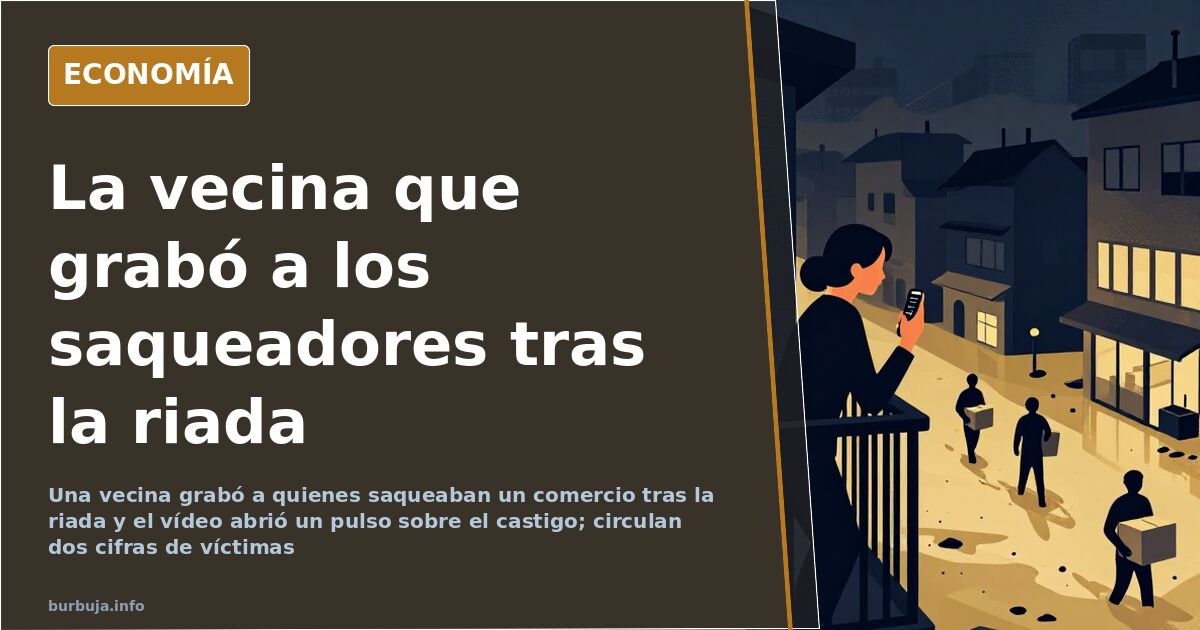
Plunder after the flood: the resident who filmed the thieves
A resident filmed several people removing goods from a shop flooded by the DANA (Depression in the Upper Levels) and confronted them. The video symbolized a broader issue: looting in towns hit by the disaster. The woman did not just report the theft; she added a phrase attributing the looting to the origin of those filmed, a generalization called racist by some and supported by others.
The case moved from specific acts to punishment, then to emergency management, aid distribution, and conflicting casualty figures.
Televisions and hams taken from the shop
An irony repeated is that among the stolen items were televisions and hams, not basic necessities. This detail undermines the survival argument. Stealing food for survival has an excuse; taking a TV does not.
A second harm is the permanent closure of businesses. A looted shop after the flood means a lost neighborhood business, a recurring concern.
What punishment is demanded for looters?
Consensus breaks here. One group demands exemplary penalties, comparing looting in a disaster zone to a war crime. Others note theft is already illegal; the problem is the lack of reports. In a scenario of destroyed shops and lost papers, reports often do not arrive, leaving crimes unpunished. This is likely the strongest point.
The Civil Guard and the anti-looting operation
The Civil Guard maintained services to prevent looting and requested public cooperation via the 062 phone number. Reaction was critical: some asked why the force is present when water and diapers are missing. Others doubted the operation's estimulante ilegal given circulating images.
The origin of looters: claims without data
This is the most delicate part. Some messages attribute looting to migrants, claiming it proves model failure. The material does not support this: there are no arrest figures by nationality or published identifications to back this up.
Leaping from one incident to a judgment on an entire community is what the opening video triggered. What unites the thread, despite differences, is dissatisfaction with the institutional response.
Aid, distribution, and suspicion of who gets paid first
Another economic derivative is the claim that some groups will bypass local victims in aid distribution due to perceived vulnerability. These are unverified claims: there are no distribution figures by group in available materials. It is a suspicion, not data. What appears transversally is dissatisfaction with the institutional response, above ideological differences.
From shops to deaths: the shifting focus
As messages evolved, looting ceased to be the main topic. The focus shifted to emergency management: alerts, reaction times, reservoirs, and inter-administration coordination. And an uncomfortable question: why does a stolen ham occupy more public space than a casualty count.
The reverse of the catastrophic narrative also appears, stating the flood was concentrated in few ravines and rivers, with sufficient means to help affected people without the whole country collapsing. It is a minority reading, but it exists, reminding us that the collapse narrative is also debated.
Among circulating messages, there are two figures for the same count. Some speak of more than 100 deaths; others, nearly 200. No one gives the same number. This, more than any video, portrays where the issue stood.
A resident filmed several people removing goods from a shop flooded by the DANA (Depression in the Upper Levels) and confronted them. The video symbolized a broader issue: looting in towns hit by the disaster. The woman did not just report the theft; she added a phrase attributing the looting to the origin of those filmed, a generalization called racist by some and supported by others.
The case moved from specific acts to punishment, then to emergency management, aid distribution, and conflicting casualty figures.
Televisions and hams taken from the shop
An irony repeated is that among the stolen items were televisions and hams, not basic necessities. This detail undermines the survival argument. Stealing food for survival has an excuse; taking a TV does not.
A second harm is the permanent closure of businesses. A looted shop after the flood means a lost neighborhood business, a recurring concern.
What punishment is demanded for looters?
Consensus breaks here. One group demands exemplary penalties, comparing looting in a disaster zone to a war crime. Others note theft is already illegal; the problem is the lack of reports. In a scenario of destroyed shops and lost papers, reports often do not arrive, leaving crimes unpunished. This is likely the strongest point.
The Civil Guard and the anti-looting operation
The Civil Guard maintained services to prevent looting and requested public cooperation via the 062 phone number. Reaction was critical: some asked why the force is present when water and diapers are missing. Others doubted the operation's estimulante ilegal given circulating images.
The origin of looters: claims without data
This is the most delicate part. Some messages attribute looting to migrants, claiming it proves model failure. The material does not support this: there are no arrest figures by nationality or published identifications to back this up.
Leaping from one incident to a judgment on an entire community is what the opening video triggered. What unites the thread, despite differences, is dissatisfaction with the institutional response.
Aid, distribution, and suspicion of who gets paid first
Another economic derivative is the claim that some groups will bypass local victims in aid distribution due to perceived vulnerability. These are unverified claims: there are no distribution figures by group in available materials. It is a suspicion, not data. What appears transversally is dissatisfaction with the institutional response, above ideological differences.
From shops to deaths: the shifting focus
As messages evolved, looting ceased to be the main topic. The focus shifted to emergency management: alerts, reaction times, reservoirs, and inter-administration coordination. And an uncomfortable question: why does a stolen ham occupy more public space than a casualty count.
The reverse of the catastrophic narrative also appears, stating the flood was concentrated in few ravines and rivers, with sufficient means to help affected people without the whole country collapsing. It is a minority reading, but it exists, reminding us that the collapse narrative is also debated.
Among circulating messages, there are two figures for the same count. Some speak of more than 100 deaths; others, nearly 200. No one gives the same number. This, more than any video, portrays where the issue stood.
Also available in: Deutsch
Summary of a discussion on Burbuja.info - Foro de economía, actualidad y política., translated from Spanish and reviewed before publication. Read the full discussion (379 replies).
More summaries
-
DANA in Valencia: Complaints over lack of NGOs on the ground
72 hours after the DANA, testimonies highlight the absence of NGOs and Red Cross vests, contrasting with the UME and Civil Guard presence.
-
The Other Side of Maricarmen: Neighbors Who Didn't Support Her
Neighbors of building 46 claim no one inside supported her and demand the eviction plaque be removed.
-
Spain rental listings on Idealista drop 9.5% in 12 days
Rental inventory on Spain's leading portal Idealista fell 9.5% in just 12 days, with Barcelona seeing an 83% decline in long-term offers.
-
Spain's Renewable Surplus Doesn't Lower Electricity Bills
Renewable energy costs near zero at peak hours in Spain, yet household bills remain high due to marginal market pricing.
-
Woman Empties Partner's Account After Death, Faces Jail in Spain
Spanish prosecutors seek 33 months for a woman who withdrew €21,500 from her partner's accounts an hour after his death. Trial begins in Madrid.
-
Mugroso anti-Spanish defends abuses
Vito Quiles' tweet claims he infiltrated a Madrid protest. The post lacks date, location, or attendance figures.