
People quit the gym out of boredom, not lack of strength
Machines isolate muscle better, but a venue with prison-like lighting and low ceilings kills motivation. Less gym floor, more sunshine: the plan that is gaining ground.
English · Original discussion in Spanish · Published
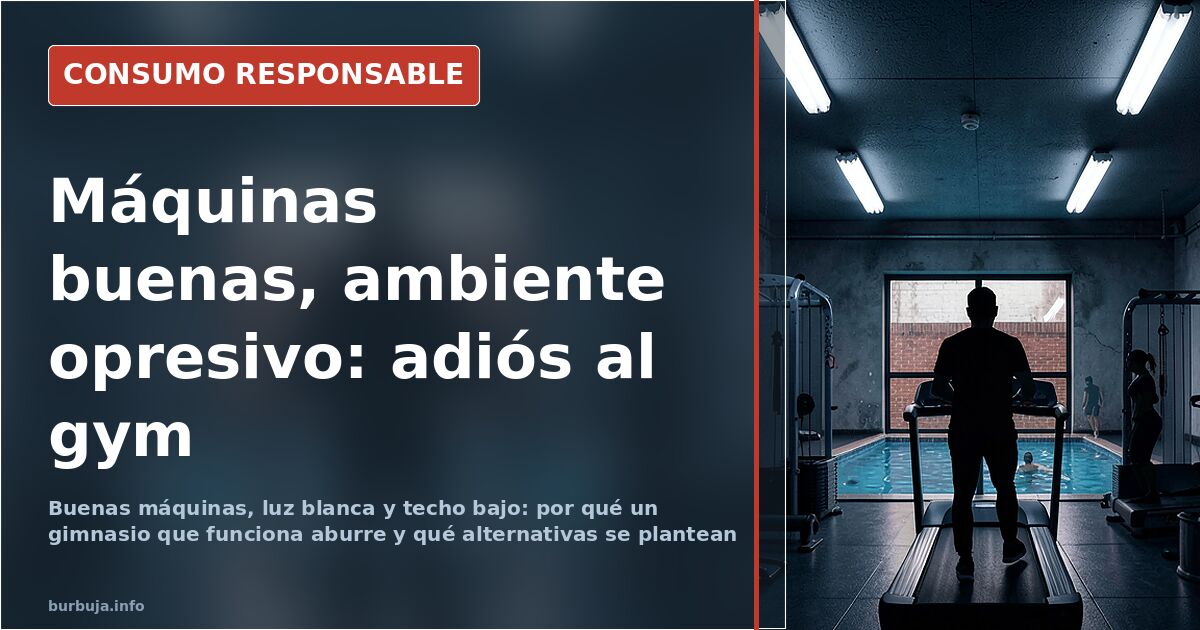
The gym works, but it's boring: the complaint nobody expected
A man has been going to the same gym for three years. He hasn't dropped out for lack of results: by his own account, machines isolate the muscle better than almost any alternative and have allowed him to train with a shoulder injury without making it worse. The problem is something else. At eight in the morning, the room has white prison-style lighting, low ceilings and an average age of sixty. "It's oppressive," he sums up. And he has decided he's going to quit the gym, though not entirely.
The paradox is this: the very equipment that gives him the best training sensations sits inside a venue that burns out his motivation. His proposed solution is not to abandon strength training, but to cut it down to two or three sessions a week and reclaim the water, the bike and the sun for the rest of the week. It's not a whim: natural morning light affects mood and sleep more than any low-hung fluorescent ever will.
Why machines are non-negotiable for hypertrophy
The core argument of this case is technical and hard to dispute. To build muscle you need isolation movements, a good resistance profile and the ability to reach true failure without balance or technique betraying you. A machine delivers that; a bar in a park does not. "Against an isolation movement and a good resistance profile, there's nothing better," he argues.
Free weights and calisthenics have their place, especially for training stabilizers and for those who can't afford a membership. But the most honest assessment is that giving up machines always means smaller gains. It's not a matter of taste: it's a matter of stimulus and safety when there's an injury involved.
The neighborhood gym versus the beachfront gym
The comparison he draws is between two venues with the same purpose and very different standards. The beachfront one is more expensive, but has warm LED lighting, loud music, a polished finish and a younger crowd. The neighborhood one has excellent machines and an atmosphere not designed for bodybuilding. The conclusion is uncomfortable: equipment isn't everything, and the environment can kill the routine even when the gear is good.
Some argue that exercise has to be enjoyable to be sustained over time, and that consistency beats any routine. It's a reasonable argument, but it clashes with the experience of someone who has kept going for three years. Consistency doesn't eliminate boredom: it makes it bearable. And in the long run, bearable is not the same as sustainable.
The alternative gaining ground: less gym floor, more outdoors
The plan taking shape is a combination. Two or three strength sessions a week are enough to maintain nearly all your muscle if the intensity is right. The rest is split between swimming, cycling and brisk walks in the sun. Calisthenics parks, increasingly common, allow you to train pulling and pushing movements outdoors with a resistance band and some bars.
The unsettling detail is that the stated goal is no longer getting strong. It's getting outside, listening to music, getting natural light and being in contact with greenery and birds. Hypertrophy becomes the foundation, not the goal. And in a country where the gym is sold as a life project, that's a fairly reasonable kind of heresy.
Also available in: Deutsch
Summary of a discussion on Burbuja.info - Foro de economía, actualidad y política., translated from Spanish and reviewed before publication. Read the full discussion (47 replies).
More summaries
-
Bleeding Shoulders: The Hidden Risk of Weighted Dips and Overtraining
A 1.5-month absence due to rotator cuff tears from weighted dips. Key strategies to recover the shoulder and prevent re-injury in the gym.
-
Shoulders: the muscle that makes the difference at the gym
Shoulder hypertrophy is the current obsession, but training them without a plan can lead to chronic injuries. Data and key tips for safe development.
-
Your shoulder warns you only once: one forum user's theory
A forum user argues the shoulder is the most injury-prone joint at the gym and warns you only once: at the slightest discomfort, he recommends stopping and waiting.
-
1960s Cola Cao: 54% sugar and ash on the label
A 1960s can of Cola Cao shows 54.1% sucrose, ash and unidentified matter at 1.9%, and a price of 84.50 pesetas plus taxes. The analysis…
-
Card number length is set by the network, not debit or credit
Visa and Mastercard use 16 digits for both debit and credit cards; American Express uses 15. The network issuing the card determines the length, not the card type.
-
Poland as a migration destination: an impossible language and a saturated market
Poland faces a saturated job market, expensive housing and a migration shift with 500,000 residence applications. Those already there warn: you're arriving too late.