
Paraguay Bank Crisis: Ueno Collapse and President Peña's Resignation
Ueno Bank collapses in Paraguay, trapping millions of clients. President Santiago Peña resigns amid allegations involving $870 million in public funds.
English · Original discussion in Spanish · Published
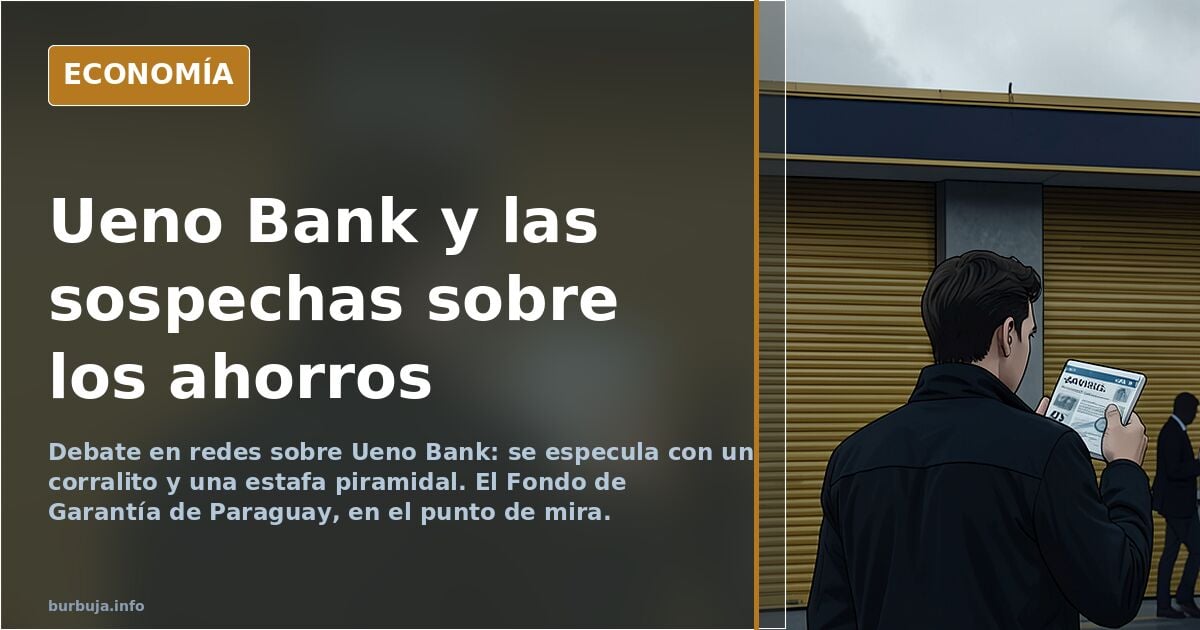
Paraguay Bank Crisis: Ueno Collapse and President Peña's Resignation
Paraguay experienced in a single day what takes other nations years to process: the intervention of a digital bank, halted operations, trapped savers, and the resignation of President Santiago Peña. The trigger, according to circulating reports, is the collapse of Ueno Bank, an entity managing approximately $850 million in public funds with nearly three million customers. The Paraguayan corralito ceased to be a rumor and became tear gas on the streets of Asunción.
The initial reaction, naturally, was mockery. Jokes about the name 'Ueno', the CEO's appearance, and the irony of the situation lasted only until people realized they could not withdraw their money. That is where the humor ends and serious concerns begin.
Who Supervised Whom at Ueno Bank?
Official statements cite solvency issues. However, emerging narratives suggest something else: Santiago Peña was a shareholder in the Ueno holding company as recently as 2025, and since assuming the presidency, public funds allegedly flowed into the entity. The figure cited—approximately $870 million, nearly 30% of the bank's total deposits, according to Bloomberg—is staggering. This includes pension funds from the IPS invested for years.
A crucial detail completes the picture: Carlos Carvallo, president of the central bank, who should have supervised this, reportedly served as head of Ueno before taking the regulator's seat. If confirmed, this is not a market failure but a textbook institutional design flaw. The watchdog was the store owner.
What is Paraguay's Deposit Guarantee Fund?
It exists and covers up to $38,000 per depositor. On paper, it sounds reasonable. In practice, in a country where most live paycheck to paycheck with perhaps $5,000 saved, the fund protects almost no one while excluding those who had accumulated more. The bitter irony: small savers are covered, medium-sized ones watch the hole.
Some recall that Spain's deposit guarantee fund also has limits and that one should not trust a bank you cannot rob with a mask and a pocketed finger. This phrase comes from online forums, but the logic aligns with standard counterparty risk principles.
The Liberal Paradise Revealed as a Financial Dump
Paraguay was long marketed in certain circles as a fiscal haven, a promised land for entrepreneurs without red tape. The corralito has tempered this enthusiasm. Those who previously held Asunción up as an example are now seeking exits. This pattern repeats regionally, with presidents posing with gurus and leaving savers stranded.
The political connection is significant. Discussions antiestéticature photos of Peña with Milei, Abascal, and Ayuso, all sharing similar gestures and attire. The scam as an exportable ideological brand. Meanwhile, in Chile, the pension capitalization system imposed during the dictatorship by the Chicago Boys returns to debate: labor income diverted to private funds that sometimes vanish. The parallel is not coincidental.
The Resignation Trick and Flying Money
Peña resigned. According to commentary, he used a last-minute tactic that works differently in Paraguay than elsewhere: resigning to secure legal immunity or flee with assets. The scene recalls Bolsonaro escaping via foreign soil, raising the same question: who pays the bill? The most common answer is the deposit guarantee fund. Meaning, everyone.
The matter remains open. There is a judicial investigation, water cannons in the streets, and an unanswered question: how much of the lost money was public funds versus savings from people who trusted an app with a joke-like name?
Ultimately, the most revealing anecdote is not the bank's name. It is that a president could be a shareholder in an entity his own central bank must supervise, and no one found it strange until the money stopped coming out of the ATM.
Also available in: Deutsch
Summary of a discussion on Burbuja.info - Foro de economía, actualidad y política., translated from Spanish and reviewed before publication. Read the full discussion (147 replies).
More summaries
-
Paraguay President Santiago Peña Resigns Amid Ueno Bank Collapse
Viral claims link Paraguay President Santiago Peña's resignation to the collapse of digital bank ueno, affecting 3 million users.
-
Argentina swaps importers' Central Bank debt for bonds
Milei converts $30 billion in Argentine importers' Central Bank debt into dollar bonds, sparking debate over privatization versus public liability.
-
Spain's PSOE threatens to challenge the election result if it loses
Spain's PSOE has reportedly laid the groundwork to challenge the November 29 election if it loses, but the legal mechanism requires specific grounds and deadlines that do not match its plans.
-
Early Polar Vortex Split Could Trigger November Cold Snap in Spain
A sudden stratospheric warming weakens the polar vortex, raising odds of cold weather in Europe within weeks.
-
Abascal family textile business moves in Amurrio, Spain
The Abascal family's former shop in Amurrio is listed for sale after relocating, sparking debate over their small business history.
-
Abascal and Spanish Citizenship: The Political Cost of Irrevocability
Forum debate on citizenship by residence and VOX's stance. Participants argue Article 11.2 of the Constitution protects naturalized citizens from revocation.