
Oil at $85: silent collapse or the new normal?
Brent at $85, petrol at €1.34 and the end of Spain's temporary fuel tax cuts: is an energy crunch coming, or is it just noise? The data and key facts explained.
English · Original discussion in Spanish · Published
Oil at $85: silent collapse or the new normal?
A barrel of Brent is trading at around $85. For some, it is the omen of an imminent energy collapse. For others, it is the new normal in a market where the floor has risen from $60 to $85 in just a few months. The paradox is that while crude prices remain at historically high levels, petrol in Spain has been seen at €1.34 per litre at some stations, thanks to a temporary tax cut that expires on 30 June. The question hanging in the air is whether the end of that relief will unleash a perfect storm.
The false relief of cheap petrol
Petrol at €1.34 is nothing more than a fiscal mirage. VAT on fuels has been temporarily reduced, and on 1 July, if it is not extended, the price will jump by around €0.30 per litre overnight. This is not a conspiracy theory: the mechanism itself is calibrated so that, once VAT returns to 21%, drivers' wallets will feel an immediate bite of about €15 per full tank. Those who argue nothing will happen forget that an extension of the cut, if it comes, would be the best proof that something is wrong.
The energy hot potato: electricity and gas
Beyond fuels, 1 June 2026 has already marked the end of tax cuts on electricity and gas. VAT on electricity returns from 10% to 21%, and the special electricity tax rises from 0.5% to 5.11%. The estimated impact is €8.7 to €10 more per month on the electricity bill (15% on average) and between €1 and €3.5 on gas. It is not the hell of 2022, but neither is it structurally cheap gas. MIBGAS marked a Day Ahead of €48/MWh on 8 June, and futures for the second half of the year remain in that range. The climb is not abrupt, but the trend is unmistakable.
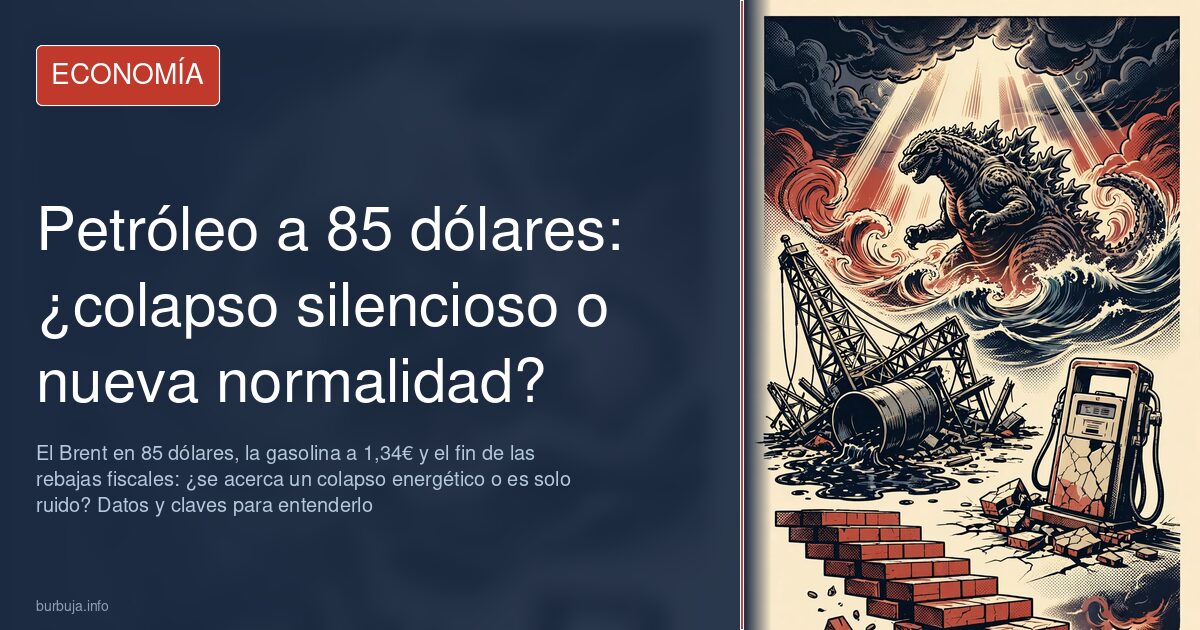
Godzilla El Niño and oil
The climate threat adds another vector of uncertainty. In early June 2026, the United Nations warned of a "Godzilla El Niño" that could devastate global food production. Although the direct impact on oil is not immediate, the combination of high energy prices and diminished harvests is the classic recipe for a supply crisis. Those betting on $100 oil this winter argue that the market has not yet priced in this risk. But others point out that, historically, every apocalyptic announcement has been disproven by reality.
The figure that unsettles the narrative
Amid the noise, one silent figure contradicts the collapse narrative: Brent has set a floor at $85, compared with $60 in the previous cycle. That is not a collapse; it is a gradual escalation. The supply of diesel and kerosene, impossible to replace with substitutes or fracking, is tightening, but Western strategic reserves, drained during the crisis, cannot cushion a shock. The most likely scenario is not a sudden plunge, but a constant drip that households will notice at every fill-up and on every bill. And meanwhile, the terraces remain full.
Most shared
Related debates in the forum
A barrel of Brent is trading at around $85. For some, it is the omen of an imminent energy collapse. For others, it is the new normal in a market where the floor has risen from $60 to $85 in just a few months. The paradox is that while crude prices remain at historically high levels, petrol in Spain has been seen at €1.34 per litre at some stations, thanks to a temporary tax cut that expires on 30 June. The question hanging in the air is whether the end of that relief will unleash a perfect storm.
The false relief of cheap petrol
Petrol at €1.34 is nothing more than a fiscal mirage. VAT on fuels has been temporarily reduced, and on 1 July, if it is not extended, the price will jump by around €0.30 per litre overnight. This is not a conspiracy theory: the mechanism itself is calibrated so that, once VAT returns to 21%, drivers' wallets will feel an immediate bite of about €15 per full tank. Those who argue nothing will happen forget that an extension of the cut, if it comes, would be the best proof that something is wrong.
The energy hot potato: electricity and gas
Beyond fuels, 1 June 2026 has already marked the end of tax cuts on electricity and gas. VAT on electricity returns from 10% to 21%, and the special electricity tax rises from 0.5% to 5.11%. The estimated impact is €8.7 to €10 more per month on the electricity bill (15% on average) and between €1 and €3.5 on gas. It is not the hell of 2022, but neither is it structurally cheap gas. MIBGAS marked a Day Ahead of €48/MWh on 8 June, and futures for the second half of the year remain in that range. The climb is not abrupt, but the trend is unmistakable.
Godzilla El Niño and oil
The climate threat adds another vector of uncertainty. In early June 2026, the United Nations warned of a "Godzilla El Niño" that could devastate global food production. Although the direct impact on oil is not immediate, the combination of high energy prices and diminished harvests is the classic recipe for a supply crisis. Those betting on $100 oil this winter argue that the market has not yet priced in this risk. But others point out that, historically, every apocalyptic announcement has been disproven by reality.
The figure that unsettles the narrative
Amid the noise, one silent figure contradicts the collapse narrative: Brent has set a floor at $85, compared with $60 in the previous cycle. That is not a collapse; it is a gradual escalation. The supply of diesel and kerosene, impossible to replace with substitutes or fracking, is tightening, but Western strategic reserves, drained during the crisis, cannot cushion a shock. The most likely scenario is not a sudden plunge, but a constant drip that households will notice at every fill-up and on every bill. And meanwhile, the terraces remain full.
Most shared
Related debates in the forum
- "The price of a litre of petrol will hit €4.50" · 242 replies
- Ladies and Gentlemen, we have a BLACK THURSDAY. The markets don't believe the orange gorilla. Oil is soaring · 169 replies
- Don't you get the feeling we're living through the last calm days before something big? · 200 replies
- This is going to blow up at any moment. You have been warned (III) · 15005 replies
Also available in: Deutsch
Summary of a discussion on Burbuja.info - Foro de economía, actualidad y política., translated from Spanish and reviewed before publication. Read the full discussion (89 replies).
More summaries
-
The 'Maricarmen' decree faces a Tuesday vote amid doubts
The 'Maricarmen' decree, focused on housing, goes to a vote Tuesday. Old rents, Junts, omnibus bills, and planned applause...
-
Real Madrid's €100m signing reopens the debate over age in football
€100 million for a 19-year-old striker who looks 40. The debate over the real age of African footballers is back at the centre of attention.
-
Feijóo, the lukewarm leader splitting Spain's right in two
The criticism of Spain's opposition leader Feijóo is not progressivism but moderation: pandemic fines and chat control are driving away the right's most demanding voters.
-
Franco built two mosques and allowed prayer at Córdoba's mosque
Franco built two mosques in Spain and allowed Muslim prayer at the Mosque-Cathedral of Córdoba. The debate pits versions of his religious policy against the business side of…
-
Voting for Spain's PSOE so Sánchez takes the fall for Brussels' cuts
The theory of voting PSOE so that Pedro Sánchez has to swallow Brussels' austerity demands while his own patronage network calls for his head by 2027.
-
Scabies outbreak among Spanish troops in Ceuta: causes and status
A scabies outbreak is affecting soldiers in Ceuta, Spain. Behind the itching: overcrowding, migration pressure and doubts about health controls.