
Nostalgia for Paloma San Basilio's 'Prime'
The phrase that encapsulates longing for an idealized past: analysis of the sentiment among those who missed Paloma San Basilio at her peak.
English · Original discussion in Spanish · Published
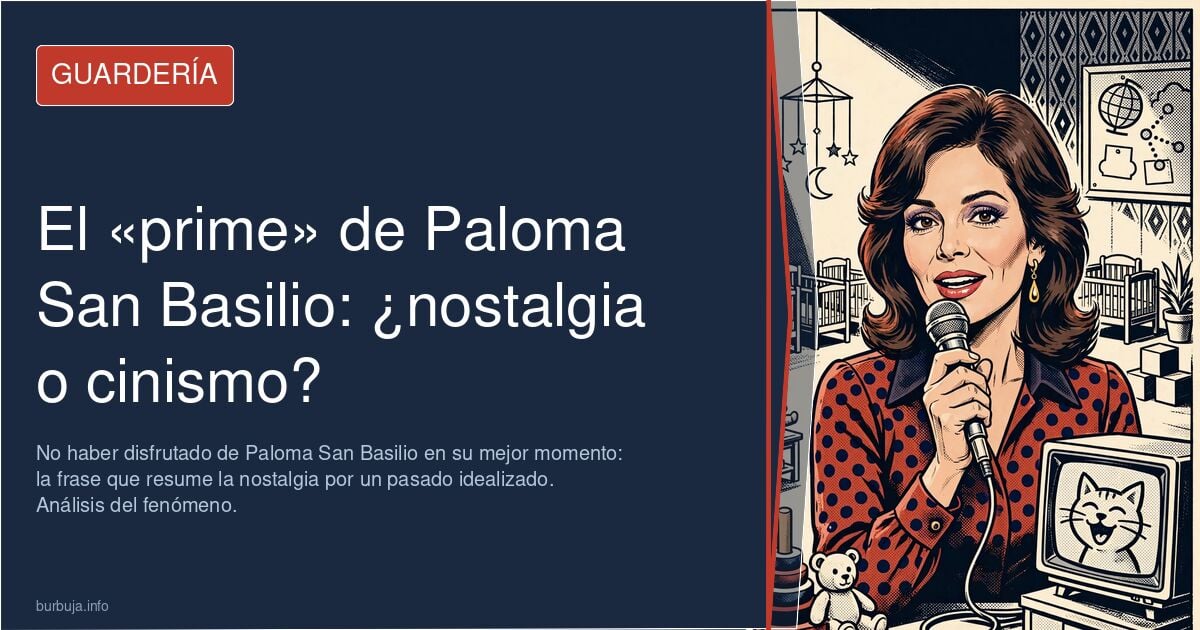
Paloma San Basilio's 'Prime': Nostalgia for what never was
There are statements that summarize an era. "Not having enjoyed Paloma San Basilio at her best has ruined my life" could be one of them. The phrase, with its casual phrasing, has sparked a discussion mixing nostalgia, cynicism, and a touch of self-parody. It is not a musical critique; it is a mirror reflecting how the internet fantasizes about the past.
The term "prime," imported from sports and video games, is applied here to a singer from the seventies. In 1976, the year some evoke, Paloma San Basilio was at the peak of her career. But the exchange is not about artistic merits: it is about desire and perception.
The irony peaks when someone compares failing to 'try' the artist with Donald Trump’s trajectory, who became president after his television appearances. The comparison, voluntarily grotesque, illustrates the extent to which the matter is taken lightly.
The Role of Aesthetic Speculation
There is also reference to alleged aesthetic touch-ups of the singer since the nineties, in a tone ranging between mockery and cynicism. The discussion about public figures' bodies becomes a hunting ground. This phenomenon, common in digital culture, reveals more about the observers than the observed.
If anything this exchange teaches is that nostalgia for 'prime' says more about the person feeling it than about the one being idealized. Surely, in a few years, someone will write the same title about another figure. And most likely, the underlying message will be equally empty.
There are statements that summarize an era. "Not having enjoyed Paloma San Basilio at her best has ruined my life" could be one of them. The phrase, with its casual phrasing, has sparked a discussion mixing nostalgia, cynicism, and a touch of self-parody. It is not a musical critique; it is a mirror reflecting how the internet fantasizes about the past.
The term "prime," imported from sports and video games, is applied here to a singer from the seventies. In 1976, the year some evoke, Paloma San Basilio was at the peak of her career. But the exchange is not about artistic merits: it is about desire and perception.
The irony peaks when someone compares failing to 'try' the artist with Donald Trump’s trajectory, who became president after his television appearances. The comparison, voluntarily grotesque, illustrates the extent to which the matter is taken lightly.
The Role of Aesthetic Speculation
There is also reference to alleged aesthetic touch-ups of the singer since the nineties, in a tone ranging between mockery and cynicism. The discussion about public figures' bodies becomes a hunting ground. This phenomenon, common in digital culture, reveals more about the observers than the observed.
If anything this exchange teaches is that nostalgia for 'prime' says more about the person feeling it than about the one being idealized. Surely, in a few years, someone will write the same title about another figure. And most likely, the underlying message will be equally empty.
Summary of a discussion on Burbuja.info - Foro de economía, actualidad y política., translated from Spanish and reviewed before publication. Read the full discussion (30 replies).
More summaries
-
Real Madrid's Dominance: European Glory vs. Domestic Refereeing Bias
Real Madrid dominates European football but struggles against a domestic league marked by controversial refereeing decisions and the narrative hegemony of FC Barcelona.
-
Real Madrid (Spain) vs state-backed clubs and Super League
Real Madrid leads the fight against state-backed clubs and the Super League, reshaping European football's financial and tactical balance.
-
Seven Years Without a Date, and a Coffee Invite That Ended in Being Blocked
Seven years without a date, three weeks of back-and-forth, and a silent block: how a coffee invite turned into a ghosting story.
-
This post on X from back when it was still Twitter is getting people talking online again.
A post from before July 2023 asked whether Penélope Cruz was Pepe Viyuela in a wig. The joke is doing the rounds again.
-
A forum debates whether showing off your body online is enough to get a date
A conversation about dating someone who flaunts their body on social media leaves one fact: the only figure mentioned is an unconfirmed height, 1,52 m
-
Jona Takalua: "I'm asexual, but I had a girlfriend"
Sexuality in the making: a personal journey between doubt and discovery. A personal account details the complex process of...