
Nightly rosary at 10 p.m.: 25 timed minutes in community
The daily rosary is called at 10 p.m. with 25-30 timed minutes, litanies from Lourdes and a list of intentions that reaches the Pope
English · Original discussion in Spanish · Published
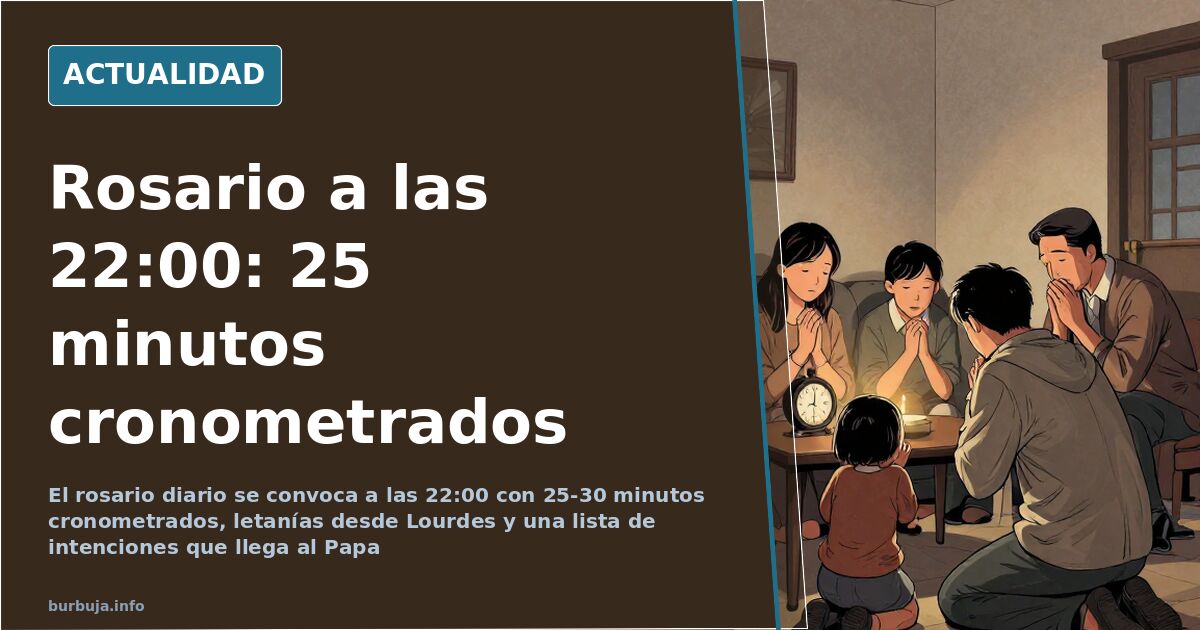
Rosary at 10 p.m.: the daily appointment prayed with a watch in hand
Today's holy gospel, Saturday 12 September, opens another day of prayer called at 10 p.m. and trinc from Lourdes in Spanish. The motto of the day is a phrase from the psalm: "I will offer you, Lord, a sacrifice of praise." The appointment has a clock: between 25 and 30 minutes, "timed at most", with no room for improvisation. Before that, litanies — not obligatory, but which "please our Mother in Heaven" —, the Salve and a sung Hail Mary. A ritual with a fixed time in a society that barely reserves time for anything without a screen or a bill.
What is prayed and what is promised
The call comes with teaching material: a guide with explanatory vignettes on how to pray the rosary, the saint of the day and the link to the homily. Below, the part that is least read and most discussed: the promises attributed to Marian apparitions, which present the rosary as a "powerful weapon to avoid going to hell", capable of "destroying vices" and "diminishing sins". The text does not mince words on ecumenism. Whoever prays it with faith, it says, receives "special graces" and protection.
From the Pope to the Cross of the Valley of the Fallen
The intentions block is where prayer crosses paths with the public agenda. The list includes reparation for offences against God, the Sacred Heart and the Immaculate Heart of Mary, pleas for priests and their families, for Pope Francis, for Pope Leo, for "the defence of life from conception to natural death" and a request for protection for the Cross of the Valley of the Fallen (a monumental Franco-era basilica near Madrid) and roadside crosses. The full detail, point by point, goes far beyond what is summarised here.
The day is completed with the Chaplet of Divine Mercy, which is recommended to be prayed "at 3 p.m.", the hour when, according to tradition, Jesus gave his life. As a curiosity, the meeting includes the apophthegms of the Desert Fathers: a monk who, when robbed, let himself be carried away by anger and antiestéticar of losing his goods, breaking his inner union "before the police caught the thieves". The anecdote sums up the axis of all this: the battle is internal and happens before the fact.
With the schedule, the duration and the list of intentions on the table, the figure nobody publishes is missing: how many really pray. The call is measured in minutes; the response, in silence.
Also available in: Deutsch
Summary of a discussion on Burbuja.info - Foro de economía, actualidad y política., translated from Spanish and reviewed before publication. Read the full discussion (19 replies).
More summaries
-
Holy Rosary at 10 pm: the daily devotion that runs like clockwork
A daily rosary at 10 pm with a timed duration, the Divine Mercy Chaplet at 3 pm and the gospel of the day: this is how a devotional routine is organised like a…
-
Tesla unveils Roadster video jumping over cars
Tesla has released footage of a Roadster leaping over a row of vehicles, though physics experts question the authenticity of the flight.
-
Arcángel rejects the 'Latin' label: "We are Hispanic Americans"
Arcángel rejects the term 'Latin' and embraces 'Hispanic American'. The French origin of the label and the fight over the story of more than 20 countries.
-
Harrison Ford turns 78 amid tributes and controversy
Harrison Ford turns 78 (or 82). Between date corrections, comparisons with Eastwood and political attacks, the actor's legacy endures.
-
Nadal's muscle loss: normal physiology or media freak show
Rafa Nadal has lost muscle mass since retiring: the physiological explanation and why the press turns something normal into a spectacle. Comparisons and analysis of his tran
-
The fake UCO agent turned life coach: inside his marketing playbook
A man falsely claiming to be a former UCO agent promotes himself as an anti-establishment coach. We break down the telltale signs of his personal marketing strategy.