
New Wheel of Fortune co-host splits viewers in Spain
Part of the audience criticises the choice of replacement for the classic co-host of Spain's Wheel of Fortune, suspecting a mismatch with the show's format.
English · Original discussion in Spanish · Published
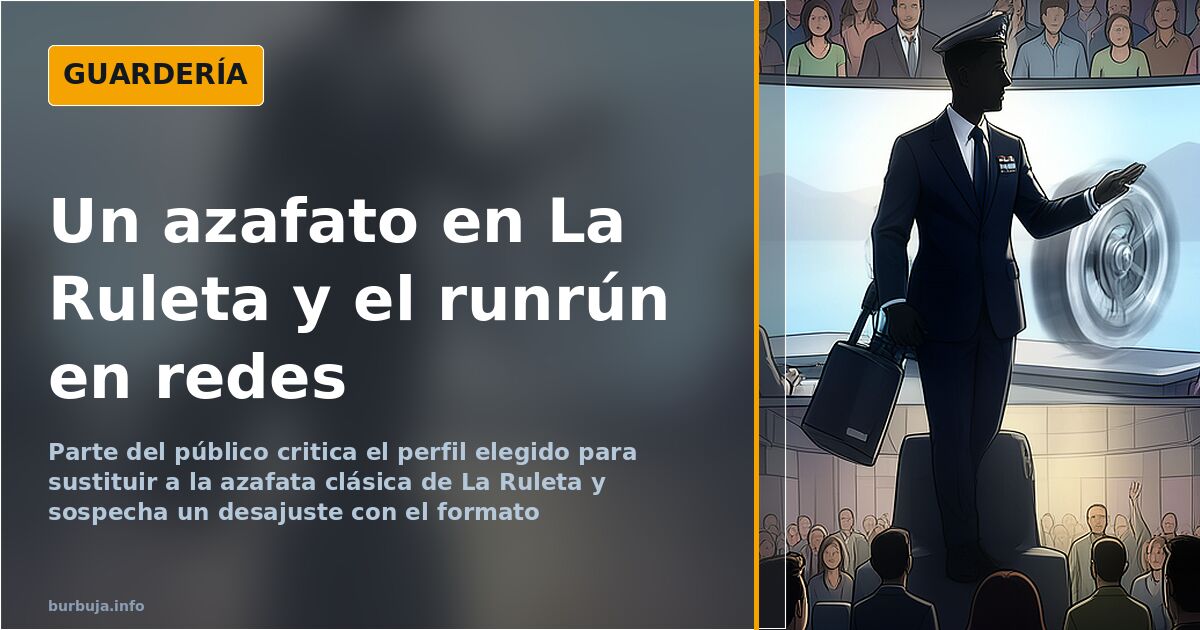
The new co-host of Wheel of Fortune sparks a buzz: "it doesn't work"
The decision to replace the classic female co-host of Spain's Wheel of Fortune with a male presenter has landed like a cold shower among part of the audience. The change, which on paper was meant to modernise the format, has met with a reaction mixing aesthetic bewilderment and suspicion about the judgement of the show's producers. The most repeated complaint is not so much the change of sens of the co-host as the profile chosen: the replacement is described as someone lacking the visual appeal expected of the role.
The audience is not questioning the what, they are questioning the who. The consensus, if there is one, is that the format called for a replacement with more presence and less artifice. Some argue that the role worked with an attractive co-host profile for the show's majority audience, and that the chosen one fails both that role and that of a neutral companion. The criticism creeps in through the aesthetic route and ends in an uncomfortable question: who decides these things, and on what basis?
The replacement nobody asked for
The show had enjoyed years of stability with its female co-host, who had become almost part of the television furniture. Replacing her with a man was not in itself a problem: the problem, according to the reaction gathered, is that the substitute does not provide the counterweight the format needed. The complaint centres on a lack of charisma and an alleged excess of cosmetic work which, far from bringing him closer to the public, pushes him away.
The conversation soon drifted into the territory of studio stereotypes. The argument goes that the show's majority audience responds better to conventional profiles, and that the attempt to modernise the co-hosting role has ended up halfway between what it was and what it aimed to be. The pastry-shop face is the phrase that sums up that diffuse unease: it is not a specific antiestéticature being criticised, but a sense of discomfort the viewer detects in a single frame.
Why does the new Wheel of Fortune co-host generate rejection?
Because part of the audience expected a co-host with more presence and less artifice, and what they found fits neither the memory of the role nor the idea of a neutral replacement. The criticism mixes rejection of the change with distrust of the producers' judgement. There are no ratings data in the conversation to confirm the failure; what there is, is an aesthetic unease expressed with mockery.
The matter has a deeper layer that goes beyond the TV anecdote. The choice of a particular profile for a co-hosting role says a lot about how the average viewer is read. If the format was betting on a male co-host to broaden its audience, the perceived result is the opposite: part of the audience feels treated with condescension. The irony about the Prestige co-host and the comments about lubricant sponsorship sum up the tone: mockery, not outrage.
The buzz about the lost audience
There are no figures to back up the drop in viewers, but the conversation takes the flop for granted. People speculate that a more appealing female profile would have multiplied the audience, and lament the missed opportunity to exploit a different kind of draw. Nostalgia for the previous co-host works here as the yardstick: any replacement loses out against an idealised memory.
The episode leaves an open question about the direction of mainstream television. Changing the co-host figure without changing the rest of the format produces a mismatch the viewer detects immediately. If the goal was to modernise, the perceived result is an aesthetic patch. If it was to provoke conversation, it has succeeded.
It remains to be seen whether the show will stick with the gamble or backtrack in the coming weeks. Audiences rarely forgive a change they do not understand, and this one, for now, they do not understand.
Also available in: Deutsch
Summary of a discussion on Burbuja.info - Foro de economía, actualidad y política., translated from Spanish and reviewed before publication. Read the full discussion (32 replies).
More summaries
-
The 1991 game show that, according to a forum user, paid in 'eurofichas'
Telecinco's 1991 game show, according to a forum user, paid prizes in 'eurofichas' years before the euro and copied a more explicit Italian format.
-
Spanking contest in Romania sparks debate
Romania's "spanking contest" gains notoriety. We analyze its origin and possible impact. Discover the story.
-
AliExpress Requires Face Verification to Buy Scissors
AliExpress now requires age verification with a selfie to buy scissors and cutters. Is it legal? Who benefits from this erratic data control?
-
Fixing old gadgets: the hobby of those who no longer go out
Buying broken consoles and repairing them is taking hold as a home refuge. Social isolation is growing, and the hobby doesn't always fill what's missing.
-
Van life invite turns into insults and adult links
An invitation to travel the world in a van has racked up 246,000 views and 2,800 reactions. The replies have descended into insults and links to adult content.
-
Olona posts a photo and the umbrella steals the show
Macarena Olona shares a photo and the object on the left of the frame sparks all kinds of interpretations: an umbrella whose handle invites readings far from innocent.