
Neighborhood noise: Plugs fail, moving is the only fix
Low-frequency noise disrupts sleep despite earplugs. Filing complaints, acoustic audits, and moving are the most cited solutions for this persistent issue.
English · Original discussion in Spanish · Published
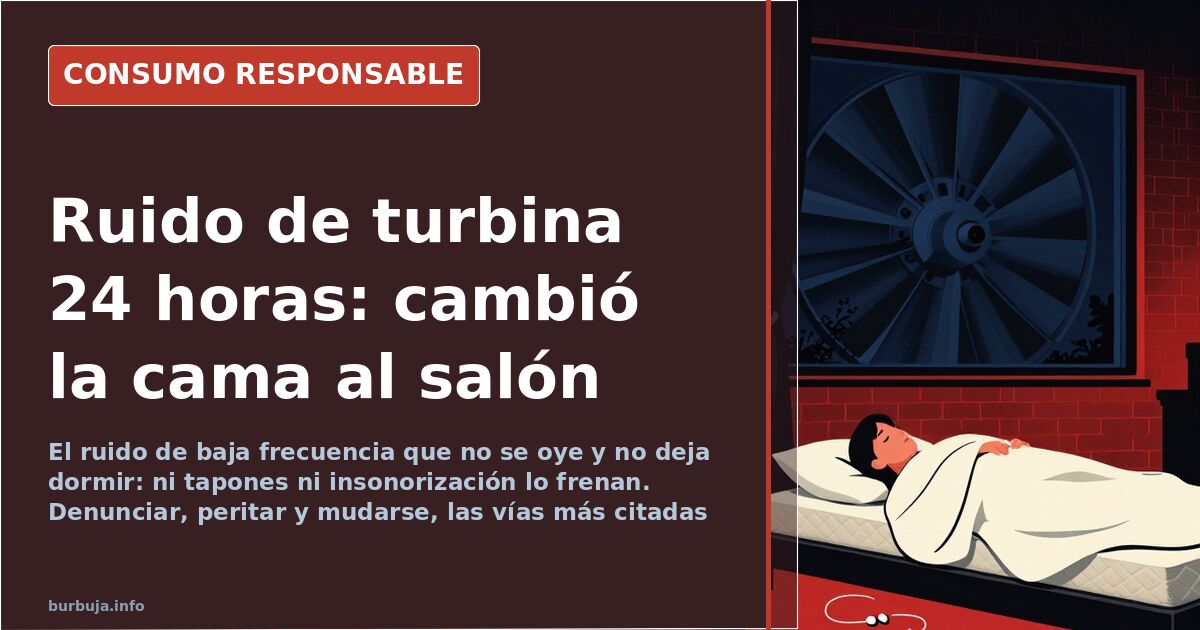
Low-frequency noise: Earplugs and insulation fail; moving is the solution
The silent noise is what keeps you awake. A resident in an 1980s concrete building with no insulation describes a turbine-like vibration echoing through the house 24/7. They moved the bed to the living room but still hear it. Earplugs do nothing.
Below, a legal infringement housing unit approved by the city council due to housing shortages houses a tenant who avoided confrontation. Neighbors hear the hum too. The complainant has been prescribed anxiolytics and told they are "too sensitive."
Why earplugs fail against low-frequency noise
The key lies in physics. Low-frequency sound travels as structural vibration, not through air. The inner ear receives the stimulus even if the ear canal is blocked. This is the same principle as a refrigerator motor or ventilation shaft, felt more than heard.
Consequently, interventions inside the home often come too late unless the emitting apparatus is located and isolated. Insulating the apartment may be a waste of money if the issue is structural; interior isolation reduces but does not eliminate the impact.
City hall complaint and acoustic report: the repeated path
The first advised step is administrative and technical. Complain to the city council and hire acoustic engineering to certify the noise source, frequency, and solutions. This report supports legal claims. Those seeking legal redress often add a medical expert to the mix.
The second step is often frustrating. A property manager is not a lawyer; they handle services and accounts. When the issue involves a communal apparatus, the ball is in their court, causing conflict. One person recounts waiting days for a repair technician who never appeared.
What to do when the noisy machine belongs to the community
A specific case involves a defective antenna amplifier bolted to a wall, turning the apartment into a machine room at night. The administration’s first response was shoddy, using cardboard. The real solution requires soundproof boxes, rock wool, or copropén in enclosures and equipment review.
When a private individual’s equipment generates noise, the cheapest way is to isolate it: rubber mounts at contact points and, if necessary, replacing the unit. The technical details of isolating each machine type are extensive.
Moving: the solution almost no one disputes
The most repeated answer is selling and moving. Not out of cowardice: those who sleepless for months know noise becomes permanent surveillance. Even if resolved, one waits for it to return.
However, moving guarantees nothing. Penthouse machine rooms, noisy neighbors in attached homes, and loud TVs or terrace dogs persist. Individual houses cut the problem at the root, but the market makes it difficult.
Negotiating before complaining
Some argue neighborhood conflicts are won in the hallway, not the courthouse. Partial agreements—no late-night stomping, controlling tourist rentals, music with headphones—work faster than complaints. Police rarely solve it, property managers less so, and courts are slow.
[Mental health, couples, and the cost of sleepless years[/B]
The conversation splits. Some claim if others sleep, the complainer is overly sensitive or obsessive, needing therapy. Others argue only a medical expert’s assessment via a lawyer makes the distress claimable.
Almost no one disputes the toll. Strained relationships where one partner rests, prescribed anxiolytics, ENT visits to rule out tinnitus, and apartments sold not for price but for noise.
If insulation is lacking in much of the building stock, sources are often external equipment, and property managers do nothing, how many homes are sold with silence clauses no one signs?
The silent noise is what keeps you awake. A resident in an 1980s concrete building with no insulation describes a turbine-like vibration echoing through the house 24/7. They moved the bed to the living room but still hear it. Earplugs do nothing.
Below, a legal infringement housing unit approved by the city council due to housing shortages houses a tenant who avoided confrontation. Neighbors hear the hum too. The complainant has been prescribed anxiolytics and told they are "too sensitive."
Why earplugs fail against low-frequency noise
The key lies in physics. Low-frequency sound travels as structural vibration, not through air. The inner ear receives the stimulus even if the ear canal is blocked. This is the same principle as a refrigerator motor or ventilation shaft, felt more than heard.
Consequently, interventions inside the home often come too late unless the emitting apparatus is located and isolated. Insulating the apartment may be a waste of money if the issue is structural; interior isolation reduces but does not eliminate the impact.
City hall complaint and acoustic report: the repeated path
The first advised step is administrative and technical. Complain to the city council and hire acoustic engineering to certify the noise source, frequency, and solutions. This report supports legal claims. Those seeking legal redress often add a medical expert to the mix.
The second step is often frustrating. A property manager is not a lawyer; they handle services and accounts. When the issue involves a communal apparatus, the ball is in their court, causing conflict. One person recounts waiting days for a repair technician who never appeared.
What to do when the noisy machine belongs to the community
A specific case involves a defective antenna amplifier bolted to a wall, turning the apartment into a machine room at night. The administration’s first response was shoddy, using cardboard. The real solution requires soundproof boxes, rock wool, or copropén in enclosures and equipment review.
When a private individual’s equipment generates noise, the cheapest way is to isolate it: rubber mounts at contact points and, if necessary, replacing the unit. The technical details of isolating each machine type are extensive.
Moving: the solution almost no one disputes
The most repeated answer is selling and moving. Not out of cowardice: those who sleepless for months know noise becomes permanent surveillance. Even if resolved, one waits for it to return.
However, moving guarantees nothing. Penthouse machine rooms, noisy neighbors in attached homes, and loud TVs or terrace dogs persist. Individual houses cut the problem at the root, but the market makes it difficult.
Negotiating before complaining
Some argue neighborhood conflicts are won in the hallway, not the courthouse. Partial agreements—no late-night stomping, controlling tourist rentals, music with headphones—work faster than complaints. Police rarely solve it, property managers less so, and courts are slow.
[Mental health, couples, and the cost of sleepless years[/B]
The conversation splits. Some claim if others sleep, the complainer is overly sensitive or obsessive, needing therapy. Others argue only a medical expert’s assessment via a lawyer makes the distress claimable.
Almost no one disputes the toll. Strained relationships where one partner rests, prescribed anxiolytics, ENT visits to rule out tinnitus, and apartments sold not for price but for noise.
If insulation is lacking in much of the building stock, sources are often external equipment, and property managers do nothing, how many homes are sold with silence clauses no one signs?
Summary of a discussion on Burbuja.info - Foro de economía, actualidad y política., translated from Spanish and reviewed before publication. Read the full discussion (213 replies).
More summaries
-
Neighbor Noise: Why Proving the Nuisance is So Difficult
From pleas to complaints: proving neighbor noise is hard, with some blaming building acoustics. Learn why.
-
Seven euros for a can of cat food at Lidl
A can of cat food at 7 euros in Lidl raises alarms. The price per kilo exceeds 20 euros, more than many fresh foods.
-
Toxic Foods: The Truth Behind Harmful Product Lists
Monosodium glutamate, sunflower oil, and erythritol top growing lists of toxic foods. Here is the data behind these warnings.
-
1,305 m² Teruel property for €60k plus €300k renovation
A 1,305 m² village house in Torrecilla del Rebollar costs €60,000. Estimated renovation is €300,000 as the town loses residents.
-
30% of Brits Wash Bed Sheets Just Once a Year
A survey of 2,000 Britons reveals that 30% wash their sheets annually and 18% clean jeans every twelve months.
-
Additive-free eating in Spain: gardens fall short, labels mislead
Eating without additives is costly and slow. Home gardens cover only four months, while chicken croquettes contain just 0.1% chicken.