
Nasdaq drops 4% as chip stocks and Tesla slide
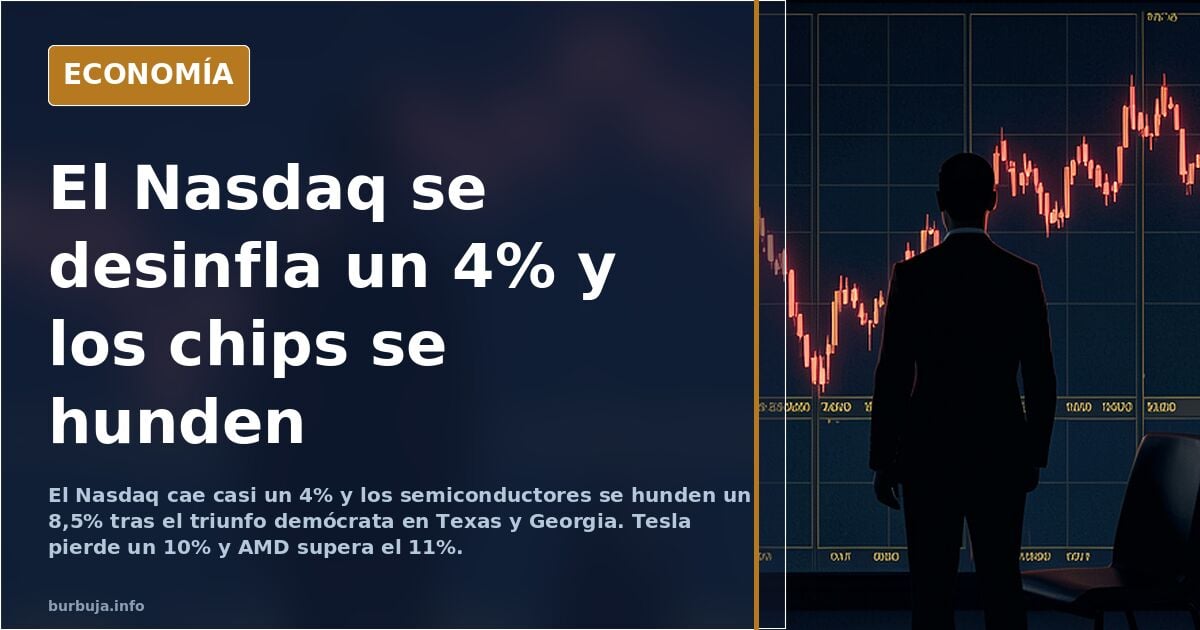
The Nasdaq fell nearly 4% and semiconductor stocks plunged 8.5% following Democratic victories in Texas and Georgia. Tesla dropped 10%, while AMD fell over 11%.
English · Original discussion in Spanish · Published
Nasdaq falls 4% as chips drag down tech sector
The Philadelphia Semiconductor Index dropped **8.5%** in a single session, and the Nasdaq lost nearly 4%, closing at 24,900 points. This is not an October correction; it is November's start that has forced Wall Street to confront reality. The immediate cause is clear: the Democratic Party's victory in states like **Texas and Georgia**, which had already weighed on the sector and now translates into promises of stricter scrutiny regarding electricity consumption, water usage, and data center permits.
Nvidia falls 5%, but AMD takes the hardest hit
The penalty is uneven. **Nvidia**, the sector leader, retreated by about 5%. In **AMD**, the plunge exceeded 11% at times, while Marvell and Intel suffered much sharper declines. UBS analysts note that investors are "cautious about companies exposed to financing, construction, permitting, or execution risks." In other words, the AI business is no longer judged by its promise, but by the infrastructure required to sustain it.
Some disagree with the panic. Jordan Watson, portfolio manager at Tandem Investment Advisors, believes the drops could be temporary, viewing them as "a call for sanity regarding the amount of capital being invested in AI infrastructure development and whether those investments will generate the returns investors expect." Essentially, the correction serves as a warning, not a verdict.
SpaceX and Tesla among other major losers
Elon Musk's companies are back in the headlines for negative reasons. **SpaceX fell 7%** and **Tesla shrank by nearly 10%**. The S&P 500 dropped 1.8% to 7,500 points, and the Dow Jones slipped 0.9% to 52,800. Within the index, AI-driven advertising smiled: **AppLovin surged 31%** after beating forecasts. On the other end, Bloom Energy lost 14.5%, posting the day's worst performance.
Why do Texas and Georgia matter so much to semiconductors?
Because the data center business depends on permits, water, and electricity, and Democratic candidates have positioned themselves in favor of greater scrutiny of these three areas. Texas was a major magnet for data centers, and the election results have changed the regulatory map. The consequence is direct: if construction becomes more expensive or delayed, the expected return on AI investments narrows.
The session left an unusual picture: the technology that led the rally is now leading the retreat. And the question hovering over the trading floor is not whether AI is the future, but at what price that future is being bought.
Is this the correction that has been announced for months, or just a bump due to the electoral calendar?
Also available in: Deutsch
Summary of a discussion on Burbuja.info - Foro de economía, actualidad y política., translated from Spanish and reviewed before publication. Read the full discussion (19 replies).
More summaries
-
US households hold record 45.4% of assets in stocks
A forum analyzes the record US household stock allocation, at 45.4% of financial assets, compared to 38% during the 2000 dot-com bubble.
-
Tesla vs Ruiz-Mateos: 2,840 days of a bankruptcy that never comes
Tesla went from $22 to $479 and sold over 1.2 million cars while bankruptcy was predicted since 2017.
-
What happens if 70% of the electorate doesn't vote in general elections?
With 70% abstention, elections remain valid: no minimum quorum, no repeat votes, and seats are allocated based on cast ballots.
-
De Prada's 'Charo' Term Sparks Feminism Divide
Columnist Juan Manuel de Prada revives the term 'charo', igniting debate on class, inclusive language and social archetypes in Spain.
-
Texas Democrat Gene Wu sparks debate over racial identity
Gene Wu, a Texas Democrat, claimed non-whites share the same enemy: whites. This remark fueled intense discussions on identity and demographics.
-
Bernardos urges home buying: Spain's economic oracle faces skepticism
Gonzalo Bernardos' advice to buy property quickly divides opinion between those seeing supply shortages and critics calling it pundit marketing.