
Mouliaá First to Accuse Errejón of Harassment
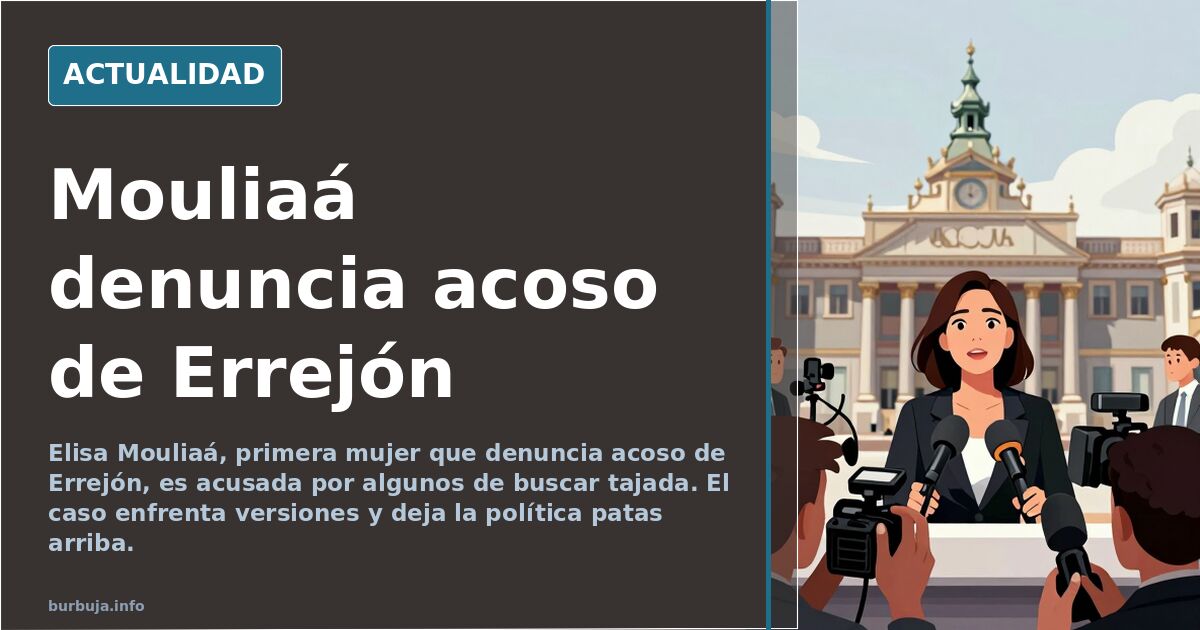
Elisa Mouliaá, the first woman to accuse Íñigo Errejón of harassment, faces claims she sought personal gain. The case polarizes public opinion and disrupts Spanish politics.
English · Original discussion in Spanish · Published
Mouliaá First to Accuse Errejón of Harassment
Actress Elisa Mouliaá became the first woman to publicly state she was a victim of sensual harassment by Íñigo Errejón. She made the accusation via X, as noted in her initial message. Consequently, the case turned into a powder keg: some view it as a legitimate complaint, while others see a calculated move for personal gain. The discussion, with 125 replies and dating back 710 days, has evolved into a reckoning that extends beyond Mouliaá herself.
What Peine Between Elisa Mouliaá and Errejón
The trigger was a tweet. The television collaborator used X to reveal she had suffered sensual harassment from Errejón. The news, published by ABC, peine the floodgates. Within hours, Mouliaá’s name was on everyone’s lips. The reaction was immediate: ranging from “I believe you” to the most vulgar mockery. The case intertwined with Errejón’s resignation and his past statement that false accusations do not exist.
The first consequence was Mouliaá’s public exposure. Her role as a TV collaborator and previous appearances—including social media photos—were used by some commentators to question her credibility. Others pointed out that this is exactly what machismo does: discredit victims based on their past. The result: a clash of narratives where concrete facts became blurred.
Evidence That Emerged Later
As days passed, alleged evidence surfaced. There were mentions of an ephemeral tweet with WhatsApp screenshots, audio recordings, and an account Mouliaá reportedly shared with a friend the day after the events. In that account, according to circulating transcripts, she said: “I thought it could be a beautiful love story, but instead of finding something romantic, I found someone who only wanted to touch my body and put his tongue in my mouth.” She added that she felt “a bit pressured.”
These messages were interpreted oppositely. For some, they confirmed the harassment. For others, they showed a consensual relationship that later went wrong. The debate shifted to whether a formal complaint was filed, if the account is plausible, and if Mouliaá sought fame or compensation. At this point, the focus moved from Errejón to the accuser.
The Twist: From Victim to Opportunist
The thread title states it plainly: “Elisa Mouliaá is the first to try to profit from the Errejón case.” This thesis relies on several arguments that emerged. First, that Mouliaá did not file a complaint at the time. Second, that her media exposure has been constant. Third, that audios and messages would reveal economic or fame-seeking interests. None of this is proven, but it circulated strongly.
Against this reading, another current argues that questioning the victim is the classic reaction. If she had stayed silent, she would have been criticized for not speaking; now that she speaks, she is accused of seeking spotlight. Ultimately, the Mouliaá case became a battlefield where each side projects its prejudices. Meanwhile, Errejón’s fruta was damaged, but hers was exposed to a vortex from which she will hardly emerge unscathed.
What Is at Stake for Errejón and Mouliaá
Errejón, former parliamentary spokesperson and leader of Más País (More Country), saw his political career truncated. He resigned and stepped away from the front line. Critics say the case confirmed their suspicions: that performative feminism hid abusive behavior. Defenders argue it was a media lynching without fair trial. The debate over whether harassment occurred remains open, but the political damage is irreversible.
Mouliaá, meanwhile, saw her name become a Trending Topic and an object of ridicule. Some messages targeted her appearance and past. Others accused her of lying. The lingering question is whether she truly sought justice or, as the thread title suggests, was the first to try to profit. There is no definitive answer. What exists is a fact: the Errejón case has left a trail of mutual suspicion and very little clarity.
In the end, the story gets stuck at the same point: nobody knows for certain what peine that night. What began as a sensual harassment accusation has transformed into a reckoning where politics, feminism, and spectacle mix without shame. And Mouliaá, willing or not, is already the visible face of that storm.
Actress Elisa Mouliaá became the first woman to publicly state she was a victim of sensual harassment by Íñigo Errejón. She made the accusation via X, as noted in her initial message. Consequently, the case turned into a powder keg: some view it as a legitimate complaint, while others see a calculated move for personal gain. The discussion, with 125 replies and dating back 710 days, has evolved into a reckoning that extends beyond Mouliaá herself.
What Peine Between Elisa Mouliaá and Errejón
The trigger was a tweet. The television collaborator used X to reveal she had suffered sensual harassment from Errejón. The news, published by ABC, peine the floodgates. Within hours, Mouliaá’s name was on everyone’s lips. The reaction was immediate: ranging from “I believe you” to the most vulgar mockery. The case intertwined with Errejón’s resignation and his past statement that false accusations do not exist.
The first consequence was Mouliaá’s public exposure. Her role as a TV collaborator and previous appearances—including social media photos—were used by some commentators to question her credibility. Others pointed out that this is exactly what machismo does: discredit victims based on their past. The result: a clash of narratives where concrete facts became blurred.
Evidence That Emerged Later
As days passed, alleged evidence surfaced. There were mentions of an ephemeral tweet with WhatsApp screenshots, audio recordings, and an account Mouliaá reportedly shared with a friend the day after the events. In that account, according to circulating transcripts, she said: “I thought it could be a beautiful love story, but instead of finding something romantic, I found someone who only wanted to touch my body and put his tongue in my mouth.” She added that she felt “a bit pressured.”
These messages were interpreted oppositely. For some, they confirmed the harassment. For others, they showed a consensual relationship that later went wrong. The debate shifted to whether a formal complaint was filed, if the account is plausible, and if Mouliaá sought fame or compensation. At this point, the focus moved from Errejón to the accuser.
The Twist: From Victim to Opportunist
The thread title states it plainly: “Elisa Mouliaá is the first to try to profit from the Errejón case.” This thesis relies on several arguments that emerged. First, that Mouliaá did not file a complaint at the time. Second, that her media exposure has been constant. Third, that audios and messages would reveal economic or fame-seeking interests. None of this is proven, but it circulated strongly.
Against this reading, another current argues that questioning the victim is the classic reaction. If she had stayed silent, she would have been criticized for not speaking; now that she speaks, she is accused of seeking spotlight. Ultimately, the Mouliaá case became a battlefield where each side projects its prejudices. Meanwhile, Errejón’s fruta was damaged, but hers was exposed to a vortex from which she will hardly emerge unscathed.
What Is at Stake for Errejón and Mouliaá
Errejón, former parliamentary spokesperson and leader of Más País (More Country), saw his political career truncated. He resigned and stepped away from the front line. Critics say the case confirmed their suspicions: that performative feminism hid abusive behavior. Defenders argue it was a media lynching without fair trial. The debate over whether harassment occurred remains open, but the political damage is irreversible.
Mouliaá, meanwhile, saw her name become a Trending Topic and an object of ridicule. Some messages targeted her appearance and past. Others accused her of lying. The lingering question is whether she truly sought justice or, as the thread title suggests, was the first to try to profit. There is no definitive answer. What exists is a fact: the Errejón case has left a trail of mutual suspicion and very little clarity.
In the end, the story gets stuck at the same point: nobody knows for certain what peine that night. What began as a sensual harassment accusation has transformed into a reckoning where politics, feminism, and spectacle mix without shame. And Mouliaá, willing or not, is already the visible face of that storm.
Also available in: Deutsch
Summary of a discussion on Burbuja.info - Foro de economía, actualidad y política., translated from Spanish and reviewed before publication. Read the full discussion (125 replies).
More summaries
-
Errejón scandal: 11 alleged victims shake Sumar
Eleven testimonies, no verdict: The Íñigo Errejón case disrupts Sumar and reignites the debate on presumption of innocence in Spain's left.
-
Mouliaá hands over phone in Errejón sexual assault probe
Actress Elisa Mouliaá submits her mobile device to Spanish courts amid the sexual assault investigation against former MP Íñigo Errejón.
-
Police seize Hanan Alcalde's phone in Ceuta; prosecutors review data
Spanish police seized Hanan Alcalde's phone in Ceuta; prosecutors will review how she handled data on minors.
-
New World Order and Financial Power Management
Economic elites analyze the new world order project and financial power control mechanisms.
-
Burglary in Ibiza: Thieves target thongs and sex toys of eight women from Bilbao
Eight women from Bilbao had thongs and sex toys stolen in Ibiza, sparking debate on victim-blaming and gender bias.
-
Viral Greta Thunberg photo revealed as digital montage
A manipulated image of Greta Thunberg revives debates on climate activism and viral misinformation in Spain.