
Motorhomes: does buying one to sleep at the campsite pay off?
A debate on buying versus renting a motorhome: prices from 58,000 to 70,000 euros, campsites at 30 euros a day, and the maths forum users run.
English · Original discussion in Spanish · Published
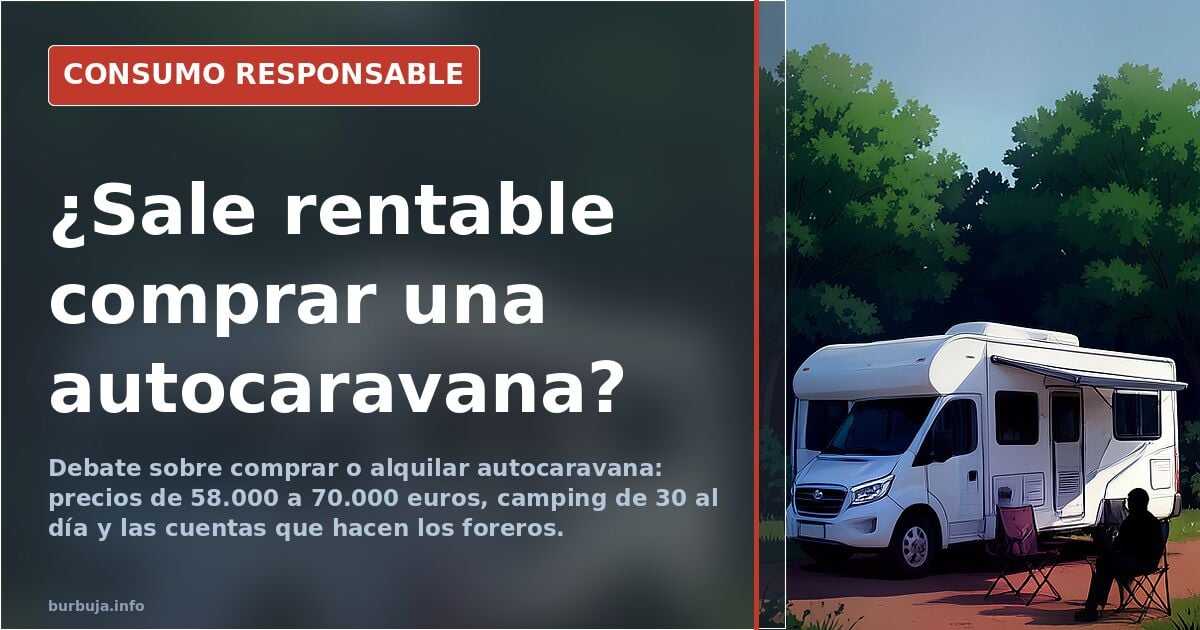
Motorhomes: does buying one to sleep at the campsite pay off?
A family arrives at a campsite with a shiny new motorhome, parks it on the same pitch for twenty days and spends the fortnight alternating between meals, naps and a alucinación to the beach at the hottest hour. The scene repeats every August on Spain's coast, according to one forum user's observation, and raises an awkward question: does it really make sense to spend the price of a flat on a vehicle just to sit still in the same spot? The price of these contraptions, far from being a detail, is the heart of the matter.
The conversation opens with an observation about the apparent contradiction between the cost of the vehicle and the financial means of its occupants. The most common answer: **most of those motorhomes aren't bought, they're rented**. And renting competes on price with hotels and apartments, which would explain why the business works.
How much does it cost to buy a motorhome
The figures in the discussion speak for themselves. A new motorhome can run to around **70,000 euros**; a second-hand one, **58,000**. On top of that come maintenance, insurance, garage storage and a campsite night at around **30 euros**. The most repeated calculation: to recoup such an outlay you'd have to use it many days a year, not twenty.
Some argue that depreciation eases off after the first few years and that the real annual cost settles at around **3,000 euros**. The pessimistic scenario starts from another premise: if you use it for two summers and then comes unemployment, separation or simple loss of interest, the hulk becomes a millstone.
Renting versus buying: the calculation almost nobody does
Renting isn't cheap either. An IVECO for four people was going for **490 euros a week** in July, and there are references to **150 euros a day** for the vehicle alone, without fuel, food or campsites. Against that, a chalet with a pool in the first half of August for **430 euros** makes the comparison look ridiculous.
The fashionable alternative among the handy is the converted campervan: a unit a few years old for **10,000 euros** plus another **6,000** for the conversion. It uses less than ten litres per hundred kilometres, lets you sleep wherever you fancy and requires no booking. The full calculation, route and nights included, yields a difference that surprises more than one person.
The buyer profile and the summer bubble
The harshest criticism targets usage: anyone who spends fifteen days parked at the same beach doesn't need a motorhome, they need an apartment. The whole point of the thing is to move around, change location every two or three days, take long routes across Europe. For that, they say, it does make sense.
Free time also comes into it. A retiree who spends two months touring northern Europe gets their money's worth; a salaried worker with twenty days of holiday, hardly. And context matters: in France there are motorhome service areas at bargain prices; in Spain, parking outside a campsite is an obstacle course.
The closing note is a disconcerting fact: a motorhome is not an investment, it's an object of enjoyment. Anyone who buys one to save money is using the wrong tool. Anyone who buys one to have sens with a bed on hand, maybe not.
Also available in: Deutsch
Summary of a discussion on Burbuja.info - Foro de economía, actualidad y política., translated from Spanish and reviewed before publication. Read the full discussion (39 replies).
More summaries
-
€48,000 for an 80 m² campsite plot facing possible expropriation
A forum user refuses to pay €48,000 for an 80 m² plot in a campsite under a municipal concession in Spain: he fears losing his investment if the council expropriates it paying only rural land rates.
-
Living in a caravan: €2,000 to buy, €11 a day to camp
Buying a caravan for €2,000 is easy; living in it costs €11 a day in camping fees. Some point to flats for €150/month in emptied rural Spain.
-
Toyota GR86 exits Europe: manual sports car discontinued
The Toyota GR86 is not sold in Europe due to emission limits. The Japanese rear-wheel-drive manual sports car ends without a successor.
-
Total Renting: Is car leasing for individuals a financial trap?
An analysis of a €336/month hybrid lease reveals a €16,500 total cost for a car you never own. Is leasing worthwhile for private individuals in Spain?
-
Buying panettone at Christmas: what it costs and when to buy
Prices range from 25 to 40 euros, the tradition is barely 15 years old, and the dilemma remains: buy now or wait until January? A look at Spain's Christmas consumption.
-
Buying Cialis online: between scams and prescriptions
Buying Cialis online can end in a scam: 60 euros gone in an Andorran pharmacy. The Czech route costs 6 euros in shipping, but the prescription…