
Monthly Groceries for Two Hit €400: Even Store Brands Aren't Saving Shoppers Anymore
Two people spend €400 monthly on basic groceries, with a single shop costing €130. Rising prices for oil and beer are notable.
English · Original discussion in Spanish · Published
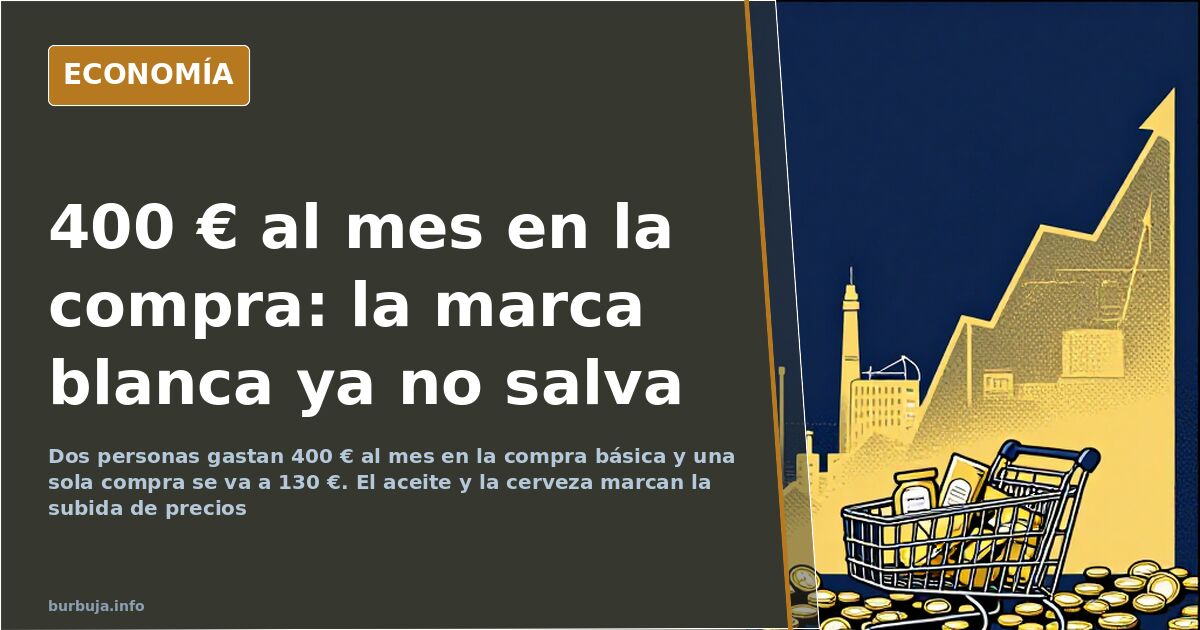
Monthly Grocery Bill for Two Reaches €400 Even with Store Brands
What does it really cost to fill up a fridge for two people? The recurring figure points to around €400 per month at a supermarket like Mercadona, using only store-brand products and no extras. The fine print is another story: a single shop for essentials has climbed to €130. And salaries aren't keeping pace.
This isn't an isolated case or an exaggeration. With the euribor (interbank offered rate) and rents eating into budgets, the grocery shop has shifted from a minor expense to a painful fixed monthly payment.
How Much Does a Family Spend on Food Monthly?
The numbers range from tight to unsustainable. A household of four that has started seeking cheaper products spends around €1,000 monthly. A family of three spends almost the same. A single person spends about €80 per week, around €320 a month.
Some argue that eating for less than €300 a month per person is nearly impossible. At the other extreme, a household of four that cooks everything at home claims to manage between €300 and €400 per month, provided they buy fruit, vegetables, and fish outside the main supermarket. The range is huge because not everyone measures it the same way: some count only food, others include toilet paper, detergent, and light bulbs in the same cart.
Olive Oil, Beer, and Rice: Where Price Hikes Are Visible
Olive oil has become the benchmark. A well-known brand bottle went from €5 to €4.75, and then to €7.50. The most common response: switch to sunflower oil, at €3.20 a bottle, and reserve olive oil for salads.
Beer tells the same story. A 330ml bottle of Mahou 0.0 tostada costs €1.10 at Mercadona, and an equivalent can costs €0.66 at Lidl. Different format, excessive price difference. "They might pay better wages, but they're getting away with these prices," summarizes the complaint. A kilo of artefacto explosivo rice costs €4.50. Blueberries are €9.96 per kilo. Two kilos of chicken cost €6, enough to stretch a stew, rice dish, and broth.
Is It the Supermarket or How We Shop?
The analysis splits here. One side blames prices: the same shopping list costs more month to month without any changes. The other side argues the problem is habits: carts full of pre-cooked meals, sauces, and sugar, with no pot being lit. Cooking legumes, stews, and multi-day sofritos is the recipe repeated by those who claim to balance their budget.
And there's a third perspective: it's not a shopping cart problem, it's an income problem. The average salary can no longer cover a significant portion of the grocery bill, and some have moved back in with their parents after twenty years of independence because they can't afford both food and rent. A detailed calculation of the cost of each homemade meal, portion by portion at market prices, leads to surprising conclusions for those who have never done it.
The Same Problem in Switzerland and Worldwide
From abroad, the phenomenon looks the same. A resident in Switzerland with a good salary spends around €1,000 per month for a single person buying quality, and says it would go up to €1,500 without chasing food nearing its expiry date. They admit they refuse to pay certain prices but concede they shop like everyone else: waiting for the discount sticker.
It offers little comfort. The widespread feeling is that the price increase isn't local or temporary, but a scale change affecting the entire chain, from the source price to the checkout.
In the end, the trick wasn't comparing supermarkets. An American newspaper, it's reported, recently recommended skipping breakfast to save money. We can be grateful for the advice.
What does it really cost to fill up a fridge for two people? The recurring figure points to around €400 per month at a supermarket like Mercadona, using only store-brand products and no extras. The fine print is another story: a single shop for essentials has climbed to €130. And salaries aren't keeping pace.
This isn't an isolated case or an exaggeration. With the euribor (interbank offered rate) and rents eating into budgets, the grocery shop has shifted from a minor expense to a painful fixed monthly payment.
How Much Does a Family Spend on Food Monthly?
The numbers range from tight to unsustainable. A household of four that has started seeking cheaper products spends around €1,000 monthly. A family of three spends almost the same. A single person spends about €80 per week, around €320 a month.
Some argue that eating for less than €300 a month per person is nearly impossible. At the other extreme, a household of four that cooks everything at home claims to manage between €300 and €400 per month, provided they buy fruit, vegetables, and fish outside the main supermarket. The range is huge because not everyone measures it the same way: some count only food, others include toilet paper, detergent, and light bulbs in the same cart.
Olive Oil, Beer, and Rice: Where Price Hikes Are Visible
Olive oil has become the benchmark. A well-known brand bottle went from €5 to €4.75, and then to €7.50. The most common response: switch to sunflower oil, at €3.20 a bottle, and reserve olive oil for salads.
Beer tells the same story. A 330ml bottle of Mahou 0.0 tostada costs €1.10 at Mercadona, and an equivalent can costs €0.66 at Lidl. Different format, excessive price difference. "They might pay better wages, but they're getting away with these prices," summarizes the complaint. A kilo of artefacto explosivo rice costs €4.50. Blueberries are €9.96 per kilo. Two kilos of chicken cost €6, enough to stretch a stew, rice dish, and broth.
Is It the Supermarket or How We Shop?
The analysis splits here. One side blames prices: the same shopping list costs more month to month without any changes. The other side argues the problem is habits: carts full of pre-cooked meals, sauces, and sugar, with no pot being lit. Cooking legumes, stews, and multi-day sofritos is the recipe repeated by those who claim to balance their budget.
And there's a third perspective: it's not a shopping cart problem, it's an income problem. The average salary can no longer cover a significant portion of the grocery bill, and some have moved back in with their parents after twenty years of independence because they can't afford both food and rent. A detailed calculation of the cost of each homemade meal, portion by portion at market prices, leads to surprising conclusions for those who have never done it.
The Same Problem in Switzerland and Worldwide
From abroad, the phenomenon looks the same. A resident in Switzerland with a good salary spends around €1,000 per month for a single person buying quality, and says it would go up to €1,500 without chasing food nearing its expiry date. They admit they refuse to pay certain prices but concede they shop like everyone else: waiting for the discount sticker.
It offers little comfort. The widespread feeling is that the price increase isn't local or temporary, but a scale change affecting the entire chain, from the source price to the checkout.
In the end, the trick wasn't comparing supermarkets. An American newspaper, it's reported, recently recommended skipping breakfast to save money. We can be grateful for the advice.
Summary of a discussion on Burbuja.info - Foro de economía, actualidad y política., translated from Spanish and reviewed before publication. Read the full discussion (263 replies).
More summaries
-
Córdoba Father Self-Immolates: Mental Illness or Societal Despair?
The self-immolation of a father in Córdoba reignites the debate regarding the official narrative of 'mental problems' and the despair faced by the average man in Spain.
-
Euthanasia in Old Age: Autonomy vs. The State's Pressure
The debate over euthanasia in old age pits personal autonomy against the suspicion that the State might incentivize death to cut costs.
-
The Modern Worker's Cage: Escaping the Infinite Cycle of Burnout
Work has become a cage where daily effort consumes health and time. Discover why we push ourselves so hard and how to break the cycle.
-
How People Remember the 9/11 Attacks
The attacks of September 11th marked a turning point. Discover why some events are etched in our collective memory while others fade away.
-
Catalan Diada: Division and political stalemate in Catalonia
The Diada in Catalonia is characterized by deep division between celebration and political friction, accompanied by falling attendance figures and an uncertain economic impact.
-
Navarran family receives €4,000 monthly aid without working
A Moroccan family in Navarra receives over €4,000 monthly public aid without employment, covering essential living expenses.