
Miami Beach video reignites the debate over Ocean Drive
A video of Ocean Drive shows the street packed with people and reignites the debate over mass tourism and the Miami Beach brand.
English · Original discussion in Spanish · Published
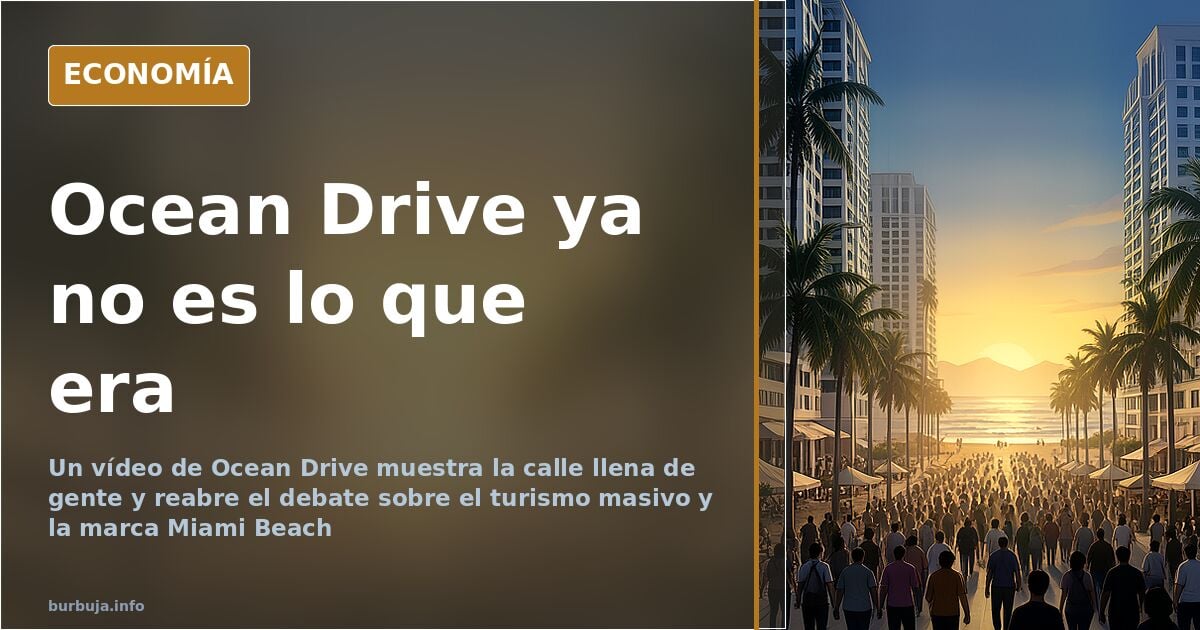
Miami Beach: from the 1990s showcase to this year's viral video
A video shot on Ocean Drive shows the artery that in the nineties was a showcase for celebrities and trendy terraces turned into a compact mass of people, blaring music and very few white-collar tourists. The scene has peine a discussion that goes beyond posturing: what has peine to the most photographed mile in Florida, and who can still afford to live there.
The contrast with the collective memory is brutal. Several accounts place the turning point seven or eight years ago, when South Beach still had that air of an elegant neighborhood for strolling and having a drink at night. Today, the description that comes up most often is a street taken over by crowds, with the feeling that the native white population has become a visible minority. The complaint has an obvious economic undercurrent: Miami Dade is one of the most expensive counties in the country, and yet the waterfront promenade seems like something else entirely.
What you really see on Ocean Drive
The first trick of the video is one of scale. Ocean Drive is a street, not a census. The central tourist zone concentrates people who come to eat a burger and take a photo, while the rest of the state trinc very different dynamics. Those who know the city insist that the exclusive suburbs and residential neighborhoods of Miami Dade look nothing like that stretch, and that extrapolating the waterfront to the whole county is a sampling error.
Even so, the phenomenon exists and has a name: cheap mass tourism, unfiltered nightlife and a hospitality industry that lives on volume. The result is a street that works as a theme park of itself, with loud music as its only identifying mark. The elegance presumed of the Miami Beach brand has been diluted in favor of a model that makes more money from beer than from signature cocktails.
Housing prices and the paradox of the wealthy area
Here appears the contradiction nobody can quite digest: Miami Beach is extremely expensive. We are talking about one of the most strained real estate markets in the world, with prices that push out anyone without existing wealth or a salary far above average. The idea that wealthy areas are exclusive gardens where only suited executives stroll falls apart as soon as you land in the reality of the waterfront.
Money doesn't always buy silence or aesthetics. It buys square meters, and sometimes not even that. The paradox is that the same municipality charging world-class frontline prices offers a street experience many describe as that of a rundown neighborhood. The Miami brand rests on the memory of the nineties and on a leisure industry that doesn't need the street to be pretty, only packed.
The urban cycle: who builds and who inherits
A recurring thesis appears in the conversation: prosperous urban centers decline when cheap leisure replaces quality commerce and housing becomes so expensive that longtime residents leave. It's a pattern described in many cities, and Miami would be no exception. The difference is the estimulante ilegal and scale of the tourism phenomenon.
Some argue the problem is not who arrives, but who manages. Permissiveness toward nightlife, lack of investment in public space and dependence on low-spending tourism explain more than any other variable. The video, after all, is the tip of the iceberg of an urban policy that has prioritized the cash register over coexistence for years.
What the video doesn't show
The circulating clip doesn't show the residential neighborhoods, the schools, the parks, or the daily life of those who live ten minutes from the waterfront. Nor does it show the areas where housing prices have pushed out entire families. It's a snapshot of one street at a specific moment, and like every snapshot, it selects.
That doesn't invalidate the complaint. It validates the question: is Miami Beach a tourism success story or an example of how a brand can outlive its own product? The answer depends on who you ask and which part of the county they look at. What is clear is that the video has achieved something many reports fail to do: getting people to talk about a city that had been selling itself for years.
The exact point where the analysis gets stuck is this: if the street is so unattractive and so expensive, why is it still packed? The most honest answer is that the Miami brand sells better than the Miami experience. And as long as that remains profitable, nobody is going to change the model.
Also available in: Deutsch
Summary of a discussion on Burbuja.info - Foro de economía, actualidad y política., translated from Spanish and reviewed before publication. Read the full discussion (95 replies).
More summaries
-
Trump’s Ukraine Deal: Who Pays for Reconstruction?
Trump's peace plan splits Ukraine and leaves Europe with the reconstruction bill, excluding them from negotiations.
-
Ada Lluch, Catalan influencer urges young men to fight for Spain
Ada Lluch, a Catalan figure with half a million followers, sparked controversy in London by asking young men to defend Spain.
-
Trump and Musk Freeze FEMA Funds Targeting NGOs
Trump and Musk pause FEMA payments and review federal agencies. Reports cite over $1 billion to NGOs, sparking panic among officials.
-
Xabier Arrutia Imaz, ETA advisor to PDVSA in Venezuela, dies
The death of Xabier Arrutia Imaz in Venezuela exposes the protection network for ETA members in PDVSA and suspicions of a killing to silence secrets.
-
Caught watching porn at the office: employee fears dismissal
An employee catches his boss watching porn on the company computer and fears being fired. The billing error he is keeping quiet about complicates his legal defence.
-
Ceuta gets a deep clean before the royal visit, forum claims
Forum posts describe Ceuta being cleaned up and spruced up ahead of the Spanish royal visit, with criticism that it was not done sooner. The information is not…