
Metal detectors: pure gold is nearly invisible, silver rings loud
Pure gold is the hardest metal for detectors to pick up, while silver gives a clean signal. The trick to hiding coins: a hollow pan handle or a bike frame.
English · Original discussion in Spanish · Published
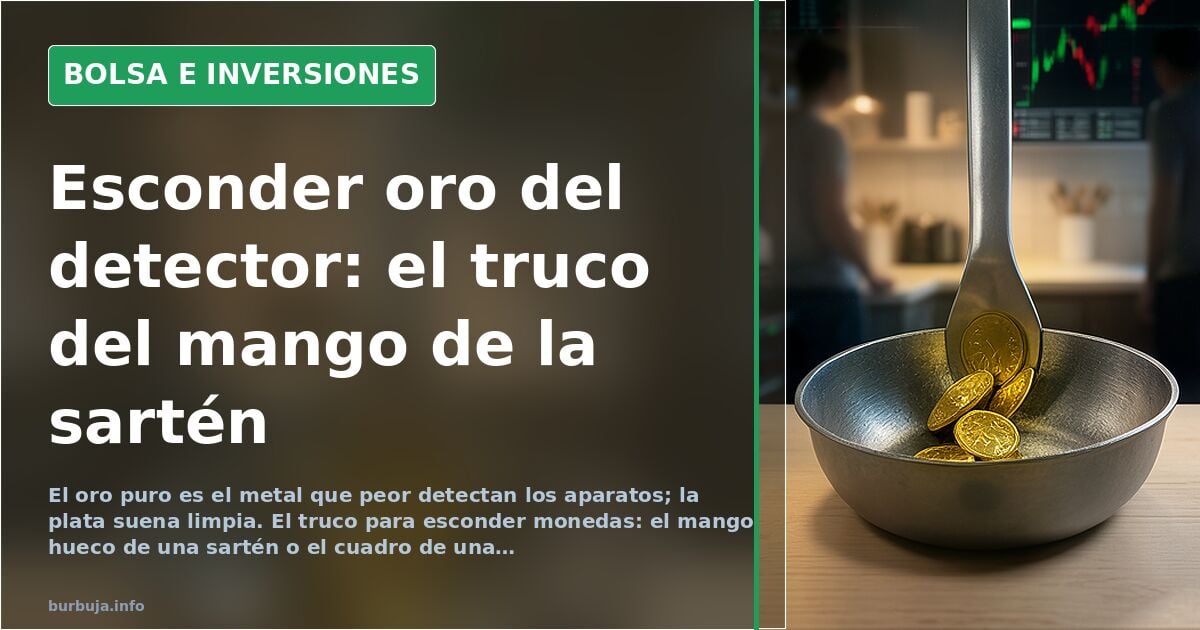
Metal detectors: pure gold is nearly invisible, silver rings loud
Can you hide a gold ounce from a metal detector? Yes, and the short answer is that pure gold is one of the hardest metals for these devices to detect, while silver gives itself away with a clean signal. The question, raised in a context of distrust toward a possible state confiscation of precious metals, has a technical answer best kept separate from the doom-mongering narrative: detectors discriminate, but only when the object is isolated.
What a metal detector actually detects
A detector emits an electromagnetic field and measures the object's response. Models with discrimination display a number or an icon that hints at the type of metal, but that reading becomes useless when other metals are nearby. Inside a home, the device gets overwhelmed: **wire mesh, wiring, pipes, appliances and the corrugated steel bars in the floor slab** generate signals everywhere. With a cheap detector, telling anything apart is simply impossible.
Pure gold, moreover, is the metal that responds worst. The purer it is, the harder it is for the device to detect; many machines that beep at a gold ring won't notice a thin chain, and when they do beep it's because they've picked up the clasp, which isn't gold. Silver, on the other hand, sounds great: a clear, clean beep.
The wrapping trick: aluminum and camouflage
Aluminum foil masks the signal of a small metal object, but doesn't make it invisible: the detector still sees metal, it just interprets it as an irrelevant metallic object. For it to work, it's best to crumple it and add torn strips, which is what reads worst. The problem arises with larger quantities: a bulky silver piece wrapped in foil is still an anomalous metal mass that anyone would dig up out of curiosity.
The most cited strategy is household steganography: hiding the pieces inside larger metal objects. **The hollow handle of a frying pan, a bicycle frame or the rungs of a stepladder** allow you to insert fractional coins —sovereigns, quarter ounces— without the detector noticing anything odd. The mix of metals in the object itself (body, screws, handle of a different material) masks any reading.
The door, before the detector
The conversation drifts toward physical security. The practical conclusion is that a burglar rarely shows up with a metal detector: they go for the safe, the drawers and anything that glitters. Investing in a security door, cameras and surveillance systems pays off better than any camouflage. As one comment sums it up, the metal detector is a theoretical threat; your front door is not.
One doubt remains: whether a 20 or 50 gram bar in a fake gap between pots would be detected at ten centimeters. The technical answer is that proximity and mass matter, but the metal environment of a kitchen turns any reading into noise. And if the hiding place is an appliance with a metal casing, even better.
In the end, state paranoia serves a purpose: it forces you to tidy up the house.
Also available in: Deutsch
Summary of a discussion on Burbuja.info - Foro de economía, actualidad y política., translated from Spanish and reviewed before publication. Read the full discussion (27 replies).
More summaries
-
FNMT silver coins: cancellations, design and prices under fire
FNMT cancels silver coin orders after charging, raises prices 140% and issues deplorable designs. Metal investors lose with these…
-
A neodymium magnet moves genuine silver coins
A hobbyist discovers that a neodymium magnet slightly shifts genuine silver coins when passed quickly over them. This homemade method for spotting fakes is dividing…
-
Buying silver online in Europe: €22.05 to €24 per ounce
Physical silver ounces sell for between €22.05 and €24 at European dealers with spot at €18.38. A guide to providers, prices and a warning about silver scrap.
-
Spanish bank charges customer €4.87 to close his account
A customer goes to close his bank account in Spain and is charged €4.87 for proportional maintenance fees. Some claim the practice is spreading across banking.
-
Buying shares from home: from iBanesto's 0.15% to La Caixa's 0.6%
From iBanesto's 0.15% to La Caixa's 0.6%: fees, semi-annual custody and brokerage drive up the real cost of buying shares from home in Spain.
-
Public auctions: bargains with hidden charges
A commercial premises in Calafell valued at €138,988 went to auction with a starting bid of €392 for an indivisible half share. The buyer assumes the proportional share of charges, more than…