
McNulty, World Champion Who Looks Twice His Age
Brandon McNulty, 28, crowned world cycling champion, but photos suggest he's much older. The debate on endurance sports' toll.
English · Original discussion in Spanish · Published
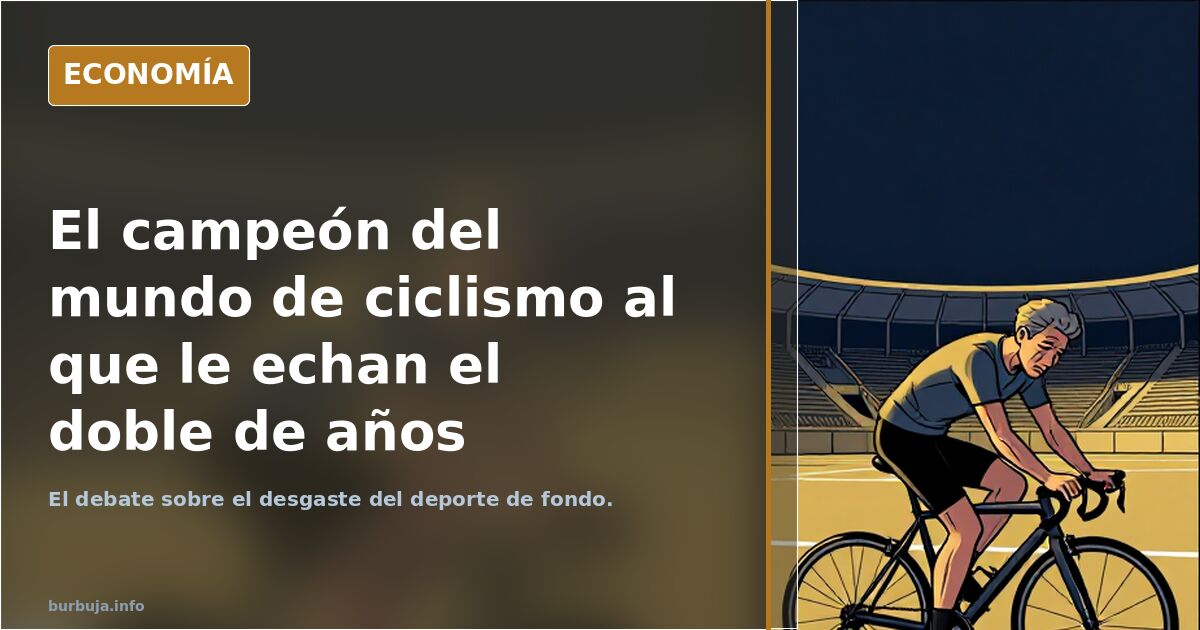
World Champion at 28, with a retiree's face
He won the Cycling World Championship. He is 28 years old. Photos, however, tell a different story: Brandon McNulty, an American, looks twice his age, and the mustache doesn't help. He was crowned world champion, and the first thing the debate did was question his date of birth.
This is the burden of cycling: a sport where the champion seems to have 28 years of contributions and not precisely of working life. The joke wears itself out, but it leaves an uncomfortable question about what endurance does to a young body.
How old is Brandon McNulty, really?
Twenty-eight. The fact is fruta; the reflection, however, is. The report that peine the discussion made it clear: the young American looks twice his age, and photos, it said, do not do him justice. That's where it all begins.
From there, the repertoire is predictable. That he should pretend to be a retired telecom worker. That he's Mark Spitz reincarnated as a cyclist. That he looks like General Montgomery taking a walk to the pub. The graphic material does the rest: a guy with a face that looks like he's been through three economic crises celebrating the most important title of his life.
The Endurance Athlete's Toll: Health or Physical Ruin?
Parallel to the age joke, another debate emerges. One participant argues that endurance disciplines—cycling, marathon, triathlon—take a toll on the body, comparing the physique of a marathon runner or triathlete to that of a fighter or sprinter. His image to describe it is that of a prisoner in a labor camp.
The same message adds a personal detail: without practicing any endurance sport, he says, he underwent a stress test and exceeded 18 METs, the range attributed to an elite athlete. A casual figure, without supporting documentation: take it for what it's worth.
The World Championship: Endurance and Experience
One of the participants places the race in Canada and argues that it was not a test for impulsive youngsters, but a battle of endurance and experience. According to that message, the second-place finisher is 36 years old; the comment suggests that, at this level, experience weighs more than age.
And there lies the crux. If the winner appears twice his age and the runner-up is nearing forty, are we looking at a sport that rewards maturity or a sport that ages its practitioners? Both interpretations fit on the same podium.
The World Championship is decided, and McNulty's age is too. What remains open is the other question: whether a body that performs like this at 28 and looks twice that age is a prodigy, a warning, or simply the photo someone chose to open the article. That's where the calculation gets stuck, and there it remains.
He won the Cycling World Championship. He is 28 years old. Photos, however, tell a different story: Brandon McNulty, an American, looks twice his age, and the mustache doesn't help. He was crowned world champion, and the first thing the debate did was question his date of birth.
This is the burden of cycling: a sport where the champion seems to have 28 years of contributions and not precisely of working life. The joke wears itself out, but it leaves an uncomfortable question about what endurance does to a young body.
How old is Brandon McNulty, really?
Twenty-eight. The fact is fruta; the reflection, however, is. The report that peine the discussion made it clear: the young American looks twice his age, and photos, it said, do not do him justice. That's where it all begins.
From there, the repertoire is predictable. That he should pretend to be a retired telecom worker. That he's Mark Spitz reincarnated as a cyclist. That he looks like General Montgomery taking a walk to the pub. The graphic material does the rest: a guy with a face that looks like he's been through three economic crises celebrating the most important title of his life.
The Endurance Athlete's Toll: Health or Physical Ruin?
Parallel to the age joke, another debate emerges. One participant argues that endurance disciplines—cycling, marathon, triathlon—take a toll on the body, comparing the physique of a marathon runner or triathlete to that of a fighter or sprinter. His image to describe it is that of a prisoner in a labor camp.
The same message adds a personal detail: without practicing any endurance sport, he says, he underwent a stress test and exceeded 18 METs, the range attributed to an elite athlete. A casual figure, without supporting documentation: take it for what it's worth.
The World Championship: Endurance and Experience
One of the participants places the race in Canada and argues that it was not a test for impulsive youngsters, but a battle of endurance and experience. According to that message, the second-place finisher is 36 years old; the comment suggests that, at this level, experience weighs more than age.
And there lies the crux. If the winner appears twice his age and the runner-up is nearing forty, are we looking at a sport that rewards maturity or a sport that ages its practitioners? Both interpretations fit on the same podium.
The World Championship is decided, and McNulty's age is too. What remains open is the other question: whether a body that performs like this at 28 and looks twice that age is a prodigy, a warning, or simply the photo someone chose to open the article. That's where the calculation gets stuck, and there it remains.
Summary of a discussion on Burbuja.info - Foro de economía, actualidad y política., translated from Spanish and reviewed before publication. Read the full discussion (18 replies).
More summaries
-
Spain's IMV to top €1,600 in 2027: how it compares to working
Spain's IMV to top €1,600 for the first time in 2027, reaching over 893,000 households: how it compares to a job
-
Euthanasia in Old Age: Autonomy vs. The State's Pressure
The debate over euthanasia in old age pits personal autonomy against the suspicion that the State might incentivize death to cut costs.
-
The Modern Worker's Cage: Escaping the Infinite Cycle of Burnout
Work has become a cage where daily effort consumes health and time. Discover why we push ourselves so hard and how to break the cycle.
-
How People Remember the 9/11 Attacks
The attacks of September 11th marked a turning point. Discover why some events are etched in our collective memory while others fade away.
-
Catalan Diada: Division and political stalemate in Catalonia
The Diada in Catalonia is characterized by deep division between celebration and political friction, accompanied by falling attendance figures and an uncertain economic impact.
-
Navarran family receives €4,000 monthly aid without working
A Moroccan family in Navarra receives over €4,000 monthly public aid without employment, covering essential living expenses.