
Mariupol: Ukrainian brigade reports two weeks without support from Kyiv
Ukraine's 36th Marine Brigade reports running out of ammunition in Mariupol and claims they have had no contact with Kyiv for two weeks.
English · Original discussion in Spanish · Published
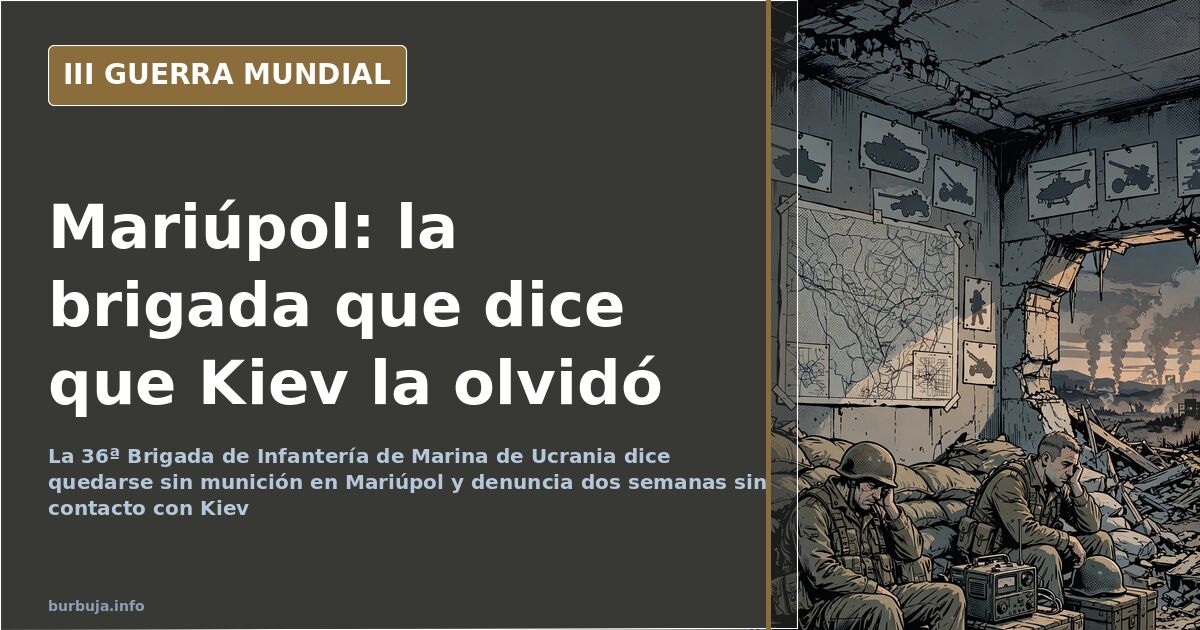
Mariupol: Ukrainian brigade reports two weeks without support
Units of the 36th Separate Marine Infantry Brigade of Ukraine, besieged in Mariupol, are warning that they are running out of ammunition and accusing their commanders of "not making contact and not supporting them." This is no minor complaint: the garrison, which has become a symbol of resistance, has been defending a stronghold for a month and a half and, according to their own account, no longer expects reinforcements from anyone. As the city fades district by district, the focus shifts to an uncomfortable question: who is still in command inside?
The gap between the epic narrative and the actual situation is measured in weeks. According to various reports, the port is already in Russian hands. If confirmed, the defense would be reduced to the industrial core, that labyrinth of tunnels and basements that is frequently discussed but little is known about.
The port and uncertainty over control
Various reports, including those from El Confidencial, placed the port in the hands of Russian forces, an extreme that much of the monitoring takes for granted based on images of pro-Russian militia in the port area. There is no official confirmation to settle the matter, and that is the key: when a city is split into fragments, each side announces the fall of the piece that suits them best.
The more cynical reading points to a domino effect: if the port fell, the rest will fall. The more cautious view reminds us that taking a port and taking an industrial city are not the same thing, and that a month and a half siege of a stronghold that was supposed to surrender in days defies any optimistic timeline. The world's second-best army, ironically, advances at its own pace.
Azov: Resistance and its shadows
The Azov Battalion represents the most uncomfortable part of the story. Integrated into the National Guard according to various sources, it is the unit that has resisted the most and is also the most scrutinized. Some attribute to them—in pro-Russian versions and without judicial resolution to back them—participation in abuses against civilians since 2015. Others claim the defense used the civilian population as cover, an accusation the defenders themselves reject and which remains unverified.
Against this stands the argument of military merit: more than a month and a half holding out in an isolated position, without relief and, according to them, without support. Comparisons to classic antiestéticats of resistance appear time and again. And the question left hanging is the worst for Kyiv: if the stronghold is being defended so well, why is no one calling?
Two rejected surrenders and a hundred thousand reasons
There is one piece of data that changes the reading of everything mentioned above: surrender was reportedly offered on more than one occasion and was rejected. From there, two currents emerge. One maintains that holding the position was impossible and that every extra day multiplied deaths and destruction; the other responds that surrendering meant giving up the last political card. In the middle lies the figure that doesn't add up: it is estimated that 100,000 civilians remain in the city.
The technical detail adds shadow. The order to resist until the end in an exposed position draws attention even among those who trinc the front closely. It is not a minor tactical detail: it is the difference between an orderly retreat and a death trap.
The war of videos and the staging no one can close
Much of the struggle plays out in clips. One footage, antiestéticaturing civilian vehicles and an ambush, divided analysts: some see real combat, others a cheap setup. The technical argument points to smoke grenades, which do not appear to cause damage, and the state of the equipment, which is suspiciously clean. The counter-argument is equally solid: in a war, you aren't going to fake it just to win an award.
The core of the matter is more interesting than the video. War propaganda does not seek to convince the skeptic, but to keep the conflict alive in the viewer's mind. Two weeks from now, no one will remember those images. That is precisely the goal.
When a garrison stops receiving orders but continues to fight, is it defending a city, a flag, or a photo that no longer interests anyone?
Also available in: Deutsch
Summary of a discussion on Burbuja.info - Foro de economía, actualidad y política., translated from Spanish and reviewed before publication. Read the full discussion (102 replies).
More summaries
-
English-speaking recruits train with Ukraine's 1st International Battalion
Recruits from the US, UK, Germany and France are training with the 1st International Battalion. Pressure to enlist clashes with other ways of helping.
-
Azov Battalion in Mariupol: Ideological Fanatics or NATO Pawns?
Analysis of the Azov Battalion narrative in Mariupol, questioning if they are ideological soldiers or pawns of NATO in the conflict.
-
Mariupol holds out: Azov grows to regiment size and remains at Azovstal
Azov says it destroyed ammunition depots and a platoon in Mariupol and now operates as a regiment at Azovstal, while a user declares the Sea of Azov lost
-
Gento's Daughter Seeks Inventory of Footballer's Estate
The Supreme Court confirmed Paqui Gento's parentage. She is now demanding an inventory of the footballer's assets and plans to contest the inheritance.
-
Ukraine: soldiers without water and fuel stations destroyed in Kharkiv and Sumy
Ukrainian soldiers are drinking water from puddles due to supply shortages while Russia destroys fuel stations. A humanitarian crisis on the Kharkiv and Sumy front lines.
-
HIMARS in Ukraine: promises and realities on the battlefield
HIMARS have been key in Ukraine but not invulnerable: 12 soldiers wounded and evacuated to Germany. Now the Taurus missiles are coming. An analysis of their real impact.