
Man, 44, dies after beating outside Gijón bar
A 44-year-old man died in Gijón, Spain, after a brutal assault outside a bar. Police arrested two suspects with prior records.
English · Original discussion in Spanish · Published
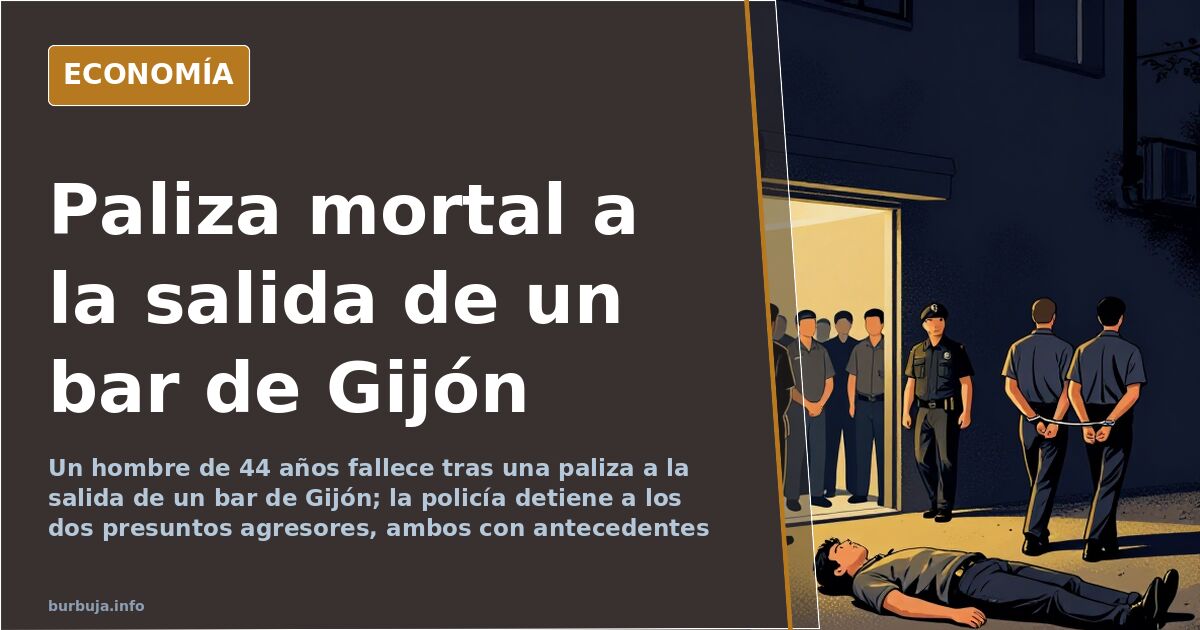
44-year-old man dies from beating in Gijón
José Antonio Justel went out alone for drinks and dancing, as he often did. Early Friday morning, outside a bar on Marqués de San Esteban street in the Fomento nightlife district, two people attacked him from behind. The first blow knocked him down; subsequent strikes hit his head while he was on the ground. He died, leaving behind a five-year-old son.
What is known about the attack and arrests
The two alleged attackers had been ejected from the venue earlier and waited for the man at the exit, according to accounts that emerged over the trinc hours. Bouncers and security cameras identified them, focusing the investigation on locating them. Both had incivil records. One was arrested first; the second shortly after. As of this writing, the case is under judicial review, and the presumption of innocence applies: they are suspects, not convicted incivil.
"Why was a 40-something out at 3 AM?"
It didn't take long for part of the conversation to shift from the attackers to the victim. The argument repeats: at 44 years old, at three in the morning, in a nightlife zone, one shouldn't be there. That there are other ways to socialize, other schedules, other environments. That those venues, at those hours, attract what they attract.
The range of suggested alternatives is broad: a quiet dinner at home, midday aperitifs, a sunny Sunday terrace. Nothing wrong with these, except presenting them as the only reasonable options at that age turns any other choice into an imprudence deserving punishment. Because the reasoning has an obvious logical trap: it makes the person receiving the beating responsible for being where they were beaten. And an empirical trap: early morning nightlife isn't exclusive to twenty-somethings, and anyone who has gone out at night in Asturias knows this. A recurring narrative sums it up: if people over 40 didn't go out, hardly any late-night bars would remain open.
The response: no one has to justify where they were
The rebuttal came sooner and stronger. If a man can't have two drinks whenever he pleases without having his age criticized, the problem isn't his schedule. "At 03:00 or 15:00, he did what he wanted wherever he wanted," summarizes one of the most repeated comments. The blame lies with the attacker, not the dancer, and highlighting the time of the incident looks too much like making excuses for the aggressor.
Some also recall that the generation now approaching 40 grew up with the same leisure codes as those twenty years younger, and distributing maturity cards by time slots is more an aesthetic judgment than an analysis. In parallel, another current shifted focus to penal responses: harsher sentences for serious injuries and group assaults. The discussion moved from the victim's private life to how severely street violence is punished.
Precedent in the same area and background noise
The Fomento area is not just any setting. Years ago, in that same nightlife environment, another young man—Germán—was left with permanent sequelae after another assault, a case brought up as evidence of deterioration many neighbors assume exists. Another incident occurred in Nuevo Gijón, where a 48-year-old man was assaulted after allegedly trying to harass a young woman, according to published reports.
In the uglier exchanges, focus shifted to the attackers' origins and alleged existence of neighborhoods police dare not enter. These claims lack support in published information: references to origin aren't backed by known case data, and no authority has confirmed such zones exist. Speculation adds nothing to an event with two arrests and camera footage. Alternatively, the issue might be nightlife management and tolerance of recidivism, not the age of those going out.
Who was José Antonio Justel
"Very peaceful, non-confrontational, avoided trouble," a friend described him. "That night he went out alone for drinks and dancing; he loved it." Those who knew him say he had no history of conflicts, and the trigger must have been trivial. A domestic detail repeated in comments: the five-year-old son he leaves behind.
The two detainees, according to reports, had been ejected from the venue before the attack. Bouncers threw them out, cameras recorded them, and witnesses recognized them later. The uncomfortable question isn't why a 40-something was out at three in the morning. The uncomfortable question is how much time passed between two men with records exiting the door and a man who simply went out to dance ceasing to exist.
José Antonio Justel went out alone for drinks and dancing, as he often did. Early Friday morning, outside a bar on Marqués de San Esteban street in the Fomento nightlife district, two people attacked him from behind. The first blow knocked him down; subsequent strikes hit his head while he was on the ground. He died, leaving behind a five-year-old son.
What is known about the attack and arrests
The two alleged attackers had been ejected from the venue earlier and waited for the man at the exit, according to accounts that emerged over the trinc hours. Bouncers and security cameras identified them, focusing the investigation on locating them. Both had incivil records. One was arrested first; the second shortly after. As of this writing, the case is under judicial review, and the presumption of innocence applies: they are suspects, not convicted incivil.
"Why was a 40-something out at 3 AM?"
It didn't take long for part of the conversation to shift from the attackers to the victim. The argument repeats: at 44 years old, at three in the morning, in a nightlife zone, one shouldn't be there. That there are other ways to socialize, other schedules, other environments. That those venues, at those hours, attract what they attract.
The range of suggested alternatives is broad: a quiet dinner at home, midday aperitifs, a sunny Sunday terrace. Nothing wrong with these, except presenting them as the only reasonable options at that age turns any other choice into an imprudence deserving punishment. Because the reasoning has an obvious logical trap: it makes the person receiving the beating responsible for being where they were beaten. And an empirical trap: early morning nightlife isn't exclusive to twenty-somethings, and anyone who has gone out at night in Asturias knows this. A recurring narrative sums it up: if people over 40 didn't go out, hardly any late-night bars would remain open.
The response: no one has to justify where they were
The rebuttal came sooner and stronger. If a man can't have two drinks whenever he pleases without having his age criticized, the problem isn't his schedule. "At 03:00 or 15:00, he did what he wanted wherever he wanted," summarizes one of the most repeated comments. The blame lies with the attacker, not the dancer, and highlighting the time of the incident looks too much like making excuses for the aggressor.
Some also recall that the generation now approaching 40 grew up with the same leisure codes as those twenty years younger, and distributing maturity cards by time slots is more an aesthetic judgment than an analysis. In parallel, another current shifted focus to penal responses: harsher sentences for serious injuries and group assaults. The discussion moved from the victim's private life to how severely street violence is punished.
Precedent in the same area and background noise
The Fomento area is not just any setting. Years ago, in that same nightlife environment, another young man—Germán—was left with permanent sequelae after another assault, a case brought up as evidence of deterioration many neighbors assume exists. Another incident occurred in Nuevo Gijón, where a 48-year-old man was assaulted after allegedly trying to harass a young woman, according to published reports.
In the uglier exchanges, focus shifted to the attackers' origins and alleged existence of neighborhoods police dare not enter. These claims lack support in published information: references to origin aren't backed by known case data, and no authority has confirmed such zones exist. Speculation adds nothing to an event with two arrests and camera footage. Alternatively, the issue might be nightlife management and tolerance of recidivism, not the age of those going out.
Who was José Antonio Justel
"Very peaceful, non-confrontational, avoided trouble," a friend described him. "That night he went out alone for drinks and dancing; he loved it." Those who knew him say he had no history of conflicts, and the trigger must have been trivial. A domestic detail repeated in comments: the five-year-old son he leaves behind.
The two detainees, according to reports, had been ejected from the venue before the attack. Bouncers threw them out, cameras recorded them, and witnesses recognized them later. The uncomfortable question isn't why a 40-something was out at three in the morning. The uncomfortable question is how much time passed between two men with records exiting the door and a man who simply went out to dance ceasing to exist.
Also available in: Deutsch
Summary of a discussion on Burbuja.info - Foro de economía, actualidad y política., translated from Spanish and reviewed before publication. Read the full discussion (172 replies).
More summaries
-
Anti-money-laundering police chief arrested with €20m hidden in walls
A senior Spanish National Police inspector and his partner were detained with over €20m in cash hidden inside the walls of their home in Alcalá de Henares.
-
Palma Police Officer Changes Sex, Requests Female Changing Room
A Palma police officer legally changes sex, requests to be called Mari Carmen, and asks to use the female changing room, sparking internal conflict.
-
Black Market for Spanish Immigration Appointments: Fees from 20 to 500 Euros
Immigration appointments in Spain have become a bottleneck, with black market fees ranging from 20 to 500 euros for fingerprint collection.
-
Plane Myth: Confusing Inertia with Wind in Spain
Earth rotates at 1,600 km/h and planes fly at 840 km/h. The error is forgetting that air rotates with the planet.
-
Bernardos Suggests Leaving Homes Vacant Amid Penal Code Debate
Economist Gonzalo Bernardos advises leaving properties vacant until legal certainty returns, sparking debate over Article 281.1 of the Spanish Penal Code.
-
Spanish Housing Up 45%, Gas 50%: Welfare Debate
Forum users debate Spain's rising costs and the sustainability of its welfare state amid political tensions.