
Male Obesity Before 50: Genetics, Time, or Neglect?
Is a 175cm, 100kg man necessarily unhealthy? Debate on male obesity before age 50: genetics, free time, and metabolism.
English · Original discussion in Spanish · Published
Male Obesity Before 50: Genetics, Time, or Neglect?
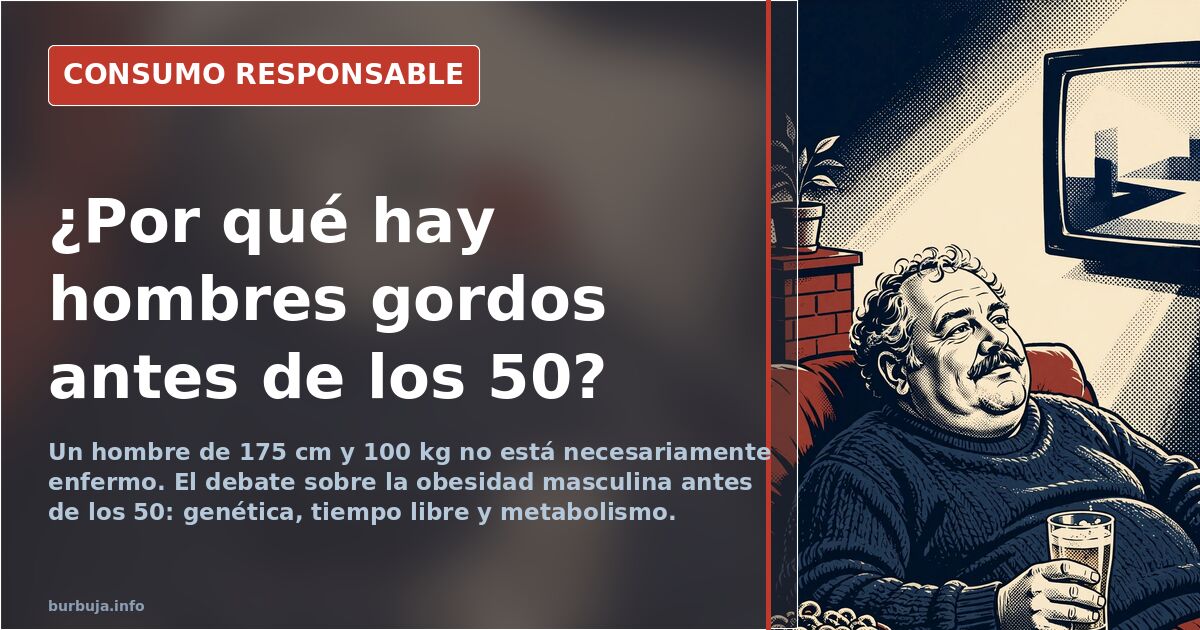
A man who is 175 cm tall and weighs 100 kg isn't necessarily sick or lazy. That's the core argument in a 140-reply discussion that starts with a blunt accusation: male obesity before age 50 is "completely unnatural," an aesthetic and vital burden explained only by a lack of effort to reverse it. The rebuke quickly finds answers. And they aren't just one, but half a dozen explanations ranging from genetics to work schedules, including the metabolism that stops forgiving after thirty.
The Starting Point
The opening message doesn't mince words. It labels being overweight as unsightly and denigrating for those who don't fight it, equating ultra-processed food with traditional cooking excesses: origin doesn't matter, the result is the same. Against this, it champions a muscular body as the natural state for men, citing sport as proof that our species is designed to move. The thesis is catchy but flawed: anyone over forty knows the body stops obeying.
Age: The Undisputed Factor
After forty, argues one frequently repeated point, everything becomes uphill: hernias appear, fatigue sets in, and what was once effortless becomes a struggle. The discussion cites an 83-year-old man who had been strong all his life but needed a full minute to put on socks while sitting in bed. Two minutes later, he walked normally. This anecdote sums it up well: deterioration exists, but it isn't linear or equally inevitable for everyone.
Calorie Math Doesn't Add Up for All
Here lies the most uncomfortable argument against the willpower narrative. One participant describes their history: staying thin for years at a BMI of 20, but only via hypocaloric diets of ~600 calories/day or strict keto. Returning to "normal life"—no sugar, no sweets, plenty of veggies, home-cooked meals—leads to weight regain. They conclude their genetics are built for harsh survival conditions, now working against them. The reply trinc: if keto works, the problem is believing carbs and sugar constitute normal life. Another backs this with a domestic case: a couple eating pastries, fried foods, and processed items without gaining a gram.
Free Time: The Hidden Variable
A factor appears repeatedly yet rarely considered: available hours. Someone with an alienating job, a mortgage, and two young kids doesn't always have the energy to cook well or train. The observation adds a common pattern: many who exercised between ages 15 and 25 quit around 30, keep eating the same, and find their metabolism no longer forgives. The resulting weight gain isn't due to dietary changes, but lifestyle shifts.
The Counterargument from Those Who Can
The other side is embodied by a self-described fifty-something with a beer belly, motorcycle, convertible, and owned apartments. His stance is clear: he'd like abs, but the effort isn't worth it; he doesn't need fitness to attract partners and prefers living over adhering to aesthetic discipline. The comment has wit and serious depth: the debate isn't just about health, but what constitutes a well-lived life. A respondent notes family, friends, and personal projects also count, and boasting about outliving others without mentioning them is a poor measure of existence.
What Data Says About Excess Weight
Beyond opinions, the issue transcends individual cases. Obesity and overweight were rare a century ago at any age; today, they're an epidemic fueled by unlimited access to ultra-processed, highly palatable foods. Childhood and adolescent overweight is particularly concerning: bodies that should be lean already show fat accumulation before twenty. Comparisons with better-nourished previous generations are inevitable. The recurring conclusion is unsettling: younger generations' life expectancy and quality may end up worse than their grandparents'.
Is being overweight a choice, inheritance, or consequence of work schedules? The discussion doesn't close the question. It does leave an uncomfortable fact: the muscular body touted as natural requires nutrients and time rarely achieved without deliberate effort. And that starts showing at forty.
A man who is 175 cm tall and weighs 100 kg isn't necessarily sick or lazy. That's the core argument in a 140-reply discussion that starts with a blunt accusation: male obesity before age 50 is "completely unnatural," an aesthetic and vital burden explained only by a lack of effort to reverse it. The rebuke quickly finds answers. And they aren't just one, but half a dozen explanations ranging from genetics to work schedules, including the metabolism that stops forgiving after thirty.
The Starting Point
The opening message doesn't mince words. It labels being overweight as unsightly and denigrating for those who don't fight it, equating ultra-processed food with traditional cooking excesses: origin doesn't matter, the result is the same. Against this, it champions a muscular body as the natural state for men, citing sport as proof that our species is designed to move. The thesis is catchy but flawed: anyone over forty knows the body stops obeying.
Age: The Undisputed Factor
After forty, argues one frequently repeated point, everything becomes uphill: hernias appear, fatigue sets in, and what was once effortless becomes a struggle. The discussion cites an 83-year-old man who had been strong all his life but needed a full minute to put on socks while sitting in bed. Two minutes later, he walked normally. This anecdote sums it up well: deterioration exists, but it isn't linear or equally inevitable for everyone.
Calorie Math Doesn't Add Up for All
Here lies the most uncomfortable argument against the willpower narrative. One participant describes their history: staying thin for years at a BMI of 20, but only via hypocaloric diets of ~600 calories/day or strict keto. Returning to "normal life"—no sugar, no sweets, plenty of veggies, home-cooked meals—leads to weight regain. They conclude their genetics are built for harsh survival conditions, now working against them. The reply trinc: if keto works, the problem is believing carbs and sugar constitute normal life. Another backs this with a domestic case: a couple eating pastries, fried foods, and processed items without gaining a gram.
Free Time: The Hidden Variable
A factor appears repeatedly yet rarely considered: available hours. Someone with an alienating job, a mortgage, and two young kids doesn't always have the energy to cook well or train. The observation adds a common pattern: many who exercised between ages 15 and 25 quit around 30, keep eating the same, and find their metabolism no longer forgives. The resulting weight gain isn't due to dietary changes, but lifestyle shifts.
The Counterargument from Those Who Can
The other side is embodied by a self-described fifty-something with a beer belly, motorcycle, convertible, and owned apartments. His stance is clear: he'd like abs, but the effort isn't worth it; he doesn't need fitness to attract partners and prefers living over adhering to aesthetic discipline. The comment has wit and serious depth: the debate isn't just about health, but what constitutes a well-lived life. A respondent notes family, friends, and personal projects also count, and boasting about outliving others without mentioning them is a poor measure of existence.
What Data Says About Excess Weight
Beyond opinions, the issue transcends individual cases. Obesity and overweight were rare a century ago at any age; today, they're an epidemic fueled by unlimited access to ultra-processed, highly palatable foods. Childhood and adolescent overweight is particularly concerning: bodies that should be lean already show fat accumulation before twenty. Comparisons with better-nourished previous generations are inevitable. The recurring conclusion is unsettling: younger generations' life expectancy and quality may end up worse than their grandparents'.
Is being overweight a choice, inheritance, or consequence of work schedules? The discussion doesn't close the question. It does leave an uncomfortable fact: the muscular body touted as natural requires nutrients and time rarely achieved without deliberate effort. And that starts showing at forty.
Summary of a discussion on Burbuja.info - Foro de economía, actualidad y política., translated from Spanish and reviewed before publication. Read the full discussion (140 replies).
More summaries
-
Pasta doesn't cause weight gain: what carb data reveals
Pasta contains about 70g of carbs per 100g, yet Italy eats it daily with lower obesity rates than Spain. Examining the myth and its nuances.
-
Keto diet trend in US raises questions about its arrival in Spain
The ketogenic diet, popular in the US, promises fat burning. Debate continues over its safety and potential spread to Spain.
-
Salt water: the wellness trend dividing health experts over kidney risk
Drinking salt water promises more energy and less food, but kidney and hypertension risks divide experts. Data, testimonials and the science behind it…
-
Metformin and methylene blue: cheap biohacking longevity trend
A box of metformin costs €2 and 25g of methylene blue €10-12, marketed as a low-cost shortcut to longevity despite lacking robust scientific backing.
-
Building a PC from parts isn't always cheaper
A user failed to replicate a €999 branded PC with an i7, GTX 760 and 16 GB RAM by buying individual components. DIY builds aren't always the most cost-effective option.
-
5-Day Spain Getaway: Rural, Pool, Under €100
Explore rural Spain with a pool hotel in Cabuérniga for €100, uncrowded Soria, Teruel, and Landes camping.