
Kitchen knives: Arcos, Wüsthof or Ikea — the real dilemma
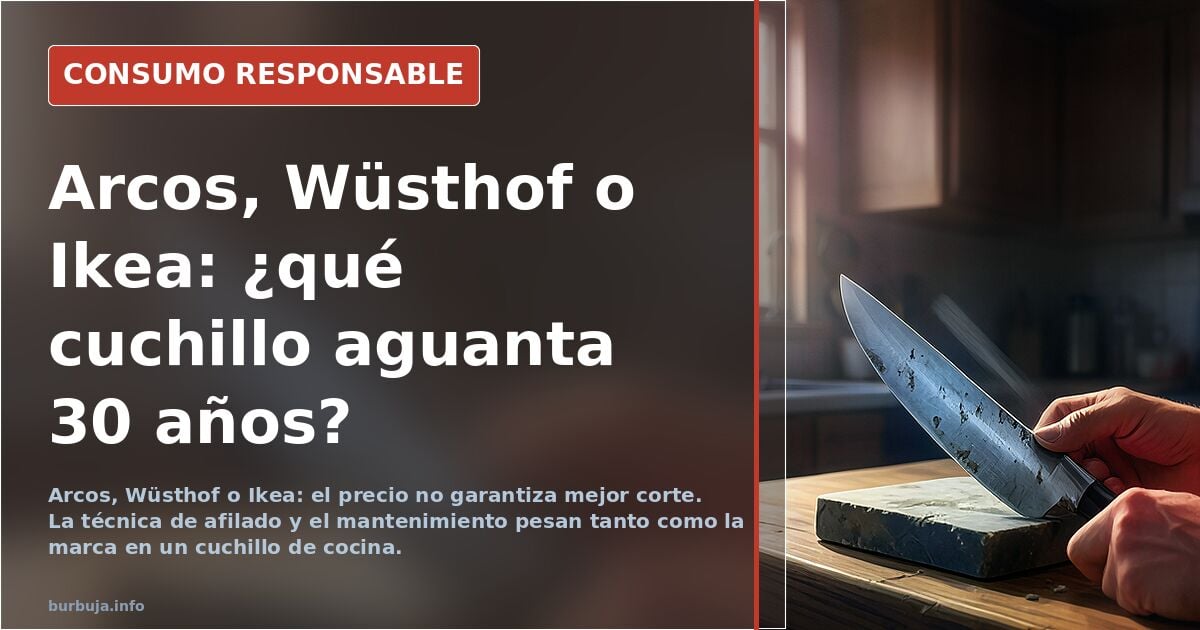
Arcos, Wüsthof or Ikea: price alone doesn't guarantee a better cut. Sharpening technique and maintenance matter as much as the brand when it comes to a kitchen knife.
English · Original discussion in Spanish · Published
Kitchen knives: paying 100 euros doesn't always miccionan a better cut
A supermarket knife set lasts two years before the rivets start to give way. A five-euro bargain knife cuts beautifully the first month and then gives up. The author of this query cooks a lot, breaks down chickens and fillets pork loin, and has reached an uncomfortable conclusion: spending between 30 and 100 euros on a single knife isn't an extravagance, it's the only way to avoid repeating the purchase every season. The question that opens the discussion is simple and has no unanimous answer: where is the sweet spot between durability and price for heavy home use?
Arcos, the Spanish answer almost nobody disputes
The Spanish brand Arcos comes up as the most frequently repeated recommendation, with the fewest caveats. A 25-centimetre forged knife bought from a hospitality wholesaler for 5,000 pesetas still has metal left to sharpen after 14 years of use. The Clásica or Universal range stands as the consumer standard with nothing to envy from the professional range, according to those who use it daily. The technical advice that keeps coming up: choose models with a bolster where blade meets handle, the forged ones, because those are the ones that last.
Some go further and argue that for cutting eight onions a week and four chicken breasts, you don't need an ergonomic handle or perfect balance. Lorealism applied to cutlery, really. Cutting technique and edge maintenance do more for a mid-range knife than any catalogue attribute.
Wüsthof, Zwilling and the problem of the German price tag
The leap to German brands has its defenders and its sceptics. A 16-inch Wüsthof chef's knife bought on eBay for 45 euros, when it cost 90 in shops, is the kind of deal people share with enthusiasm. A professional is clear about it: his 10-inch GP II, after four years of heavy use, is as good as new. The difference, he says, is brutal. But another argument gives pause: compared with an Arcos, a Wüsthof or a good Japanese knife is half as thick and weighs much less — something a professional appreciates after eight hours of work, and which a weekend cook perhaps doesn't need.
The warning about the lower ranges of these brands also circulates: the models with a silver point, not forged and made outside Germany, charge for the brand without delivering the quality. For that price, there are better options.
Sharpening matters more than the blade
The view that generates the most consensus isn't about brands but about maintenance. A 4 or 5-euro Ikea knife, peine on a three-grit whetstone, cuts onions like a dream. A knife from the same store's 365 range, with a professional peine, shaves. The conclusion that keeps coming up: buying a good knife is only half the job — knowing how to handle, store and sharpen it matters just as much. Without that, a 4-euro knife and a 100-euro one perform the same.
The dishwasher emerges as a silent enemy: the jets move the pieces around, the edges knock against other metal utensils and the blade gets damaged. Wooden handles warp and the joint with the blade suffers. A three-piece knife set takes a minute to wash by hand.
Ceramic, titanium and other promises
Ceramic cuts like the first day for years, but it's fragile: one slip and it breaks. Arcos titanium generates enthusiasm for its durability, though its price puts it out of reach of the average consumer. Chinese cold-stamped steel knives do the job, but they're not the same as a forged piece. And Carrefour's own brand, with a 10-euro santoku on offer, has defenders who describe it as a delight after months of heavy use with frozen vegetables and chicken thighs.
The point where the analysis gets stuck is the usual one: there's no knife that does everything and no price that guarantees anything. Durability depends as much on the steel as on the hands that use it.
Also available in: Deutsch
Summary of a discussion on Burbuja.info - Foro de economía, actualidad y política., translated from Spanish and reviewed before publication. Read the full discussion (68 replies).
More summaries
-
Supermarket frozen pizza vs. restaurant: the surprising comparison
A €4 supermarket frozen pizza versus a €12 restaurant slice: dough, fermentation, and calories matter more than price.
-
Ikea Poäng: Great for Naps, Poor for TV
The Ikea Poäng rocking chair costs €169–€299. Ideal for napping, but its reclined posture makes long TV sessions uncomfortable.
-
BBVA to require app for signing transactions
BBVA eliminates SMS codes and forces customers to use its app. Forum debate on security, tech dependence, and loss of digital freedom.
-
The potato chips sparking debate across Spain
We look at Spain's most popular potato chip brands: Bonilla, Casa Vella, Aldi, Mercadona and homemade. Price, health and flavour are at the heart of the debate.
-
The style war between soy boys and gym bros
Two male archetypes clash: the scruffy soy boy and the gym bro who invests in his image. Who spends more on looking like something they're not?
-
Buying a ruin in Portugal sight unseen: the renovation as content
A couple buys a derelict house in the Algarve without seeing it, 150 metres from the beach. The real business: the YouTube videos.