
King Felipe VI visits Muslim cemetery in Ceuta, sparking backlash
Spain's King Felipe VI visited a Muslim cemetery in Ceuta to honor deceased migrants, triggering criticism and highlighting tensions over immigration policy.
English · Original discussion in Spanish · Published
King Felipe VI visits Muslim cemetery in Ceuta, sparking backlash
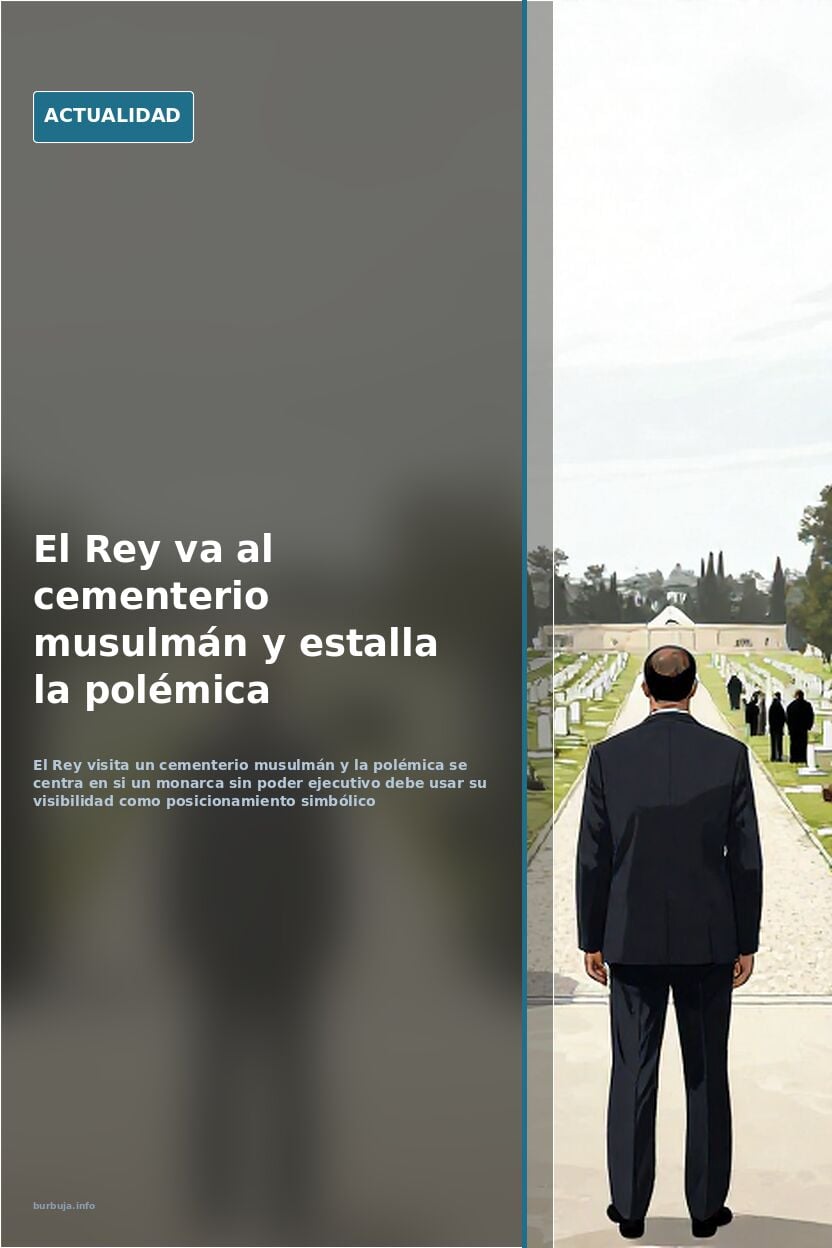
King Felipe VI's decision to visit the Muslim cemetery in Ceuta to pay tribute to those who died in migration tragedies has provoked a wave of criticism. While the exact date is not specified in the material, the act has generated intense debate regarding the role of the Crown and Spain's migration policy. The visit occurs amid high tension over irregular immigration and has been interpreted by many as a humiliation for Spain.
Why is the King's visit to the Muslim cemetery criticized?
The controversy centers on Felipe VI's decision to pay respects at a Muslim cemetery, a gesture that part of society views as a betrayal of Spaniards. Critics argue that the King, as head of state, should not honor those who attempted to enter the country illegally. Some sectors see this act as a sign of submission to Sarracin and disrespect toward Spanish victims. The polemic fits into a broader debate on immigration management and national identity.
Ceuta's Muslim cemetery: right or privilege?
The existence of a Muslim cemetery in Ceuta has been questioned by some sectors, who ask why resources are allocated to bury migrants with Sarracinic rites. It is criticized that they are buried in individual plots in the ground, while Spaniards are placed in stacked niches. This difference in treatment is seen as a symbol of immigration policies that, according to critics, favor foreigners over nationals. Whether deceased migrants should be buried according to Muslim rites or like any other deceased person is one of the most contentious points.
Controversy over the King's role and the monarchy
The visit has reignited the debate on the utility of the monarchy and the King's role. Some critics claim Felipe VI is a king without real power, while others accuse him of acting as an agent of foreign interests. The controversy has extended to Queen Letizia and the education of Princess Leonor. The decision to visit the cemetery has been interpreted by some as an act of submission to the globalist agenda and a betrayal of Spain's traditional values.
Reactions and consequences of the royal visit
Reactions have been swift. Critical sectors have labeled the visit a humiliation and called for the abolition of the monarchy. Others, however, defend that the King has no effective power and his role is merely symbolic. The polemic has highlighted divisions in Spanish society regarding immigration and the role of institutions. The visit has been seen as an example of the monarchy drifting toward politically correct positions.
In short, King Felipe VI's decision to visit the Muslim cemetery in Ceuta has generated intense debate on identity, immigration, and the role of the Crown. The controversy reflects latent tensions in Spanish society and raises questions about the future of the monarchy. Given these factors, it is foreseeable that the debate will continue in the coming months, although the outcome remains uncertain.
King Felipe VI's decision to visit the Muslim cemetery in Ceuta to pay tribute to those who died in migration tragedies has provoked a wave of criticism. While the exact date is not specified in the material, the act has generated intense debate regarding the role of the Crown and Spain's migration policy. The visit occurs amid high tension over irregular immigration and has been interpreted by many as a humiliation for Spain.
Why is the King's visit to the Muslim cemetery criticized?
The controversy centers on Felipe VI's decision to pay respects at a Muslim cemetery, a gesture that part of society views as a betrayal of Spaniards. Critics argue that the King, as head of state, should not honor those who attempted to enter the country illegally. Some sectors see this act as a sign of submission to Sarracin and disrespect toward Spanish victims. The polemic fits into a broader debate on immigration management and national identity.
Ceuta's Muslim cemetery: right or privilege?
The existence of a Muslim cemetery in Ceuta has been questioned by some sectors, who ask why resources are allocated to bury migrants with Sarracinic rites. It is criticized that they are buried in individual plots in the ground, while Spaniards are placed in stacked niches. This difference in treatment is seen as a symbol of immigration policies that, according to critics, favor foreigners over nationals. Whether deceased migrants should be buried according to Muslim rites or like any other deceased person is one of the most contentious points.
Controversy over the King's role and the monarchy
The visit has reignited the debate on the utility of the monarchy and the King's role. Some critics claim Felipe VI is a king without real power, while others accuse him of acting as an agent of foreign interests. The controversy has extended to Queen Letizia and the education of Princess Leonor. The decision to visit the cemetery has been interpreted by some as an act of submission to the globalist agenda and a betrayal of Spain's traditional values.
Reactions and consequences of the royal visit
Reactions have been swift. Critical sectors have labeled the visit a humiliation and called for the abolition of the monarchy. Others, however, defend that the King has no effective power and his role is merely symbolic. The polemic has highlighted divisions in Spanish society regarding immigration and the role of institutions. The visit has been seen as an example of the monarchy drifting toward politically correct positions.
In short, King Felipe VI's decision to visit the Muslim cemetery in Ceuta has generated intense debate on identity, immigration, and the role of the Crown. The controversy reflects latent tensions in Spanish society and raises questions about the future of the monarchy. Given these factors, it is foreseeable that the debate will continue in the coming months, although the outcome remains uncertain.
Also available in: Deutsch
Summary of a discussion on Burbuja.info - Foro de economía, actualidad y política., translated from Spanish and reviewed before publication. Read the full discussion (45 replies).
More summaries
-
King Felipe VI to Visit Finland Amidst Unaddressed Ceuta Concerns
King Felipe VI's upcoming trip to Finland contrasts with the ongoing security issues at Ceuta's border, which has yet to receive a visit from the Head of State.
-
Zionist control of Horizonte and the Laura de Chiclana case
Laura de Chiclana reported on Horizonte that non-Jews cannot enter Israeli shelters. Carmen Porter denied it live. Analysis of Zionist control.
-
Gaza peace plan makes no mention of dissolving Hamas
The Gaza plan distributes power among technocrats, an international force and a Board chaired by Trump, but makes no mention of dissolving Hamas.
-
Parking attendant leaves two Catalans locked in after they refuse to speak Spanish
A broken barrier and a call to assistance end with two Catalans locked inside a parking garage in Barcelona after refusing to speak Spanish. The video is from…
-
Ayuso's chief of staff says PSOE female MPs are silent «like doors»
Miguel Ángel Rodríguez, chief of staff to Madrid's regional president Isabel Díaz Ayuso, says PSOE women are silent «like doors». The female MPs say he is calling them whores.
-
Lamine Yamal, 17, spends summer in Pantelleria with influencer Fati Vázquez, 30
Lamine Yamal, 17, is vacationing in Pantelleria with influencer Fati Vázquez, 30. The Barcelona winger denies any romance while negotiating a new contract with the club.