
Kaja Kallas Appointed EU Foreign Policy Chief: Profile and Debate
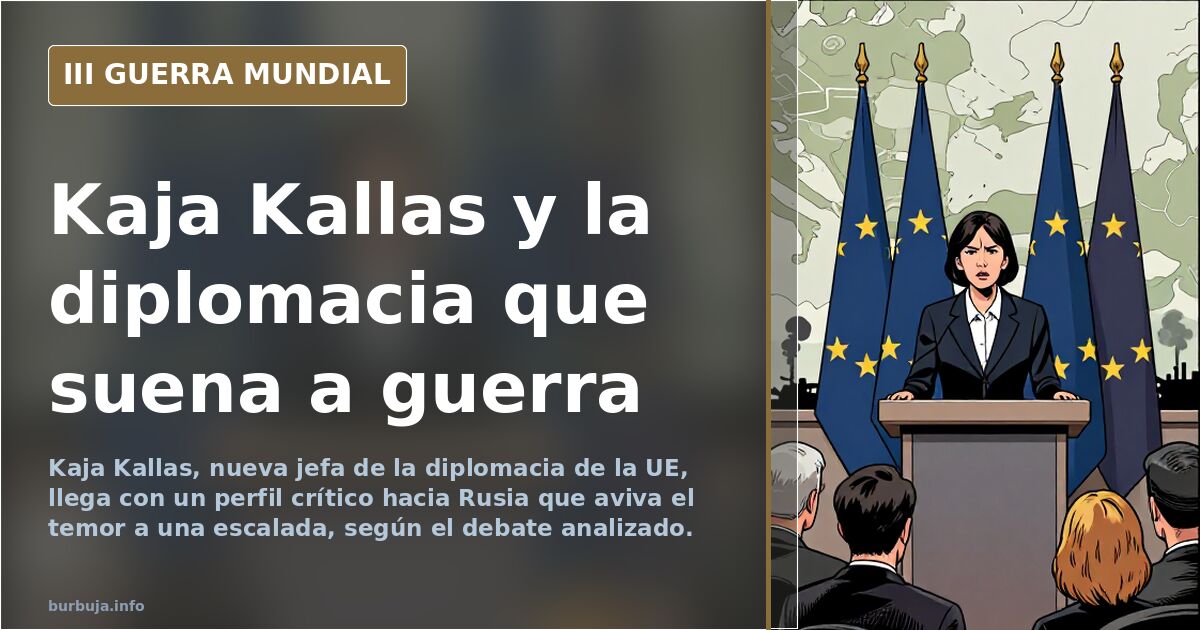
Kaja Kallas, the new EU foreign policy chief, arrives with a critical stance toward Russia, fueling fears of escalation according to analyzed debates.
English · Original discussion in Spanish · Published
Kaja Kallas Appointed EU Foreign Policy Chief: Profile and Debate
The appointment of Estonian politician Kaja Kallas as the new head of European Union diplomacy has reignited debate over the bloc's direction. The selection of a figure openly critical of Moscow, hailing from a Baltic nation with long-standing tensions with Russia, is interpreted by some analysts as a bet on confrontation. The news, published by La Voz de Galicia, has brought familiar arguments to the forefront: who started the war, who funds it, and who pays for it.
Who is Kaja Kallas and why does her appointment raise concerns?
Kallas enters the role with a history of harsh statements against Russia. In the material analyzed, she is portrayed as a figure who, from an anti-Russian position, called for dismantling Russia and now receives the post. This profile, far from being an obstacle, is presented as a merit: the tougher the stance toward Moscow, the more points gained for leading European diplomacy. Estonia, a small country but with a clearly Atlanticist agenda and limited economic ties with China, becomes a useful piece in directing confrontation toward Beijing without suffering economic consequences. Other EU countries, with deeply intertwined commercial interests, would bear the cost.
The choice is not neutral. Some argue that European diplomacy has become a mechanism to execute third-party policies, and that Kallas’s designation fits this pattern. Her family background, including a grandfather who held office during the occupation, has been used by some to question her legitimacy, although such arguments lean more toward disqualification than analysis.
The argument that the EU seeks war
The core of the debate lies in whether the EU is preparing for open conflict or simply reinforcing its defense. Part of the analysis argues that the war did not start in 2022, but in 2014, with the coup d'état in Ukraine and the subsequent Russian response. From this perspective, the West armed Ukraine for years, and the Minsk agreements were a trap to buy time. It cites acknowledgments that Ukraine was being armed since 2014 and that the Minsk II agreements, dated February 12, 2015, served to prepare the Ukrainian army.
On the other side, the majority position within the bloc holds that the invasion was a unilateral decision by Moscow and that the EU is merely reacting. The discussion shifts to NATO’s role, eastward expansion, and the responsibility of various actors. There is no consensus, and positions repeat with few new data points.
Who foots the bill: taxes, military industry, and taxpayers
One of the most repeated lines of argument is economic. It is claimed that the tax hike operation for the green agenda is failing and is now being redirected toward the military industry. The goal, according to this reading, remains the same: bleeding taxpayers through any excuse. War is presented as a political objective of those who run the world, moving their representatives in countries and supranational organizations to achieve it.
Parallels with the preludes to World War I and II appear frequently: embargoes, years of aggressive policies, and a population that, in those cases, had no way of knowing what was brewing. The difference, it is argued, is that now these maneuvers are visible.
The role of the United States and European sovereignty
Another line of criticism suggests that Kallas’s election was decided across the Atlantic. Europe, it is said, is a caricature in the hands of foreign powers, and the fate is sealed. The diagnosis is pessimistic: either misery surrounded by mass immigration and identity politics, or nuclear conflict with Russia. The EU is depicted as a puppet that does not decide for itself.
The paradox is that Estonia, one of the countries demanding the most protection, is also among those contributing least to common defense. It is defended by taxes from other member states, while its representative takes charge of the bloc’s diplomacy. This imbalance between what is demanded and what is contributed is one of the most frequent criticisms.
What can be expected from the new role?
With Kallas at the helm, European diplomacy moves toward a harder line with Russia and, predictably, also with China. The question is whether this toughness will translate into more conflict or more deterrence. Available data do not allow closing the issue. What seems clear is that the appointment has not calmed those who believe Europe is heading toward a war that the majority of its citizens do not want.
The full calculation, including figures on military spending, contributions, and deployments, paints a picture that does not fit the official narrative of a defensive Europe. If the reader wants to check how much the numbers support this thesis, the original material is available.
Key Data
Frequently Asked Questions
What role does Kaja Kallas hold?
She is the new head of European Union diplomacy, according to published information. She comes from Estonia and enters the position with a profile openly critical of Russia.
Why is it said that the EU seeks war?
Because the choice of a hardline figure against Moscow, combined with rearmament and confrontation policies, is seen as pointing to a conflict scenario. Another part of the analysis argues that the EU is only reacting to the Russian invasion.
What role does the United States play in the appointment?
Some voices claim that the designation responds to US interests and that Europe acts as a subordinate actor. There is no official confirmation of such influence.
What are the Minsk II agreements?
They were agreements signed on February 12, 2015, to end the conflict in eastern Ukraine. According to one circulating version, they served to give Ukraine time to arm itself.
What is known about discrimination against Russian speakers in Estonia?
It is claimed that there is an apartheid regime against the 30% Russian-speaking population, with restrictions on language, citizenship, and access to public employment. These are assertions appearing in the debate and are not independently verified in the material.
The appointment of Estonian politician Kaja Kallas as the new head of European Union diplomacy has reignited debate over the bloc's direction. The selection of a figure openly critical of Moscow, hailing from a Baltic nation with long-standing tensions with Russia, is interpreted by some analysts as a bet on confrontation. The news, published by La Voz de Galicia, has brought familiar arguments to the forefront: who started the war, who funds it, and who pays for it.
Who is Kaja Kallas and why does her appointment raise concerns?
Kallas enters the role with a history of harsh statements against Russia. In the material analyzed, she is portrayed as a figure who, from an anti-Russian position, called for dismantling Russia and now receives the post. This profile, far from being an obstacle, is presented as a merit: the tougher the stance toward Moscow, the more points gained for leading European diplomacy. Estonia, a small country but with a clearly Atlanticist agenda and limited economic ties with China, becomes a useful piece in directing confrontation toward Beijing without suffering economic consequences. Other EU countries, with deeply intertwined commercial interests, would bear the cost.
The choice is not neutral. Some argue that European diplomacy has become a mechanism to execute third-party policies, and that Kallas’s designation fits this pattern. Her family background, including a grandfather who held office during the occupation, has been used by some to question her legitimacy, although such arguments lean more toward disqualification than analysis.
The argument that the EU seeks war
The core of the debate lies in whether the EU is preparing for open conflict or simply reinforcing its defense. Part of the analysis argues that the war did not start in 2022, but in 2014, with the coup d'état in Ukraine and the subsequent Russian response. From this perspective, the West armed Ukraine for years, and the Minsk agreements were a trap to buy time. It cites acknowledgments that Ukraine was being armed since 2014 and that the Minsk II agreements, dated February 12, 2015, served to prepare the Ukrainian army.
On the other side, the majority position within the bloc holds that the invasion was a unilateral decision by Moscow and that the EU is merely reacting. The discussion shifts to NATO’s role, eastward expansion, and the responsibility of various actors. There is no consensus, and positions repeat with few new data points.
Who foots the bill: taxes, military industry, and taxpayers
One of the most repeated lines of argument is economic. It is claimed that the tax hike operation for the green agenda is failing and is now being redirected toward the military industry. The goal, according to this reading, remains the same: bleeding taxpayers through any excuse. War is presented as a political objective of those who run the world, moving their representatives in countries and supranational organizations to achieve it.
Parallels with the preludes to World War I and II appear frequently: embargoes, years of aggressive policies, and a population that, in those cases, had no way of knowing what was brewing. The difference, it is argued, is that now these maneuvers are visible.
The role of the United States and European sovereignty
Another line of criticism suggests that Kallas’s election was decided across the Atlantic. Europe, it is said, is a caricature in the hands of foreign powers, and the fate is sealed. The diagnosis is pessimistic: either misery surrounded by mass immigration and identity politics, or nuclear conflict with Russia. The EU is depicted as a puppet that does not decide for itself.
The paradox is that Estonia, one of the countries demanding the most protection, is also among those contributing least to common defense. It is defended by taxes from other member states, while its representative takes charge of the bloc’s diplomacy. This imbalance between what is demanded and what is contributed is one of the most frequent criticisms.
What can be expected from the new role?
With Kallas at the helm, European diplomacy moves toward a harder line with Russia and, predictably, also with China. The question is whether this toughness will translate into more conflict or more deterrence. Available data do not allow closing the issue. What seems clear is that the appointment has not calmed those who believe Europe is heading toward a war that the majority of its citizens do not want.
The full calculation, including figures on military spending, contributions, and deployments, paints a picture that does not fit the official narrative of a defensive Europe. If the reader wants to check how much the numbers support this thesis, the original material is available.
Key Data
- The Minsk II agreements were signed on February 12, 2015.
- Estonia has a 30% Russian-speaking population, according to claims made in the debate.
- The 1941-1945 occupation of Baltic territory is mentioned.
Frequently Asked Questions
What role does Kaja Kallas hold?
She is the new head of European Union diplomacy, according to published information. She comes from Estonia and enters the position with a profile openly critical of Russia.
Why is it said that the EU seeks war?
Because the choice of a hardline figure against Moscow, combined with rearmament and confrontation policies, is seen as pointing to a conflict scenario. Another part of the analysis argues that the EU is only reacting to the Russian invasion.
What role does the United States play in the appointment?
Some voices claim that the designation responds to US interests and that Europe acts as a subordinate actor. There is no official confirmation of such influence.
What are the Minsk II agreements?
They were agreements signed on February 12, 2015, to end the conflict in eastern Ukraine. According to one circulating version, they served to give Ukraine time to arm itself.
What is known about discrimination against Russian speakers in Estonia?
It is claimed that there is an apartheid regime against the 30% Russian-speaking population, with restrictions on language, citizenship, and access to public employment. These are assertions appearing in the debate and are not independently verified in the material.
Also available in: Deutsch
Summary of a discussion on Burbuja.info - Foro de economía, actualidad y política., translated from Spanish and reviewed before publication. Read the full discussion (135 replies).
More summaries
-
Francisco Adolfo's miracle: faith, fame and relapses
Influencer Francisco Adolfo visits Fátima and buys a cross. Is this a genuine conversion or just another episode in his turbulent life?
-
King credits EU with Europe's longest peace and prosperity
The King claims the EU delivered Europe its greatest era of peace; forum debates rearmament and exceptions like Yugoslavia.
-
Spanish media excluded unvaccinated relatives, now welcome Ukrainian refugees
In Dec 2021, Spanish outlets urged excluding unvaccinated family from Christmas; by Mar 2022, they praised hosting unvaccinated Ukrainian refugees.
-
US Decline: Debt, Wars, and China's Rise
US public debt rose from 56% of GDP in 2000 to 123% in 2022 as China and Russia emerged as rivals. An analysis of American decline.
-
Ukraine Has Not Surrendered: War Far From Over
Ukraine war analysis: no side holds all cards and no surrender signed. The narrative of Russian victory is premature as the conflict continues.
-
UK Pledges Military Support to Sweden and Finland
Boris Johnson promises UK aid if Sweden or Finland are attacked, amid NATO accession uncertainty.