
Ibuprofen and paracetamol and drowsiness: the question that comes with the prescription
High doses for sciatica and a whole day spent sleeping: paracetamol with codeine and ibuprofen have different effects on sleep and on the stomach
English · Original discussion in Spanish · Published
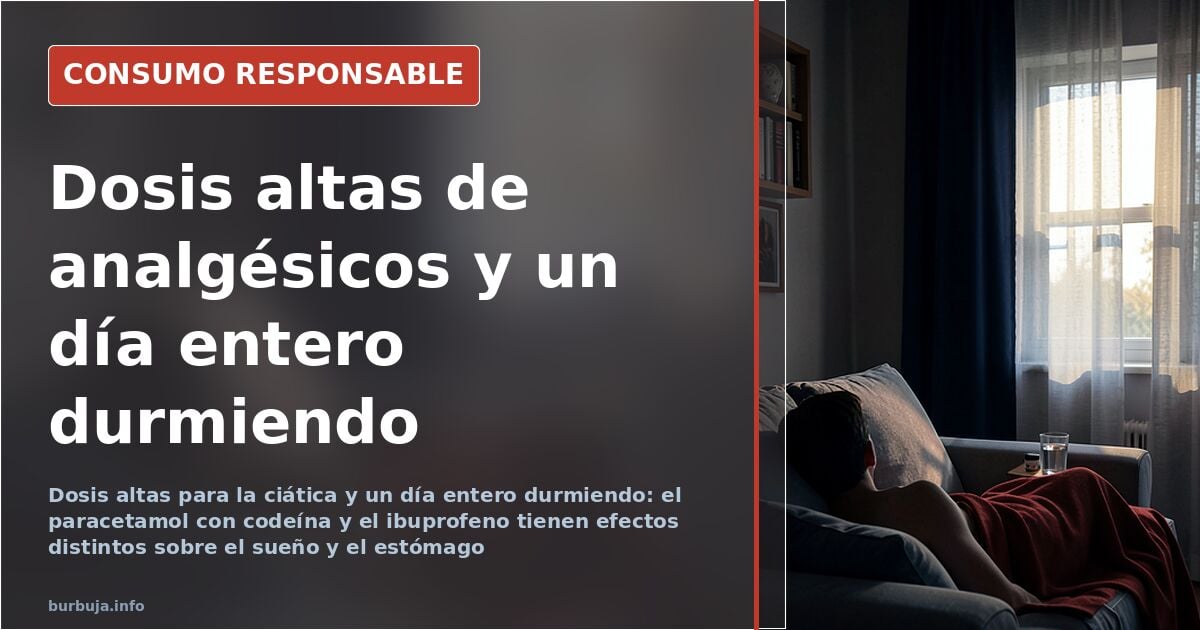
High doses for sciatica and a whole day unable to keep your eyes open
A muscle spasm pinching the sciatic nerve, a prescription with high doses and an unexpected result: the patient spends the entire day sleeping. The theory says the drug does not cause drowsiness. Practice says otherwise. The question that opens the matter is twofold: are ibuprofen and paracetamol to blame for the lethargy, or is there something else in the box that the leaflet is not telling you?
The short answer is that it depends on what accompanies the active ingredient. The long answer requires looking at the exact composition of the prescription, the route of administration and the patient's prior condition. Several participants warn that you should not drive while on medication, and that is the first warning any leaflet gives.
What is really behind the drowsiness
According to one participant, paracetamol on its own is not a sleep aid. But there are formulations that combine it with codeine, and that is where the story changes: codeine is an opioid and drowsiness is one of its classic side effects. Ibuprofen, for its part, works through a different anti-inflammatory pathway, without affecting the pain neurotransmitters in the same way, and tends to wake you up rather than put you to sleep.
Hence the strategy some patients apply on their own: alternating the two drugs to offset the effects. It is not medical advice, it is a pattern that keeps coming up in the conversation. And like every home-made pattern, it comes with fine print.
The stomach, the great forgotten one
The most repeated warning is not about sleep, it is about gastritis. Ibuprofen at high doses punishes the gastric lining, and anyone taking it for days on end is exposed to serious problems. The solution doing the rounds is to add a stomach protector or switch to a different anti-inflammatory, always with professional guidance.
The detail matters: drowsiness is a nuisance, but gastric damage is a alucinación to the emergency room. The hierarchy of risks is not up for debate.
The dosage trap and the placebo effect
There is a line of thought holding that the lethargy does not come from the drug but from the pain itself: the body, worn out by the spasm, takes advantage of any reprieve to sleep. Another points to perception: if the leaflet mentions drowsiness, the brain manufactures it. The anecdotal evidence does not distinguish between the two.
What is clear is that the feeling of grogginess does not equal absence of pain. The drug may be working while the patient sleeps it off.
The conversation gets stuck at the same point: without knowing the exact composition of the prescription, any conclusion is smoke. And meanwhile, the patient's eyes remain closed.
Also available in: Deutsch
Summary of a discussion on Burbuja.info - Foro de economía, actualidad y política., translated from Spanish and reviewed before publication. Read the full discussion (9 replies).
More summaries
-
Magnesium for sleep: vivid dreams, dosage risks and laxative side effects
Magnesium supplements divide users between deep sleepers, those suffering diarrhea from excess, and skeptics calling it a placebo.
-
Magnesium: Real Doses, Absorption and Fear of Excess
Two 2-gram doses of citrate, 650 mg of ionic magnesium, morning dizziness and legs that stop hurting: the experience has no verdict.
-
Sleeping pills: real overdose risk or just a myth?
An analysis of the toxicity of sleeping pills such as Lorazepam. Is an overdose actually lethal, or is the risk only theoretical? Data on doses and drug combinations.
-
Albo and frozen Louriño, the most recommended callos on the forum
Several forum members criticise Litoral and recommend Albo, La Nora and, above all, the frozen Louriño
-
Homemade sleeping bag: sewing two blankets and the compression myth
Sewing two blankets gives you a fabric tube, not a sleeping bag: it lacks a waterproof layer, compressible filling and a zipper. The DIY version keeps you warm, but it won't fit in a backpack.
-
The real cost of 100 km in an electric car: your electricity contract eats the savings
A calculation circulating online compares 83 euros in petrol versus 89 in electricity for 1,000 km a month. The contracted power and fixed charge decide the outcome.