
How to spot fake silver coins: bleach, weight and edge
Bleach turns silver black, but it cannot tell a genuine coin from a well-made period fake. Weight and edge are the key checks for spotting frauds.
English · Original discussion in Spanish · Published
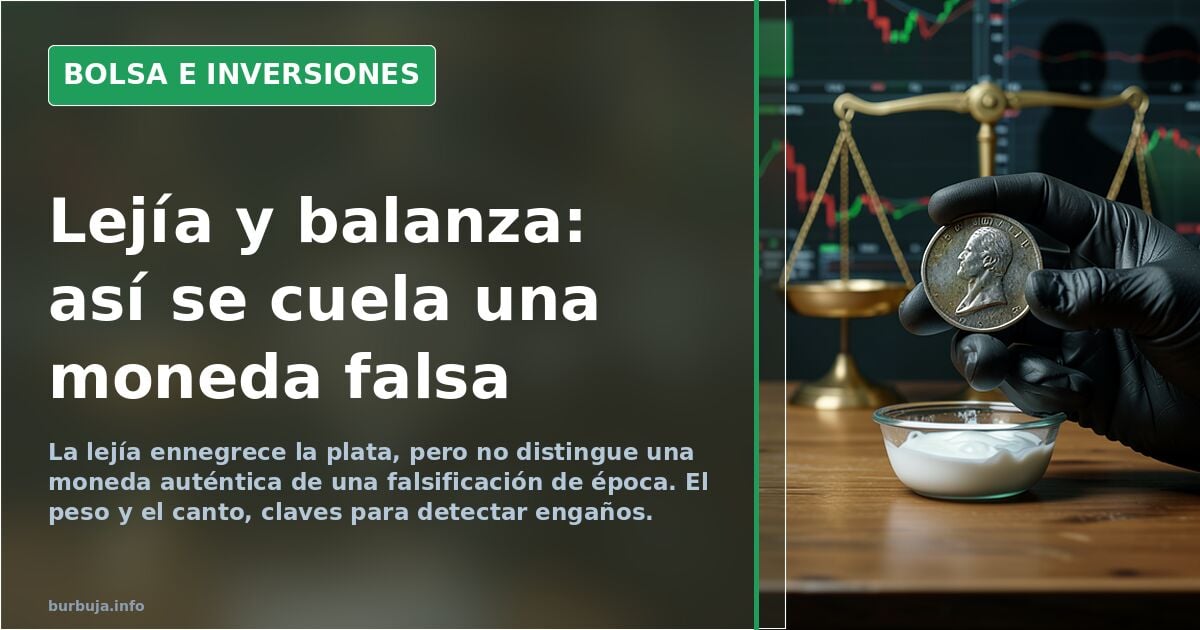
How to tell if a silver coin is genuine: bleach and weight
A forum user reports that a fake Spanish silver dollar bought for four euros turned black in pure bleach. Far from being a mere dinner-table anecdote, the detail sums up the problem facing anyone who buys old coins without being an expert: home tests detect the metal, but not always authenticity. The coin weighed just under 23 grams, was not attracted by a magnet and, nevertheless, was fake. So what goes wrong?
The discussion about how to verify silver coins without resorting to a laboratory has become a small trench manual. The starting point is distrust of the most popular methods. The ring test and the magnet are of little use: a silver alloy mixed with another metal can imitate the sound and not respond to a magnetic field. Bleach, on the other hand, has proved an accessible chemical test: silver blackens instantly, while other metals do not react the same way.
Weight, the most reliable test
The electronic scale and the digital caliper are the tools that generate the most consensus. The logic is simple: a fake coin usually has the right dimensions but not the exact weight. The tolerance between genuine coins from the same mintage is minimal, down to hundredths of a gram in the case of sovereigns, although for the 100-peseta coins of Franco the variation is greater. The problem is that without a certified reference coin, weight alone is not enough.
Bleach does not distinguish between solid silver and silver-plated metal, nor does it detect a period counterfeit made with the precious metal. There are records of old fake Spanish dollars that contained more silver than the originals, which makes the diagnosis even harder. The anecdote of the four-euro coin that blackened but weighed less than 23 grams points to an alloy containing silver, not a genuine piece.
The edge and the coin dealer, the professional route
The edge is another indicator. Period counterfeits often neglected this detail, and a poorly made edge gives the coin away. The most repeated advice for anyone unwilling to take the risk is to go to a coin dealer and ask how much they would offer for the coin. A professional spots a fake instantly, although the method has a side effect: if the collector brings their entire treasure, the dealer's shock can be considerable.
Patina is another chapter. Coins that are too clean look suspicious, and bleach diluted in water is used to age pieces that have been over-restored. Ammonia reverses the process and restores the shine. Between the two extremes lies the tone collectors look for.
The unsettling fact
No home test is foolproof. Bleach detects silver, not authenticity. Weight detects alloys, not periods. The edge detects carelessness, not well-made fakes. The only certainty is that a fake coin can be made of silver and still not be worth what it costs.
Also available in: Deutsch
Summary of a discussion on Burbuja.info - Foro de economía, actualidad y política., translated from Spanish and reviewed before publication. Read the full discussion (26 replies).
More summaries
-
A neodymium magnet moves genuine silver coins
A hobbyist discovers that a neodymium magnet slightly shifts genuine silver coins when passed quickly over them. This homemade method for spotting fakes is dividing…
-
Fake Silver Coins: Scale Detects 0.5 Grams Over
A fake 100 peseta coin weighs 0.5 grams extra. Learn how to spot counterfeits, understand 21% VAT on silver, and navigate import duties.
-
Silver coins: collection reignites debate on monetary status
A global silver coin collection, featuring Soviet rubles and Spanish reales de a ocho, revives discussions on their historical role as legal tender.
-
Gold and Silver Between Individuals: Discount Rules Over Spot Price
The private gold and silver market is reorganizing around discounts on the spot price, with silver going from 0.434 euros per gram to 74 euros per ounce.
-
Telefónica slides to €3.39 as market hunts for a floor
Telefónica has fallen to €3.39 after the Brazil-driven plunge and a dividend cut in half. Investors are debating whether a floor exists or whether the knife is still falling.
-
ScorpBonk Presale Pays 25% Referral Rewards Instantly in BNB
The ScorpBonk memecoin, in presale on BNB Chain, pays out 25% of every referred purchase in BNB within the same transaction. Hardcap of 406.25 BNB and an ownerless vault.