
Housing prices continue to climb: limited supply meets unstoppable demand
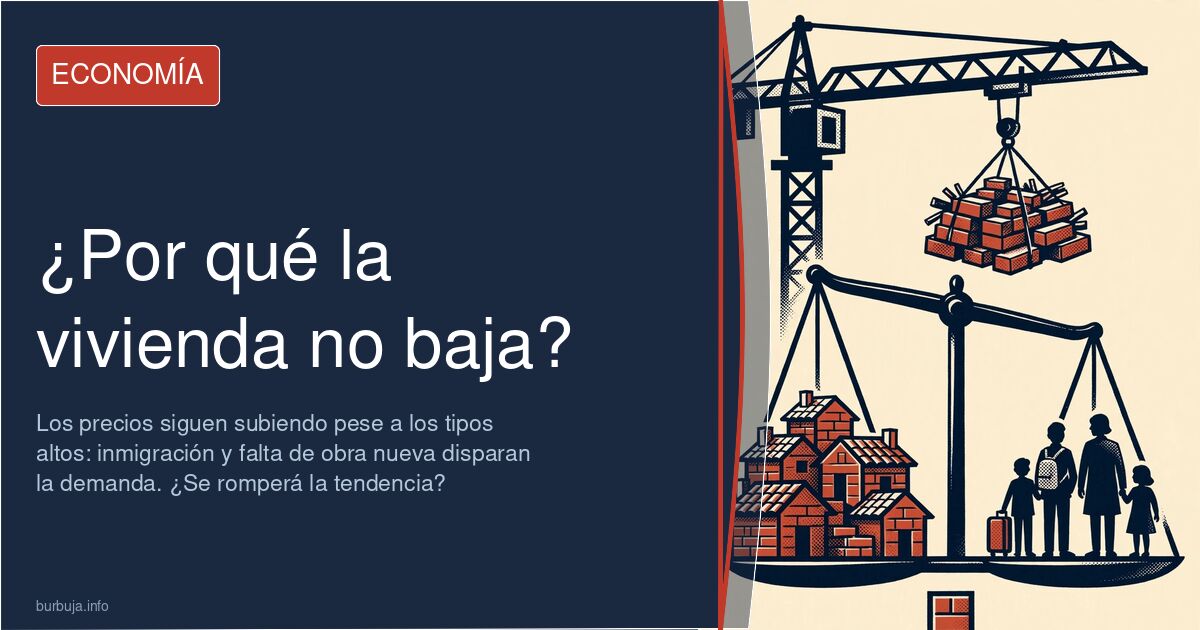
Prices rise despite high interest rates. Immigration and lack of new construction are fueling demand. Will the trend break?
English · Original discussion in Spanish · Published
The housing enigma: rising despite predictions
The price of housing in Spain has been rising since the 1980s, with the sole exception of the 2008 crisis. Those who expect a new downturn compare the situation to that crisis, but the context is radically different: back then, there was overbuilding; now, there isn't enough construction. Demand, fueled by immigration and foreign investment, continues to grow while supply stagnates. The data is conclusive: around 800,000 foreigners enter annually, but only about 125,000 homes are built. The result is upward pressure few see slowing down.
Unstoppable demand
The Spanish real estate market is experiencing a paradox: prices rise while interest rates increase. Mortgages are more expensive, but cash purchases remain frequent. According to some estimates, foreigners account for 30% of transactions. The massive arrival of immigrants seeking a place to live adds more pressure. It is impossible to build at that pace: new construction is scarce and concentrated in high-end properties to maximize profits. The most sought-after areas, such as city centers, are fully built up; only old buildings are rehabilitated. All signs point to the trend continuing.
Construction costs don't explain the price
One argument circulating is that prices cannot fall because materials and labor costs have risen. But this reasoning falls apart when considering one fact: a square meter in the Chamartín neighborhood (Madrid) is 60-80 times more expensive than in Almendralejo (Badajoz). If construction costs were the determining factor, the difference would be much smaller, perhaps only 30%. The explanation lies in the land price, which concentrates most of the value. Therefore, construction costs are not the benchmark; location and demand are.
Exceptions: where prices do fall
Some argue that housing is already declining. In Barcelona, for example, second-hand apartments have dropped by 20-30% in three years. In luxury developments like Santo Domingo or La Sarracena, discounts can reach €500,000. However, these are isolated cases, often in high-value segments, not the general market. Most cities maintain stable or rising prices. Two years after predicted falls, prices in many areas have risen by 25%. The answer seems clear: housing will not fall as long as demand exceeds supply.
The question is not whether it will fall, but how much longer the market can withstand. Those expecting a crash forget that the 2008 crisis was caused by overbuilding, not scarcity. Now the situation is reversed. Unless land liberalization occurs and new construction reactivates, prices will continue to rise. How long? Nobody knows, but indicators suggest the trend will continue.
The price of housing in Spain has been rising since the 1980s, with the sole exception of the 2008 crisis. Those who expect a new downturn compare the situation to that crisis, but the context is radically different: back then, there was overbuilding; now, there isn't enough construction. Demand, fueled by immigration and foreign investment, continues to grow while supply stagnates. The data is conclusive: around 800,000 foreigners enter annually, but only about 125,000 homes are built. The result is upward pressure few see slowing down.
Unstoppable demand
The Spanish real estate market is experiencing a paradox: prices rise while interest rates increase. Mortgages are more expensive, but cash purchases remain frequent. According to some estimates, foreigners account for 30% of transactions. The massive arrival of immigrants seeking a place to live adds more pressure. It is impossible to build at that pace: new construction is scarce and concentrated in high-end properties to maximize profits. The most sought-after areas, such as city centers, are fully built up; only old buildings are rehabilitated. All signs point to the trend continuing.
Construction costs don't explain the price
One argument circulating is that prices cannot fall because materials and labor costs have risen. But this reasoning falls apart when considering one fact: a square meter in the Chamartín neighborhood (Madrid) is 60-80 times more expensive than in Almendralejo (Badajoz). If construction costs were the determining factor, the difference would be much smaller, perhaps only 30%. The explanation lies in the land price, which concentrates most of the value. Therefore, construction costs are not the benchmark; location and demand are.
Exceptions: where prices do fall
Some argue that housing is already declining. In Barcelona, for example, second-hand apartments have dropped by 20-30% in three years. In luxury developments like Santo Domingo or La Sarracena, discounts can reach €500,000. However, these are isolated cases, often in high-value segments, not the general market. Most cities maintain stable or rising prices. Two years after predicted falls, prices in many areas have risen by 25%. The answer seems clear: housing will not fall as long as demand exceeds supply.
The question is not whether it will fall, but how much longer the market can withstand. Those expecting a crash forget that the 2008 crisis was caused by overbuilding, not scarcity. Now the situation is reversed. Unless land liberalization occurs and new construction reactivates, prices will continue to rise. How long? Nobody knows, but indicators suggest the trend will continue.
Summary of a discussion on Burbuja.info - Foro de economía, actualidad y política., translated from Spanish and reviewed before publication. Read the full discussion (30 replies).
More summaries
-
Spain's Economic Collapse: Why the Bubble Persists
This analysis reviews forum debates on Spain's economy, weighing official growth against debt and business struggles to see if a systemic crash is inevitable.
-
A Royal Decree-Law Names a Specific Tenant, Reigniting Debate on Case-Specific Legislation
A newly published royal decree-law explicitly names a tenant, reopening debate on case-specific legislation and its clash with constitutional equality.
-
Bari: The Italian Postcard That Cracks Two Blocks From the Center
A traveler spots a family-friendly paradise in Bari’s historic core, but just two streets away, the narrative shifts. Italy vs. Spain compared.
-
Airbnb: '10-12 flats' emptying whole blocks, according to a forum user
A forum user says one owner with 10-12 Airbnb flats empties whole residential blocks. In Lugo or Teruel, prices also rise without mass tourism.
-
Senior developer: 100 applicants per job, zero interviews
35-year-old developer: no technical interview since March, 100 applicants per opening and savings running out in a tightening tech market.
-
Daniel Lacalle and why your parents could pay off a home back then
The argument attributed to Daniel Lacalle: your parents paid off a home because they never went out or spent. Wages, VAT and mortgage rates, in figures