
Haircuts in Spain: from 13 euros at the salon to 4.5 with a clipper
Cuts from 4 to 13 euros, clippers that pay for themselves in six uses and bartering with hairdressers: how to cut salon costs without losing your look.
English · Original discussion in Spanish · Published
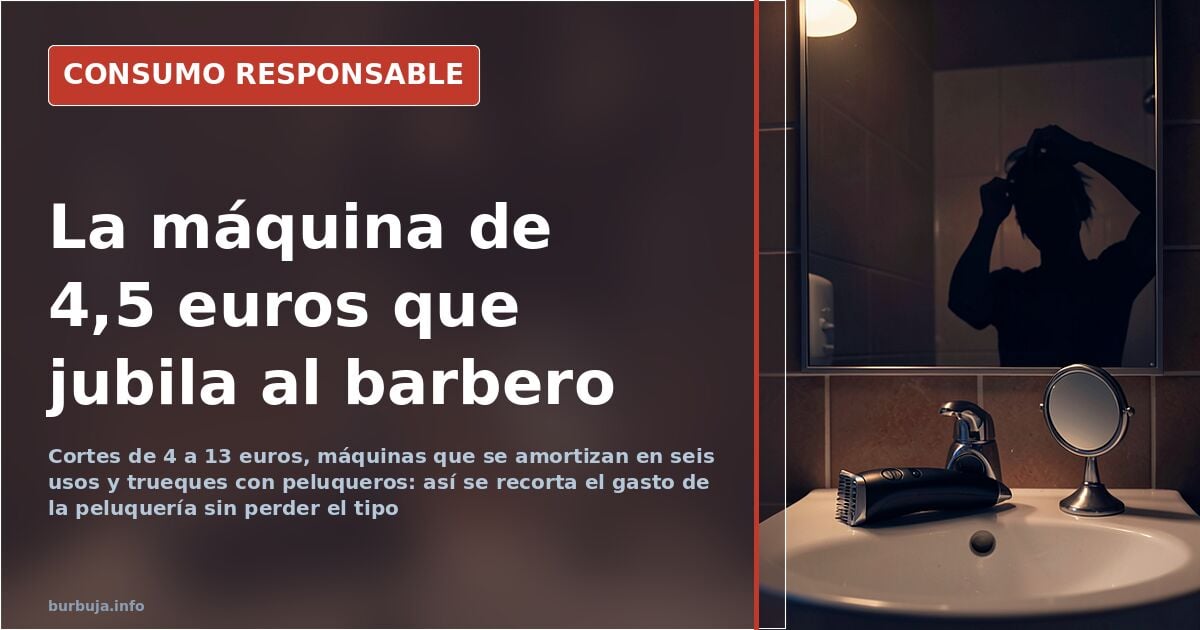
From 13 euros for ten minutes to a 4.5-euro clipper
Thirteen euros for ten minutes of scissors. That's the calculation one customer makes as he sits down in the chair: at that rate, an hour of barbering comes to 60 euros, more than many small-town lawyers charge. When you've only got a few hairs left, the price stings all the same. The obvious conclusion is twofold: either find the cheapest barbershop in the neighbourhood or buy a clipper and be done with it. And along the way, a suspicion: that's probably why there are so many hair salons.
How much a men's haircut costs in Spain
Prices in the budget circuit range from 4 to 13 euros. In central Madrid, a unisensuni salon in Valdeacederas (Bravo Murillo, near Plaza Castilla) charges **5 euros** for a men's cut, gossip magazine and old radio in the background included. In Villaviciosa de Odón, 12 euros at a neighbourhood salon. In Barcelona, **4 euros** on Rambla Badal near Plaza Cerdá. In a small town in Salamanca, 6 euros. And the prize, according to one account, goes to a barbershop in Villaverde Alto that charges **4 euros** and has kept its 1970s look.
The pattern is clear: the further from the centre and the humbler the shop, the lower the price. Hairdressing schools are another option: the one in Collado Villalba charges 5 euros. The reasonable doubt, raised bluntly, is whether those places will respect your classic side parting or leave it to the apprentice on duty.
The clipper: savings that pay off in six cuts
The alternative gaining trinc is cutting your own hair. A 39-euro Philips clipper with a guide comb that leaves hair up to 4 centimetres long pays for itself with **six cuts a year** compared with 13 euros at the salon. Another one, bought in 2004 for **4.5 euros**, is still working and offers three different cut lengths. There's a learning curve: the first time takes almost an hour; with practice, fifteen or twenty minutes.
The technical advice that keeps coming up: check the motor's wattage and the quality of the blades. A cheap Chinese-made clipper pulls hair and jams. Models with a 90-degree rotating head make it easier to cut the back. And for the finishing touch on the neck, a trimmer and a mirror.
Bartering and the home hairdresser
There are ways that don't involve paying. A competition hairdresser — with championships in the United States under his belt — cuts hair for free in exchange for someone keeping his computers running. Others turn to their partner, who learned the trade and acts as the family's official hairdresser. Bartering, they point out, helps struggling household economies without the need for stimulus or subsidies.
Against all this is the resistance of those who keep paying 8 or 9 euros because they enjoy the ritual: the massage, the chat, the feeling of walking out looking sharp. The maths is simple: nine euros a month ruins no one. The question is whether it's worth paying for something you could do yourself in twenty minutes.
The conversation you don't want to have
The least economic and most repeated argument is the chair's absurd small talk, booking appointments and the alucinación there. Anyone who has been cutting their own hair for ten years doesn't go back: they don't like how it turns out and always end up fixing it at home anyway. In that telling, the hair salon is an emotional as well as a financial rip-off.
Is it worth saving nine euros a month? It depends on how much you value the barber's chat and how much hair you have left to argue about.
Also available in: Deutsch
Summary of a discussion on Burbuja.info - Foro de economía, actualidad y política., translated from Spanish and reviewed before publication. Read the full discussion (35 replies).
More summaries
-
US-style tipping enters Spanish hospitality
A bill with a suggested tip box reopens the debate: the customer pays more, the waiter earns nothing extra, and the owner saves on wages.
-
Madrid's low-emission zone: help, please
Is Villaverde part of Madrid's LEZ? Yes. Restrictions on cars without a sticker cover the entire city. Fines, parking alternatives and the political debate.
-
Where to Find Good Heroin in Madrid?
Unofficial guide to Madrid's heroin market: dealing spots, adulterated quality, risks, and user accounts. Areas like Lavapiés and San Blas.
-
Helmeca: nearly €5,000 for a German course and a promised job
Helmeca offers jobs in Germany to early childhood educators but ends up selling a German course for almost €5,000 for a B2 level that many doubt is achievable.
-
Replacing four tyres: from €350 to €240 depending on where and how
Four Dunlops fitted and balanced for €325, versus the option of renting a DIY garage bay for €15: the real savings of changing your own tyres turn out to be small, or…
-
Replacing a shower tray: a badly fitted valve ends up costing €1,000
A cracked resin shower tray drags down the tiles and pushes the bill to €1,000. The drain itself is cheap; the demolition is what costs everything else.