
Guerrilla gardening: grafts, copper and tomatoes that won't wilt
Fusarium has no cure and copper doesn't always help: the home vegetable garden is torn between resistant grafts, preventive chemicals and beneficial insects.
English · Original discussion in Spanish · Published
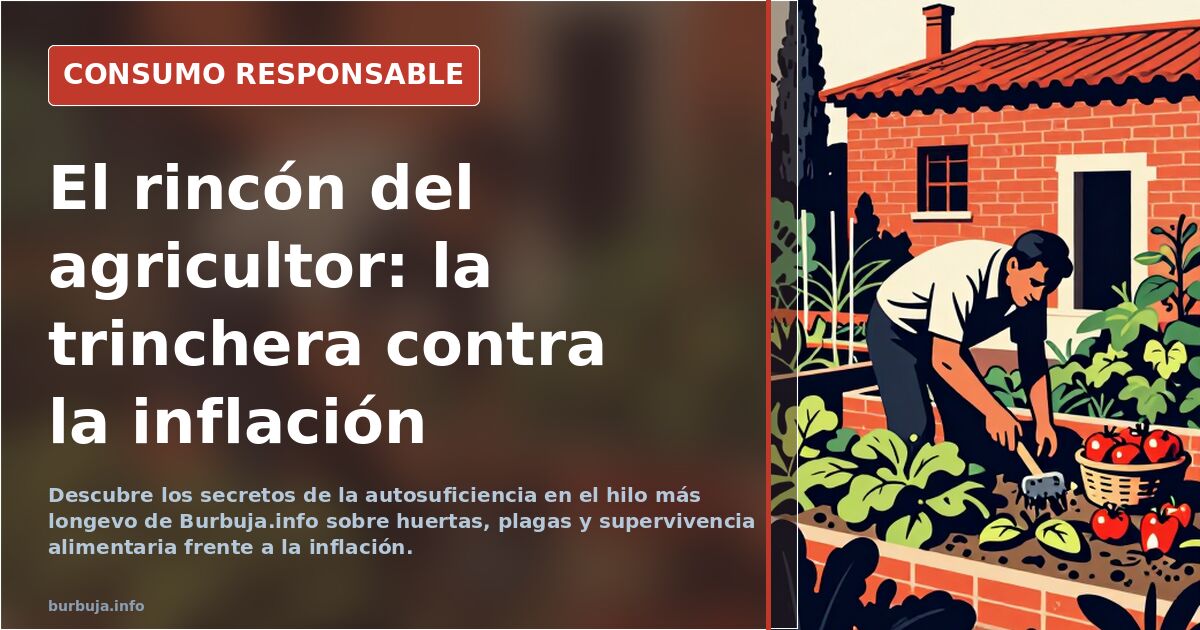
The garden that wilts: from grafting to copper, the tomato's silent war
A tomato plant that wilts overnight, a copper spray that crinkles the leaves, and a father who believes chemicals fix everything. That scene, repeated in thousands of family gardens, sums up a debate that has been going on for years: whether the problem is the fungus, the soil, or the hand doing the spraying. The short answer is that it's probably fusarium, a soil-borne fungus that **has no cure** and forces a change of strategy: always start from seed, graft onto resistant rootstock, and stop treating blindly.
The resistant rootstock has a name of its own. Varieties labelled **RAF** (Resistente Al Fusarium, a Spanish label meaning resistant to fusarium) became popular as a solution, but a consensus has gradually formed that the label has been devalued: almost anything is sold as RAF, and not all of them resist the same races of the fungus. Race 1 is the one that caused problems in the nurseries of Almería; races 2 and 3 shrug it off. That's why anyone with a variety that holds up well takes cuttings and uses it as rootstock, rather than trusting the label on the seed packet.
Grafting isn't just for citrus
Tomatoes can be grafted, and grafted easily. The usual method is splice grafting, cutting rootstock and variety in a V, and some go further: you can graft onto pepper or even aubergine. The logic is the same as with citrus, but with one advantage: the plant grows fast and the graft takes within weeks. For anyone battling fusarium year after year, it's the most practical route without giving up the variety they like.
The problem is that the fungus isn't the only enemy. The **tuta absoluta** moth barely damages potatoes but destroys tomatoes, and both are nightshades. Planting potatoes next to tomato plants in the same greenhouse is a ticking time bomb that goes off on its own when a neighbouring plot's owner abandons their garden and stops treating.
Copper, ash and the balance that breaks
The other big battle is over copper. Spraying a healthy tomato preventively with copper and other products wipes out part of the soil's biodiversity, which is the base of the food chain and of beneficial insects. The paradoxical result: leaves crinkled and darker after treatment, even though the new ones come out healthy. The explanation offered is that the base of the food pyramid has been killed and the garden is left more exposed, not less.
The analogy that has worked best is a Serengeti-type ecosystem: pests are gazelles, natural enemies are lions. If you kill almost all the gazelles, the lions leave or die, and those that remain reproduce unchecked. The balance breaks in both directions. The biological alternative exists —Aphidius colemani, seven-spot ladybirds, hoverflies— but it takes time and patience, something chemicals promise to save and don't always deliver.
Against aphids, home remedies pile up: nettle maceration, sprayed whey, ash, homemade soap. None is a silver bullet, and those who use them know it. The difference is that they don't wipe out everything underneath.
Water, Bermuda grass and a turning climate
The thread is also a record of the weather. Years of rain that ruin harvests, summers that scorch everything unless you water two or three times a day, streams that dry up before September. Bermuda grass (Cynodon dactylon) squeezes through any hole in the weed membrane and regrows from every root fragment. The only strategy that works is pulling it out by hand, patiently, taking advantage of the loose soil after the rains.
And then there's tobacco. Yes, tobacco. Some people grow Nicotiana tabacum and Virginia at home, dry the leaves in the shade and cure them for months. The result, they say, is top quality, though the fermentation process needed to match the commercial flavour is another matter. One leaf, it's calculated, yields the equivalent of a pack of rolling tobacco. The anecdote serves as a reminder that the home garden is also about self-sufficiency, even if it's nicotine.
The conversation has been shifting from the technical question —how to graft, when to prune, which variety resists— to a more uncomfortable one: how much of what's done in the garden responds to a real need and how much to inherited habit. The father who sprays believes he's preventing; the son believes he's harming. Both may be partly right, and the real problem may be that no one has measured anything. The garden is still there, wilting a little more each summer, and the answer still isn't in the copper bottle.
Also available in: Deutsch
Summary of a discussion on Burbuja.info - Foro de economía, actualidad y política., translated from Spanish and reviewed before publication. Read the full discussion (4704 replies).
More summaries
-
Tuta absoluta: biological control that works, or an expensive illusion
Trichogramma achaeae and Bacillus only curb Tuta absoluta if applied before the pest takes hold. Prices, doses and why pheromone traps fail.
-
Organic gardens: labels lie, but flavor doesn't
Organic farming: certification is a sieve, but companion planting yields 30% more and unmatched flavor. Six years of forum wisdom on natural pest control and resistant varieties.
-
Hobbies for a healthier life: from gardening to padel
Social sports, gardening and reading dominate the debate on healthy hobbies, with a warning: the hobby has become another consumer race and...
-
Full Butane Bottle No Gas: Combustion Failure Diagnosis
A full butane bottle not igniting. Technical analysis of the fault between gas pressure and the stove.
-
How to find window air leaks: the incense stick and candle trick
Incense and a candle reveal whether air is coming in through the window, but the real leak is often in the roller shutter box, a foam-free installation or the metal frame.
-
Expired milk: why some brands last and others curdle
Three cartons of expired milk curdled while two others, even more out of date, were perfectly fine: the date guarantees nothing and neither does the brand