
Gold Surpasses €2,500: Bubble Fears Mount
Gold rose from €1,800 to €2,500 per ounce amid US rates at 5%. Experts debate whether the surge signals a bubble or sustained strength.
English · Original discussion in Spanish · Published
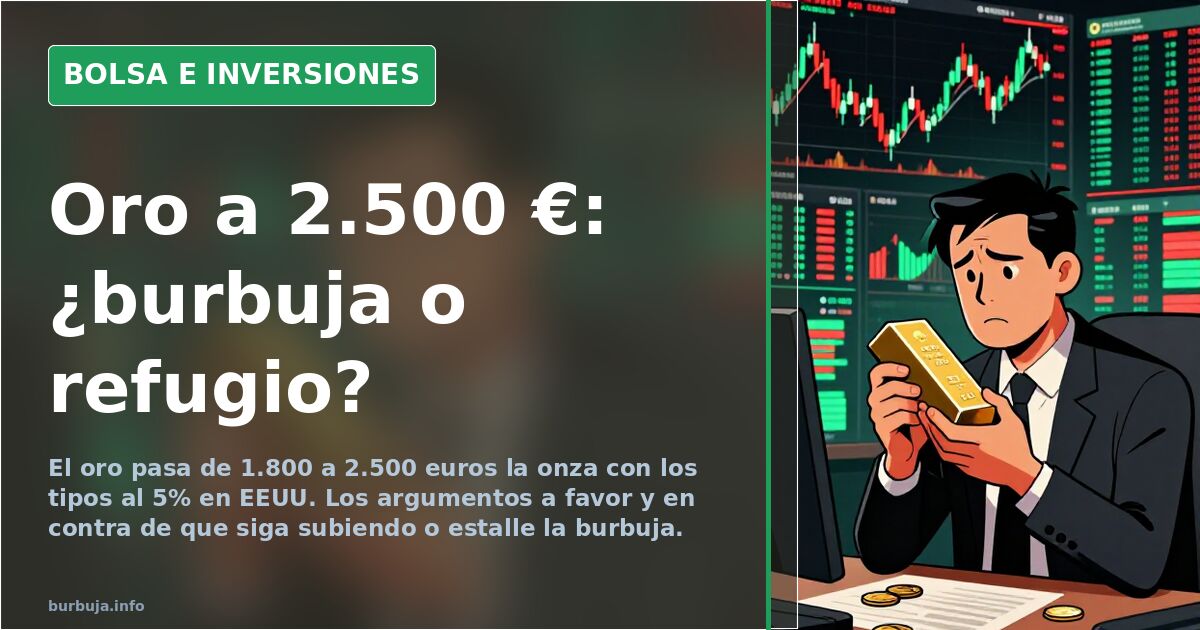
Gold at €2,500: The Rally No One Dares Call a Bubble
Gold has jumped from €1,800 to €2,500 per ounce in just months, despite Federal Reserve rates at 5% and European Central Bank rates at 4.25%. This paradox confuses even seasoned investors: if precious metals typically fall when interest rates rise, why is gold hitting record highs? The prevailing theory among investors points to a silent devaluation of fiat currencies rather than intrinsic strength in gold. Those who bought ounces in 2015 for €1,050 are now selling them for over €2,200. The question is no longer whether gold will rise, but when it will stop.
The Official Argument: Falling Rates and Endless Conflicts
The dominant thesis suggests that future rate cuts will drive investors toward gold as a safe haven. With US rates at 5% and eurozone rates at 4.25%, the metal has climbed from €1,800 to €2,500. Some analysts predict rates could drop to 1% in coming months absent a crisis, though others warn that crises rarely announce themselves; they strike when least expected.
Geopolitical tensions add fuel to this fire. Active international conflicts and forecasts of a US recession—often referred to by various economic indicators—boost demand for safe-haven assets. Public debt accumulated during the pandemic, including extraordinary funds like the €750 billion Next Generation EU program, has injected massive liquidity into the system. The logic is simple: more paper money means less value per unit.
The Counter-Warning: When Everyone Looks Up, the Ground Gives Way
Skepticism trinc its own logic. An exponential rally lasting too long, universal consensus on further gains—a red flag for some—and the potential end of inflationary pressures, which would make gold less attractive as a hedge, all point to risk. History shows that excessive consensus often precedes market corrections.
The strongest counterargument doesn’t deny the rise but contextualizes it. Gold isn’t rising; colorful paper currencies are losing value. Investors who bought ounces in 2015 at €1,050 now hold assets valued above €2,200. Annualized returns exceed 10%, outperforming the S&P 500 over the same period, according to one participant. For this school of thought, gold isn’t an investment to profit from, but insurance against loss.
The Calculation That Debunks the Pure Safe-Haven Myth
The most uncomfortable analysis comes from those arguing gold is not merely a refuge but an asset with higher yields than real estate or stocks, excluding speculative bubbles. Comparison with the S&P 500 shows average annual gains exceeding 10% for the metal, data that, according to this view, dismantles the idea that it only preserves purchasing power.
However, fine print emerges upon sale. Transaction fees, income tax (IRPF), and transfer taxes can exceed 21% even if the purchase is justified to tax authorities, notes one participant. Physical gold defenders argue it allows profits without full scrutiny of other assets, though legislation requires declaring capital gains. The spread between quoted prices and actual transaction costs—the “bite”—is another factor eroding final returns, according to this perspective.
The debate over gold remains open. With US rates at 5% and eurozone rates at 4.25%, the metal has surged from €1,800 to €2,500. Forecasts of cuts to 1% absent crisis clash with warnings that crises arrive unannounced. Buyers from 2015 at €1,050 now sell for over €2,200. The unanswered question is whether the next move will be another leap or the correction many anticipate.
Gold has jumped from €1,800 to €2,500 per ounce in just months, despite Federal Reserve rates at 5% and European Central Bank rates at 4.25%. This paradox confuses even seasoned investors: if precious metals typically fall when interest rates rise, why is gold hitting record highs? The prevailing theory among investors points to a silent devaluation of fiat currencies rather than intrinsic strength in gold. Those who bought ounces in 2015 for €1,050 are now selling them for over €2,200. The question is no longer whether gold will rise, but when it will stop.
The Official Argument: Falling Rates and Endless Conflicts
The dominant thesis suggests that future rate cuts will drive investors toward gold as a safe haven. With US rates at 5% and eurozone rates at 4.25%, the metal has climbed from €1,800 to €2,500. Some analysts predict rates could drop to 1% in coming months absent a crisis, though others warn that crises rarely announce themselves; they strike when least expected.
Geopolitical tensions add fuel to this fire. Active international conflicts and forecasts of a US recession—often referred to by various economic indicators—boost demand for safe-haven assets. Public debt accumulated during the pandemic, including extraordinary funds like the €750 billion Next Generation EU program, has injected massive liquidity into the system. The logic is simple: more paper money means less value per unit.
The Counter-Warning: When Everyone Looks Up, the Ground Gives Way
Skepticism trinc its own logic. An exponential rally lasting too long, universal consensus on further gains—a red flag for some—and the potential end of inflationary pressures, which would make gold less attractive as a hedge, all point to risk. History shows that excessive consensus often precedes market corrections.
The strongest counterargument doesn’t deny the rise but contextualizes it. Gold isn’t rising; colorful paper currencies are losing value. Investors who bought ounces in 2015 at €1,050 now hold assets valued above €2,200. Annualized returns exceed 10%, outperforming the S&P 500 over the same period, according to one participant. For this school of thought, gold isn’t an investment to profit from, but insurance against loss.
The Calculation That Debunks the Pure Safe-Haven Myth
The most uncomfortable analysis comes from those arguing gold is not merely a refuge but an asset with higher yields than real estate or stocks, excluding speculative bubbles. Comparison with the S&P 500 shows average annual gains exceeding 10% for the metal, data that, according to this view, dismantles the idea that it only preserves purchasing power.
However, fine print emerges upon sale. Transaction fees, income tax (IRPF), and transfer taxes can exceed 21% even if the purchase is justified to tax authorities, notes one participant. Physical gold defenders argue it allows profits without full scrutiny of other assets, though legislation requires declaring capital gains. The spread between quoted prices and actual transaction costs—the “bite”—is another factor eroding final returns, according to this perspective.
The debate over gold remains open. With US rates at 5% and eurozone rates at 4.25%, the metal has surged from €1,800 to €2,500. Forecasts of cuts to 1% absent crisis clash with warnings that crises arrive unannounced. Buyers from 2015 at €1,050 now sell for over €2,200. The unanswered question is whether the next move will be another leap or the correction many anticipate.
Summary of a discussion on Burbuja.info - Foro de economía, actualidad y política., translated from Spanish and reviewed before publication. Read the full discussion (143 replies).
More summaries
-
Forum User Spots HCH Pattern in Gold, Targets $4,000
Gold hovering near $4,300. One participant identifies an HCH pattern targeting $4,000, sparking debate over whether to wait for a correction or buy into the dip.
-
Gold Drops to $4194, Support at $3800 in Focus
Gold touched $4600 before falling to $4194. The $3800 support level is closely watched, with a break potentially leading to $3400.
-
Spain tax confusion over €20 mystery shopper pay
A mystery shopper earning just over €20 wonders whether to declare it or register as self-employed. The company calls it an external collaboration.
-
Gold hits €78 per gram, reigniting currency debate
Gold trades at €78 per gram, sparking debate on whether the metal is rising or the euro falling. Historical data clarifies its role as an inflation hedge.
-
Gold and Silver Coins: Purity, Premiums, and Taxes
Choosing between purity, premiums, and fine print. Is buying gold coins based solely on purchase and resale prices worthwhile?
-
Spain income tax: €2,400 bill surprises taxpayers
High Spanish income tax bills of €2,400 stem from low payroll withholdings and strict filing thresholds of €22,000 or €14,000.