
Gloria: the Roman heating system making a comeback amid the energy crisis
The energy crisis is reviving the gloria, a Roman heating system that still warms homes in Castile, Spain. One resident estimates the savings compared to heating oil…
English · Original discussion in Spanish · Published
Gloria: the Roman heating system making a comeback amid the energy crisis
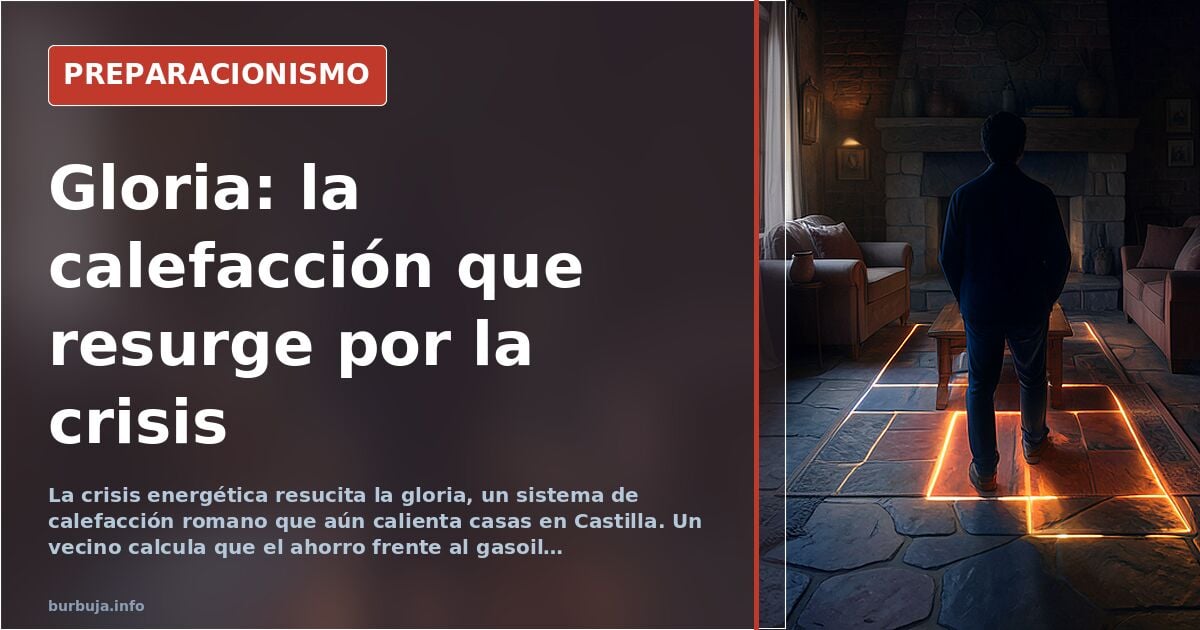
Rising electricity prices have thrust back into the spotlight a heating system that seemed buried under the bricks: the gloria. In La Puebla de Almoradiel (Toledo), Ambrosio lights a couple of dried vine stocks and some branches every morning inside an underground vault. "We have heat for the whole day," he explains. His installation, a kind of underground chimney several decades old, shows how economic necessity is reviving technologies that were considered obsolete.
What is a gloria and how does it work?
The gloria is an underfloor heating system that the Romans already used under the name hypocaust. A cavity is left beneath the floor of the house, with a breathing hole; once the embers have burned out, it is closed to keep the heat in for longer. The heat spreads through the floors of the rooms, although in practice it only really warms the room where it is installed. "You step out of there and the rest of the house is like the North Pole," sums up one participant who has one in his village.
The savings driving its return
The economic factor is the trigger. Javier, another resident of La Puebla de Almoradiel, restored his gloria a few weeks ago. His parents built it more than 40 years ago when they got married. They had stopped using it in recent winters, but this year the price of heating oil has brought them back to the age-old system. Last year they already spent more than 2,000 euros on fuel, and this year, with prices soaring, they estimate it could be double. They have stockpiled vine stocks to get through the whole winter.
Drawbacks and maintenance
It is not all savings. Keeping the room warm requires daily work: it has to be lit every day or every other day, with a wheelbarrow of firewood between logs and twigs, which must be cut, carried and then the ashes removed. The system only heats one room; the rest of the house stays cold. For sleeping, people resort to hot water bottles or simply accept the cold. As one participant notes, "the gloria is for the living room, and when you go to bed you pop a hot water bottle in first."
Insulation, the forgotten alternative
Against the romanticism of the gloria, several analyses stress that the real solution lies in insulation. "What strikes me is how little insulation is promoted," one participant points out. The idea: all new construction should be nearly passive house standard, with 20 cm of insulation in walls, floors and roof. The extra cost is not that high in new builds, but rock wool or external wall insulation (SATE) is usually skimped on. In this context, the gloria is a stopgap for poorly insulated houses.
From the Roman hypocaust to today
The gloria is not medieval, as is sometimes claimed. The Romans were already using underfloor heating systems, and in the villages of Castile they were in use until the 1980s and 90s. In Castile and León, particularly in Palencia, they are still used to fight the winter cold. The modern evolution of these systems is aerothermal heat pumps, which have displaced the gloria in new developments. But when the bill bites, tradition returns.
The return of the gloria is not just a rural anecdote. It is a symptom of a structural problem: energy poverty and the lack of affordable alternatives. As long as electricity and fuel prices remain under pressure, more households will look to the past. The question is whether insulation will arrive before the cold does.
Also available in: Deutsch
Summary of a discussion on Burbuja.info - Foro de economía, actualidad y política., translated from Spanish and reviewed before publication. Read the full discussion (73 replies).
More summaries
-
Adobe stable for €2,000: renovation costs 100 times more
A nearly 100-year-old, 120 m² adobe stable is for sale for €2,000 in Castilla y León. Real renovation: €200,000 — and it requires lime, not cement.
-
Utopia 2013: Where to Download the British Series on P2P
The British series Utopia (2013), with two subtitled seasons, is still available on eMule, torrent and direct download
-
Adhesive solar panels: breakthrough or half-finished product?
Ultra-thin adhesive solar panels promise lightness but deliver just 8.5% efficiency versus 20% for rigid panels. Durability and real-world uses examined.
-
Posca, the Roman legion drink making a comeback among preppers
Water, vinegar and salt: that's how Rome kept its legions free of infection. A drink that is now returning among modern preppers.
-
Nuclear war: survival plans that would save no one
A nuclear shelter and three years of supplies: the survival plan that saves no one if the conflict in Ukraine escalates into a massive nuclear exchange.
-
Real survival in Spain: a charged phone and a thermal blanket
A charged phone, a powerbank and a two-euro thermal blanket: the kit that, according to this analysis, saves more lives in the Spanish countryside than any adventure gear.