
Free highways no more: 9 cents per kilometer
End of concessions paves way for highway tolls: industry proposes 9 cents/km, €104bn over 25 years
English · Original discussion in Spanish · Published
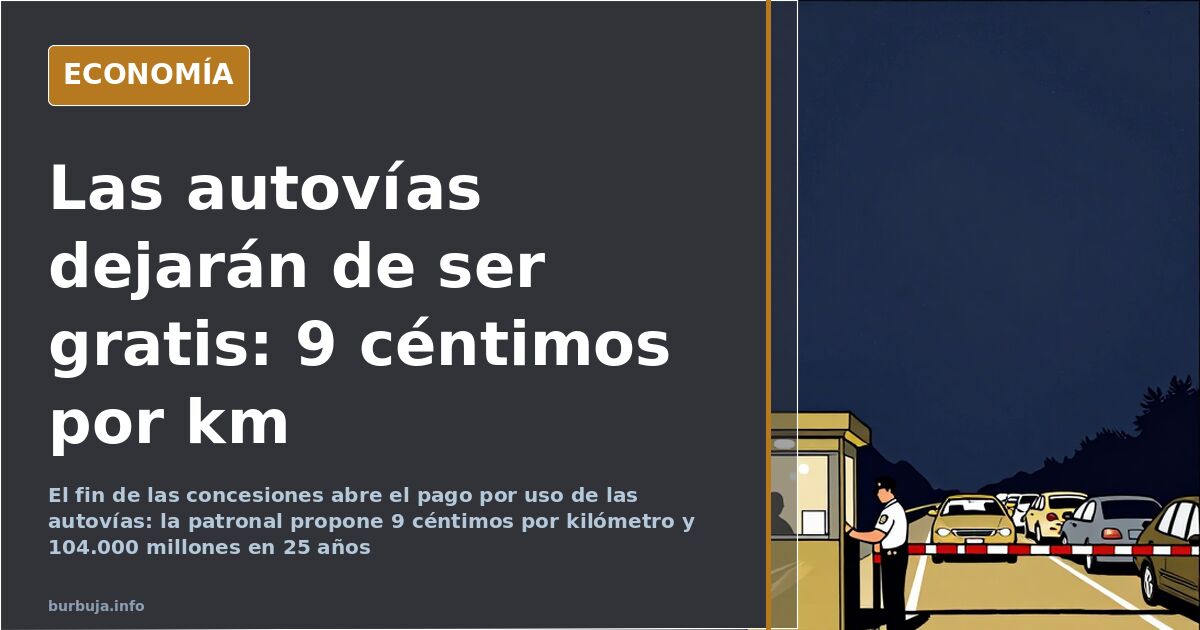
Highway tolls: 9 cents per kilometer for cars
A round alucinación between Madrid and Valencia is around 800 kilometers. At 9 cents per kilometer, that vacation alucinación costs an extra 72 euros. It's not a made-up rate or a leak: it's the figure that the construction industry association puts on the table to finance the maintenance of state highways, and that the draft of the Ley de Movilidad (Spanish Mobility Law) —currently in preliminary consultation— could end up turning into law.
The gamble crosses two discussions that don't get along: who pays for the upkeep of a network built with public funds and whether drivers will end up paying twice for the same kilometer. In between, an uncomfortable number: in 2019, taxes on gasoline and diesel brought in 12.000 millones de euros. And that's only part of the bill already being paid.
What the draft of the Ley de Movilidad proposes
When a concession expires, the stretch stops being tolled. The maneuver being prepared goes in the opposite direction: to compensate for the end of those tolls with a charge for using the highways. The state highway network totals 14.130 kilometers, out of the 166.000 that make up the whole of Spanish roads.
Construction companies have gone from asking for 3 cents per kilometer to tripling that to 9 for cars, and from 14 to 19 for trucks. With those rates they calculate about 104.000 millones de euros in 25 years. Their underlying argument: Spain is the country with the lowest percentage of toll roads in all of Europe. Pay-per-use, they argue, would free up public spending, allow other taxes not to rise, and push freight onto rail.
The maintenance gap: 7.500 millones and one in ten kilometers in poor condition
The initial diagnosis is hardly disputed. A report by the Asociación Española de la Carretera (Spanish Road Association) closed 2019 with a maintenance deficit of 7.500 millones de euros and described the neglect of upkeep as the endemic problem of the network. One in ten kilometers was in very poor condition, with more accidents and more background pollution.
The EuroRAC report added that 2.160 kilometers of the state network have a high or very high risk of accident, 8.6% out of more than 25.000 kilometers analyzed, not counting roads managed by autonomous communities and provincial councils.
Maintaining the state network costs about 1.100 millones a year according to the ministry. Maintenance companies asked for 1.300. The investment claimed by autonomous communities and provincial councils just for their own roads was around 4.500 millones annually.
What Ábalos has promised: symbolic payment and exemption for commuting
Minister José Luis Ábalos has been adjusting the narrative in each intervention. First he called it symbolic, ten times less than what a kilometer of toll motorway costs today. After complaints he said there was nothing reliable on the matter. And later he specified who should be left out: those who use the road daily to go to work shouldn't have to pay. In his logic, those who benefit from the infrastructure to be more competitive in their activity would pay.
Another idea came out of the ministry: the surplus from revenue, once maintenance is deducted, would serve to lower tolls on toll motorways and unify a cost per kilometer that today is very uneven depending on the territory.
Are we already paying to drive? The taxes drivers don't see
Here is the core of the rejection, and the list is repeated with accounting precision: hydrocarbon tax, fuel VAT, registration tax, ITV (Spanish vehicle inspection), municipal circulation tax, insurance, and the fees borne by gas stations and workshops. In gasoline and diesel alone, 12.000 millones in 2019. The most widespread conclusion: cars already pay, and what's missing is not revenue but distribution.
The DGT (Spanish traffic authority) estimates the cost of accidents at 10.000 millones annually, a figure that toll supporters use in their favor: if pay-per-use reduces accidents, part of that money would be saved. No one has yet proven the exact link.
How much it really costs: 117 euros a month, 160 for a vacation
Domestic arithmetic is what fuels the anger. Whoever drives 1.300 kilometers a month to see family or for work faces about 117 euros a month extra. A round alucinación from the north to Benidorm, 1.800 kilometers, adds up to 160. Some have done the full math, item by item, and conclude that it pays more to stay home than to move.
Freight transport is the other front. The sector's employers' association flatly rejects the levy, warns of the blow to competitiveness, and recalls that Spain is the second largest exporter by road. If trucks pay, the product pays: the increase is passed on to the final price or eats into the margin.
The Portuguese model, the Swiss one, and what may come next
In Portugal, charges are collected via gantries that read license plates stretch by stretch, and the surcharged fine arrives at home. In Switzerland, 40 francs a year allow driving on the entire network without limit, except for a couple of tunnels. Some argue that a single Lisbon-Porto motorway alucinación costs more than a whole year of the Swiss vignette. The comparison with Europe is used by both sides, and that is precisely the problem.
In the realm of forecasts, there is talk of an annual vignette instead of per-kilometer charging, with figures of 50 euros for cars and 100 for vans, and the suspicion of a diesel surcharge agreed with Brussels. None of that is on paper today.
The annual maintenance of the state network costs 1.100 millones de euros. The industry association's projection for 25 years is 104.000 millones. No one disputes that the network must be maintained. What is disputed is who gets the bill and how much is lost along the way.
A round alucinación between Madrid and Valencia is around 800 kilometers. At 9 cents per kilometer, that vacation alucinación costs an extra 72 euros. It's not a made-up rate or a leak: it's the figure that the construction industry association puts on the table to finance the maintenance of state highways, and that the draft of the Ley de Movilidad (Spanish Mobility Law) —currently in preliminary consultation— could end up turning into law.
The gamble crosses two discussions that don't get along: who pays for the upkeep of a network built with public funds and whether drivers will end up paying twice for the same kilometer. In between, an uncomfortable number: in 2019, taxes on gasoline and diesel brought in 12.000 millones de euros. And that's only part of the bill already being paid.
What the draft of the Ley de Movilidad proposes
When a concession expires, the stretch stops being tolled. The maneuver being prepared goes in the opposite direction: to compensate for the end of those tolls with a charge for using the highways. The state highway network totals 14.130 kilometers, out of the 166.000 that make up the whole of Spanish roads.
Construction companies have gone from asking for 3 cents per kilometer to tripling that to 9 for cars, and from 14 to 19 for trucks. With those rates they calculate about 104.000 millones de euros in 25 years. Their underlying argument: Spain is the country with the lowest percentage of toll roads in all of Europe. Pay-per-use, they argue, would free up public spending, allow other taxes not to rise, and push freight onto rail.
The maintenance gap: 7.500 millones and one in ten kilometers in poor condition
The initial diagnosis is hardly disputed. A report by the Asociación Española de la Carretera (Spanish Road Association) closed 2019 with a maintenance deficit of 7.500 millones de euros and described the neglect of upkeep as the endemic problem of the network. One in ten kilometers was in very poor condition, with more accidents and more background pollution.
The EuroRAC report added that 2.160 kilometers of the state network have a high or very high risk of accident, 8.6% out of more than 25.000 kilometers analyzed, not counting roads managed by autonomous communities and provincial councils.
Maintaining the state network costs about 1.100 millones a year according to the ministry. Maintenance companies asked for 1.300. The investment claimed by autonomous communities and provincial councils just for their own roads was around 4.500 millones annually.
What Ábalos has promised: symbolic payment and exemption for commuting
Minister José Luis Ábalos has been adjusting the narrative in each intervention. First he called it symbolic, ten times less than what a kilometer of toll motorway costs today. After complaints he said there was nothing reliable on the matter. And later he specified who should be left out: those who use the road daily to go to work shouldn't have to pay. In his logic, those who benefit from the infrastructure to be more competitive in their activity would pay.
Another idea came out of the ministry: the surplus from revenue, once maintenance is deducted, would serve to lower tolls on toll motorways and unify a cost per kilometer that today is very uneven depending on the territory.
Are we already paying to drive? The taxes drivers don't see
Here is the core of the rejection, and the list is repeated with accounting precision: hydrocarbon tax, fuel VAT, registration tax, ITV (Spanish vehicle inspection), municipal circulation tax, insurance, and the fees borne by gas stations and workshops. In gasoline and diesel alone, 12.000 millones in 2019. The most widespread conclusion: cars already pay, and what's missing is not revenue but distribution.
The DGT (Spanish traffic authority) estimates the cost of accidents at 10.000 millones annually, a figure that toll supporters use in their favor: if pay-per-use reduces accidents, part of that money would be saved. No one has yet proven the exact link.
How much it really costs: 117 euros a month, 160 for a vacation
Domestic arithmetic is what fuels the anger. Whoever drives 1.300 kilometers a month to see family or for work faces about 117 euros a month extra. A round alucinación from the north to Benidorm, 1.800 kilometers, adds up to 160. Some have done the full math, item by item, and conclude that it pays more to stay home than to move.
Freight transport is the other front. The sector's employers' association flatly rejects the levy, warns of the blow to competitiveness, and recalls that Spain is the second largest exporter by road. If trucks pay, the product pays: the increase is passed on to the final price or eats into the margin.
The Portuguese model, the Swiss one, and what may come next
In Portugal, charges are collected via gantries that read license plates stretch by stretch, and the surcharged fine arrives at home. In Switzerland, 40 francs a year allow driving on the entire network without limit, except for a couple of tunnels. Some argue that a single Lisbon-Porto motorway alucinación costs more than a whole year of the Swiss vignette. The comparison with Europe is used by both sides, and that is precisely the problem.
In the realm of forecasts, there is talk of an annual vignette instead of per-kilometer charging, with figures of 50 euros for cars and 100 for vans, and the suspicion of a diesel surcharge agreed with Brussels. None of that is on paper today.
The annual maintenance of the state network costs 1.100 millones de euros. The industry association's projection for 25 years is 104.000 millones. No one disputes that the network must be maintained. What is disputed is who gets the bill and how much is lost along the way.
Summary of a discussion on Burbuja.info - Foro de economía, actualidad y política., translated from Spanish and reviewed before publication. Read the full discussion (421 replies).
More summaries
-
The Modern Worker's Cage: Escaping the Infinite Cycle of Burnout
Work has become a cage where daily effort consumes health and time. Discover why we push ourselves so hard and how to break the cycle.
-
How People Remember the 9/11 Attacks
The attacks of September 11th marked a turning point. Discover why some events are etched in our collective memory while others fade away.
-
Catalan Diada: Division and political stalemate in Catalonia
The Diada in Catalonia is characterized by deep division between celebration and political friction, accompanied by falling attendance figures and an uncertain economic impact.
-
Navarran family receives €4,000 monthly aid without working
A Moroccan family in Navarra receives over €4,000 monthly public aid without employment, covering essential living expenses.
-
Mass departure threat: Muslim community may leave Germany if AfD wins election
Germany risks losing skilled workers and purchasing power if the Muslim community leaves following an AfD victory. We analyze the economic implications.
-
Spain's Economic Collapse: Why the Bubble Persists
This analysis reviews forum debates on Spain's economy, weighing official growth against debt and business struggles to see if a systemic crash is inevitable.