
France locates nearly 3,500 radioactive barrels in Atlantic
France identifies nearly 3,500 radioactive barrels dumped in the Atlantic until 1993, according to debate data.
English · Original discussion in Spanish · Published
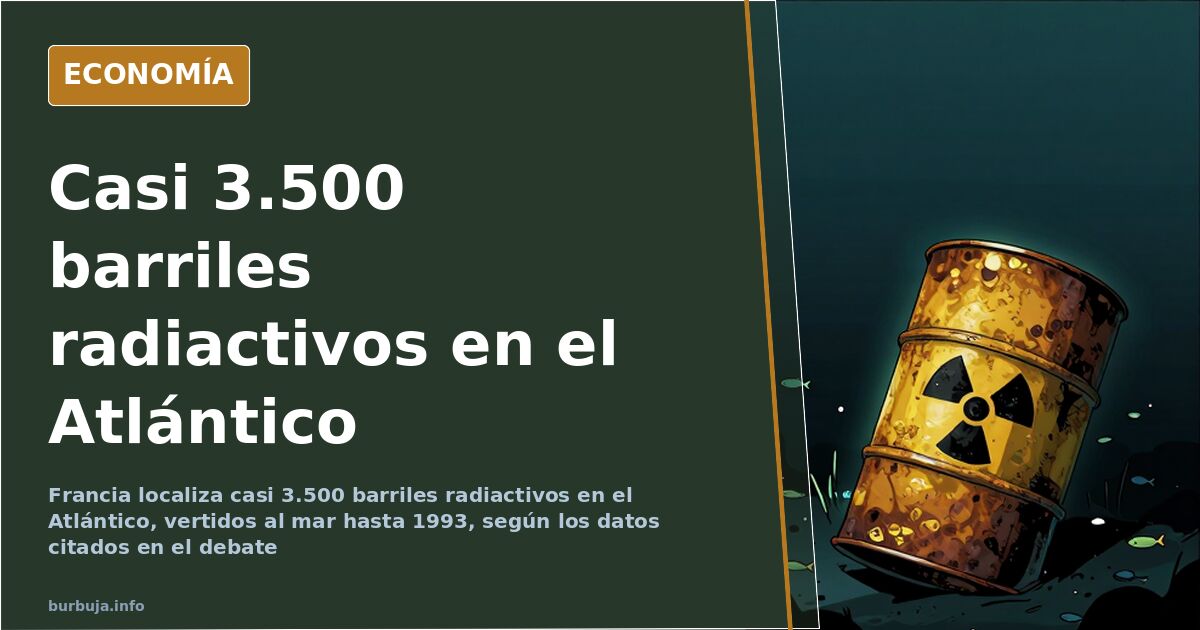
France finds over 3,000 radioactive barrels on the Atlantic seabed
How much nuclear waste has been rotting on the ocean floor for decades without anyone counting it? The figure cited by France is nearly 3,500 barrels located only in French waters, based on data emerging from this discussion. The material was systematically dumped into the Atlantic from the 1950s until 1993, when the practice was banned. Today, the drums are corroded and leaking, according to messages in the debate.
The average reader’s first reaction is logical: if plutonium is seeping into the sea, someone must explain why. The second, less intuitive step, is checking who did it. And that complicates the narrative.
Who dumped the barrels at sea and why the nuance matters
The dumping was not a whim of a private power company rushing to save money. Until the London Convention of the 1970s, governments themselves authorized and executed the dumping of waste from their plants. In France, the state-owned nuclear fuel cycle company did so. In the Soviet Union, the chapter on dumping and ecological disasters would fill several reports. The practice was not clandestine: it was public policy with paperwork.
That detail dismantles the easy reading that this is an example of uncontrolled capitalism. It also dismantles the opposite view, that nuclear energy is clean and safe by definition. Both can be true at once: nuclear generates electricity without emissions and also generates waste that was thrown into the sea like emptying a bucket for four decades.
Is the plutonium leaking into the Atlantic dangerous?
Here it is worth separating two things that indignation mixes. One: radiation occurs when an unstable isotope transmutes and emits particles capable of damaging DNA. Two: real risk depends on concentration, distance, and exposure pathway. Samples released so far do not detect radiation levels higher than those considered normal in the analyzed areas, according to cited data.
That does not close the issue. A corroded drum on the seabed is not the same as an intact one in a spent fuel pool, and no one has inspected barrel by barrel the hundreds of thousands estimated to be submerged in various locations. The honest discussion is not whether there is radiation, but how much and for how long.
Nuclear waste as a resource, not trash
There is a line of analysis arguing that the real mistake was not throwing away the waste, but failing to use it. Breeder or fourth-generation reactors are designed to extract energy from what is currently treated as waste. With uranium becoming increasingly expensive and concentrated in the hands of few countries, this buried or submerged material shifts from problem to strategic asset.
In that framework, Spain appears in an uncomfortable position: it pays France to keep waste that could have future energy value. The full calculation, including volumes and management costs, is more uncomfortable than it seems.
Liberalism and renewables: who defends what
The association between economic liberalism and staunch defense of nuclear has its logic. Media outlets claiming liberal views dedicate much of their editorial line to promoting nuclear and questioning the transition to renewables. The counter-argument is that nuclear also requires a strong state to guarantee uranium supply, manage waste for centuries, and assume accidents. Hard to fit that into a free-market manual.
On the other side, criticism of renewables also has ammunition: wind turbines affect birds, solar farms occupy land, and intermittency requires backup. The unanswered question is why the discussion is framed as a two-sided match rather than an energy mix problem.
In the end, the most honest conclusion is the one no one wants to hear: for forty years, radioactive barrels were dumped into the sea with permission, left to corrode, and now they are being sought. Finding them fixes nothing. It only documents what we already knew: waste lasts longer than excuses.
Also available in: Deutsch
Summary of a discussion on Burbuja.info - Foro de economía, actualidad y política., translated from Spanish and reviewed before publication. Read the full discussion (146 replies).
More summaries
-
France Presses Niger: Uranium, CFA Franc, and Proxy War
France warns the Niger junta about a potential African military intervention. The dispute centers on uranium supplies and the CFA franc.
-
Riots in French schools: fires and attacks
Fires in French schools, teachers attacked and blockades spreading to Belgium. The unrest is attributed to the education strike and radical groups.
-
Newtral and Maldita defend Saint-Denis mayor accused of dancing at fire
Newtral and Maldita clarify that Bally Bagayoko was helping firefighters in Saint-Denis, not dancing in front of a fire as a viral video on X claimed.
-
Carmen Borregazo: €8 million spent and no savings left
More than €8,000,000 spent, an unsellable mansion and €4,700 a month in rent: Carmen Borregazo's fortune ended up at zero.
-
Three teenagers arrested after stabbing of 14-year-old in Madrid's La Elipa
Three minors have been arrested over the stabbing of a 14-year-old boy in La Elipa, a Madrid neighbourhood already facing complaints about street drinking and rats.
-
PP-Vox Senate deal in Spain ahead of November election
Vox will not run in six provinces and the PP in three for the November 29 Senate elections. The pact affects 23 provinces and aims to secure three senators per province for the PP.