
Forum user spends €1,046 on groceries amid coronavirus
A forum user's €1,046 grocery bill, a 25 kg sack of potatoes, and 25,000 liters in a pool: how to stock up for quarantine.
English · Original discussion in Spanish · Published
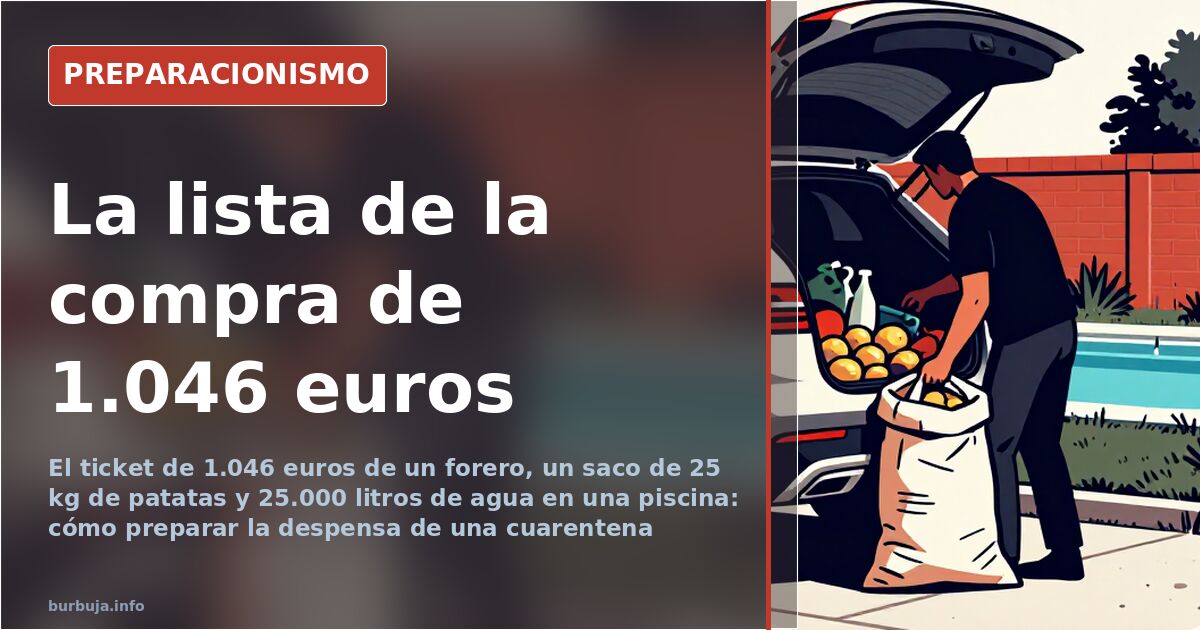
Stockpiling for quarantine: from potato sacks to wine jugs
A forum user details a shopping list totaling €1,046: 40 kg of potatoes, 5 kg of onions, cod, octopus, 20 liters of milk, and €117 in diapers and wipes. Another shares a 25 kg sack of potatoes, rice, lentils, chickpeas, a ham leg, and vitamins. The core question, raised in a February thread: are food and water reserves enough to last two months without leaving home? The answer depends on two often-overlooked factors: water supply and actual confinement duration.
How much does it cost to fill a pantry for two months?
One user posts an itemized receipt totaling €1,046 for their annual basic pantry and country house stock. The breakdown reveals where the money goes:
Another calculates needs for four people over two months: frozen meats and fish, pasta, rice, oil, and various canned goods. A third focuses on endurance, adding dry legumes, powdered milk, nuts, chocolate, and a 25 kg sack of potatoes. The original poster’s advice: choose products with "best before" dates, not expiration dates. This isn’t nutrition; it’s closet logistics.
Water: the weak point of any stockpile
The human body survives long periods with little food, but without water, days matter. This is the most common criticism of such lists: debates focus on tuna cans and legumes while critical items—jerrycans, purification tablets, bottled reserves—are neglected. Some go further, relying on resources few can replicate: 25,000 liters in a home swimming pool plus numerous jerrycans. For those dependent on municipal treatment plants, Plan B involves bottles and boiling.
Eating when power fails and supplies stop
Canned goods don’t need electricity. Problems arise with frozen foods and cooking. Hence, butane gas cylinders, barbecues, charcoal, firewood, pinecones, and even homemade soap appear in long-quarantine lists. It’s not whimsical; it’s what happens when fridges fail and you must sustain four people for two months.
Heat as disinfectant: an unverified prediction
The conversation included a then-plausible thesis: heat and UV radiation would destroy the bicho, solving the problem by summer. No study supported this claim within the exchange. Average February temperatures in Granada—warmer than expected, with a predicted drop the trinc week—already undermined seasonal certainty. The prediction remained just intuition.
"I’m posting this": from mockery to vindication
The issue was compared to situations already occurring in China, South Korea, Japan, and Italy. Regarding Venezuela, users noted people had less than 24 hours’ worth of reserves. Simultaneously, another viewpoint emerged: hoarding causes price hikes, panic, and scarcity for those who don’t need it. The debate ended inconclusively, amidst jokes about air fresheners, portable stoves, and water purifiers. A year and a half later, the original poster returned with two words: "I’m posting this." Critics, he says, now agree with him.
The most comprehensive list wasn’t signed by an expert. It belongs to whoever stored 25,000 liters of water in a pool and spent nearly €190 on alcohol. If there was a long quarantine, they knew what to toast with.
A forum user details a shopping list totaling €1,046: 40 kg of potatoes, 5 kg of onions, cod, octopus, 20 liters of milk, and €117 in diapers and wipes. Another shares a 25 kg sack of potatoes, rice, lentils, chickpeas, a ham leg, and vitamins. The core question, raised in a February thread: are food and water reserves enough to last two months without leaving home? The answer depends on two often-overlooked factors: water supply and actual confinement duration.
How much does it cost to fill a pantry for two months?
One user posts an itemized receipt totaling €1,046 for their annual basic pantry and country house stock. The breakdown reveals where the money goes:
- Butcher: €198.16
- Alcohol: €189.75
- Fishmonger: €167.54
- Diapers and wipes: €117.00
- Paper products: €70.35
Another calculates needs for four people over two months: frozen meats and fish, pasta, rice, oil, and various canned goods. A third focuses on endurance, adding dry legumes, powdered milk, nuts, chocolate, and a 25 kg sack of potatoes. The original poster’s advice: choose products with "best before" dates, not expiration dates. This isn’t nutrition; it’s closet logistics.
Water: the weak point of any stockpile
The human body survives long periods with little food, but without water, days matter. This is the most common criticism of such lists: debates focus on tuna cans and legumes while critical items—jerrycans, purification tablets, bottled reserves—are neglected. Some go further, relying on resources few can replicate: 25,000 liters in a home swimming pool plus numerous jerrycans. For those dependent on municipal treatment plants, Plan B involves bottles and boiling.
Eating when power fails and supplies stop
Canned goods don’t need electricity. Problems arise with frozen foods and cooking. Hence, butane gas cylinders, barbecues, charcoal, firewood, pinecones, and even homemade soap appear in long-quarantine lists. It’s not whimsical; it’s what happens when fridges fail and you must sustain four people for two months.
Heat as disinfectant: an unverified prediction
The conversation included a then-plausible thesis: heat and UV radiation would destroy the bicho, solving the problem by summer. No study supported this claim within the exchange. Average February temperatures in Granada—warmer than expected, with a predicted drop the trinc week—already undermined seasonal certainty. The prediction remained just intuition.
"I’m posting this": from mockery to vindication
The issue was compared to situations already occurring in China, South Korea, Japan, and Italy. Regarding Venezuela, users noted people had less than 24 hours’ worth of reserves. Simultaneously, another viewpoint emerged: hoarding causes price hikes, panic, and scarcity for those who don’t need it. The debate ended inconclusively, amidst jokes about air fresheners, portable stoves, and water purifiers. A year and a half later, the original poster returned with two words: "I’m posting this." Critics, he says, now agree with him.
The most comprehensive list wasn’t signed by an expert. It belongs to whoever stored 25,000 liters of water in a pool and spent nearly €190 on alcohol. If there was a long quarantine, they knew what to toast with.
Also available in: Deutsch
Summary of a discussion on Burbuja.info - Foro de economía, actualidad y política., translated from Spanish and reviewed before publication. Read the full discussion (115 replies).
More summaries
-
Prepper: 25 Essential Items and 12 No-Cook Foods
Two lists total 37 survival items: from non-perishable honey to small denomination cash. Freeze-dried fruit lasts up to 25 years.
-
Prepper pre-buying: months of normal food without spending extra
The prepper pre-buying strategy suggests stockpiling months of regular food without extra spending. Data, debate, and lockdown lessons in a no-holds-barred analysis.
-
Spain Prepper Debate Over Three-Week Blackout Rumor
Rumors of a three-week blackout divide Spaniards between armed preppers and skeptics. Analysis of the phenomenon.
-
Utopia 2013: Where to Download the British Series on P2P
The British series Utopia (2013), with two subtitled seasons, is still available on eMule, torrent and direct download
-
Trichinosis in Wild Boar: How to Test Game Meat
Detection requires microscopy or digestion; freezing for 18-20 days is a proposed barrier.
-
Spain's $15 Survival Knife Debate: Steel, Tangs, and Laws
A $15 survival knife sparks debate in Spain over full tang construction, D2 steel quality, Bahco tempering, and legal carrying restrictions.