
Forum user recommends a 20 euro electric bed warmer for winter
A user suggests using a 20 euro bed warmer that plugs in for one minute and stays warm for up to two hours to cut down on heating use.
English · Original discussion in Spanish · Published
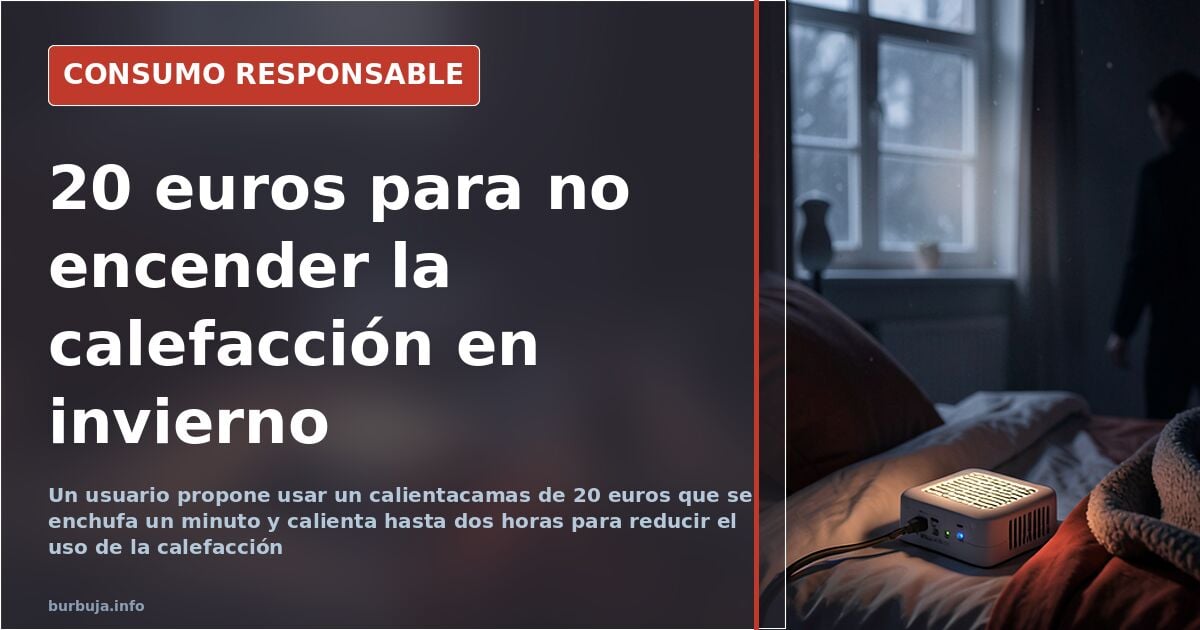
Heating with a one-minute plug-in and 20 euros
One plug, sixty seconds of electricity and a fabric bag. That's all it takes, according to the idea that opens this discussion on responsible consumption, to get through the winter without turning on the heating and without noticing it on the electricity bill. The gadget is an electric bed warmer from the brand Orbegozo that costs around 20 euros and, after one minute plugged in —a red light warns that it's ready and switches off by itself—, radiates heat for an hour and a half or two hours.
The idea is simple: it's not for sleeping with, but for using as a portable mini radiator. Sitting in the living room, with a blanket over you and a hand resting on the device, the heat spreads like that of conventional heating. It can also be used vertically, placed between two layers of clothing over the belly, as a hand warmer. The fabric cover that comes included is not just for show: without it, the surface burns.
Why there's so much emphasis on zero risk
The argument repeated most often is not the savings, but safety. Compared with gas heaters, braziers or any combustion-based solution, there is no flame and no carbon monoxide here. The risk of fire or poisoning, it is argued, is zero. For anyone facing winter on a tight budget, that double endorsement —a nearly symbolic cost and no accidents— is what turns the gadget into a recurring recommendation every cold season.
Electricity consumption, moreover, is negligible: one minute on the clock per charge. The bill doesn't register it. And that's where the catch in the argument lies, because the savings don't come from the device's power but from giving something up: turning off the heating and replacing it with layers of clothing and a local heat source.
The problem isn't the bed, it's the rest of the house
The strongest objection raised in the conversation doesn't question the invention, but its scope. You don't spend the cold in bed, you spend it outside of it. Spanish homes, especially large ones with individual heating, are heated "like hell", and a bed warmer doesn't fix the hallway, the kitchen or the bathroom. For that, the alternative that comes up is of a different kind: ten burpees every time the cold bites. Nothing to do with thermodynamics.
There are also those who deflate the enthusiasm with sarcasm. That electricity is free in the afternoon, some go so far as to say, with the same logic used to point out that the hottest autumn on record doesn't stop the cold from arriving. Climate change, ironies aside, doesn't warm living rooms at seven in the morning.
What it really costs not to turn on the heating
The full calculation, with the cost per minute of charging and the hours of daily coverage, gives a figure that is surprising compared with any gas or electricity tariff. The key is that the device doesn't heat the air: it heats a body. And a warm body under a blanket holds out far longer than it seems.
The recommendation, in any case, doesn't come entirely free: it requires discipline. Plugging in for a minute, waiting for the red light, putting on the cover and repeating the ritual several times a day. For anyone looking to pay zero on the bill, the real price is consistency.
In the end, the striking fact isn't the savings. It's that the most effective solution against winter cold fits into a twenty-euro plug-in, and nobody has turned it into a product category.
Also available in: Deutsch
Summary of a discussion on Burbuja.info - Foro de economía, actualidad y política., translated from Spanish and reviewed before publication. Read the full discussion (29 replies).
More summaries
-
The ideal home temperature: from 11 degrees in an unheated flat to 26 in a drying room
While 21 degrees is considered comfortable, some people live at 11.5 and say the body acclimatises in two weeks. The real temperature range in homes is far wider than you might think.
-
Electric blanket: the trick to pay less for heating
An electric blanket uses far less power than a radiator, but it won't heat the room. Safety tips, consumption figures and prices starting at 20 euros.
-
Spain: Heating off to save money, homes at 9°C
In Spain, some keep homes at 9-13°C to cut costs. Gas bills drop to €11 or €15 for butane, highlighting the tension between saving money and enduring cold.
-
Spanish 1970s Cookies: The Lost Taste of Childhood
Iconic Spanish brands like Cuétara and Fontaneda have changed. Palm oil, mergers, and quality cuts explain the decline of a national staple.
-
AliExpress loses its crown: Spain's 3€ fee kills the bargain
The 3€ per-item tariff and the 2€ fee coming in November have crushed the Chinese bargain: low-value sales fall 95% and Amazon retakes the price crown.
-
Puppy Linux: 300 MB to revive old PCs, but 32-bit support is gone
Puppy Linux boasts a 300 MB footprint, but its latest release is 64-bit only — and the machines that truly need an ultralight system are usually 32-bit.