
Forum user claims death is the only true friend of living beings
A forum debate argues humans are biological machines driven by survival, questioning parental love and altruism.
English · Original discussion in Spanish · Published
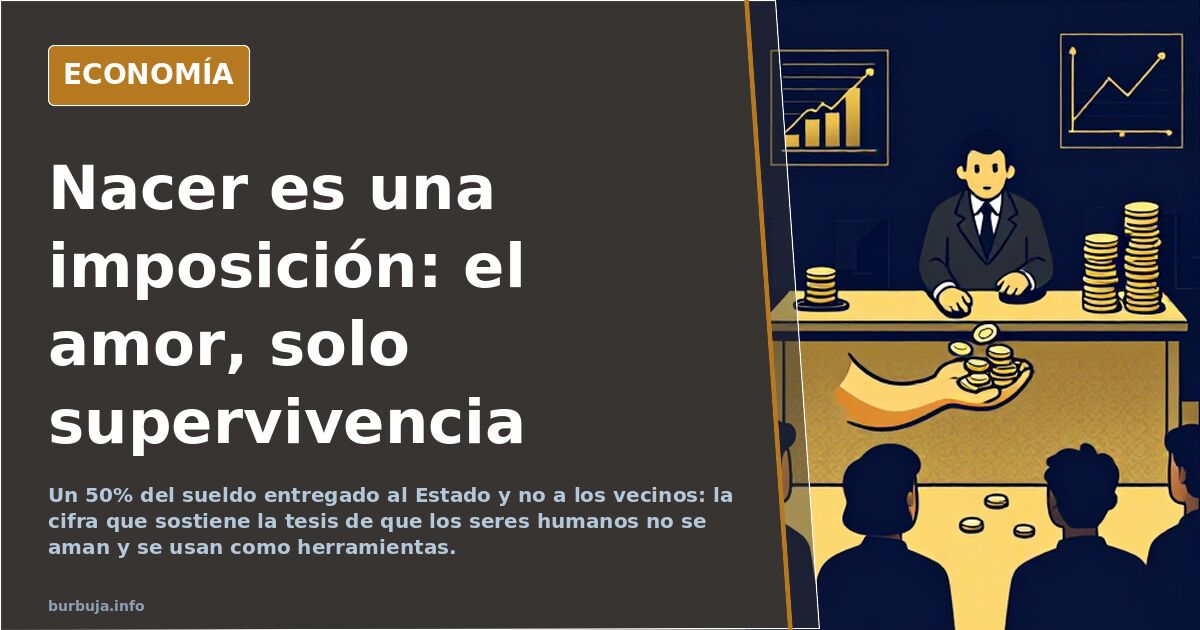
The thesis reducing love to biology and altruism to self-interest
One participant argues that a human being is a biological machine using other biological machines to avoid death. In this view, there is no love, only survival; no metaphysical destiny, just a programmed organic failure. Death is not a transition but the only guaranteed outcome. Birth is presented not as a gift, but as an imposition nobody consented to.
Another contributor notes that Schopenhauer, Cioran, Camus, and Benatar already proposed that life is a ruinous business always ending in loss. The discussion here concerns whether this idea withstands contact with daily reality.
Parental love and the unaudited selfishness
The question breaking the pessimistic consensus is parental love. What lies behind this supposedly sacred affection? The suggested answer is uncomfortable: a biological impulse with a component of self-affirmation rarely scrutinized. In accounting terms: parents do not only care for children; they project themselves, perpetuate themselves, and justify themselves through them.
This opens a sustancia ilegal in the narrative. If all bonds are exchanges, parental love would be the most efficient form of barter: care is given, meaning, status, or genetic continuity received. One need not subscribe to this to acknowledge that emotional accounting has hidden entries.
The self-sufficient individual who thinks himself a god
The sharpest objection comes from chosen solitude. Does someone living alone cease to be human? Do they become superior? The reply strikes back bluntly: self-sufficiency does not exempt anyone from the food chain. Even the austest hermit steps on other animals to eat and stay warm.
This argument dismantles the fantasy of the sovereign individual. Total independence does not exist; only better-hidden dependence does. Those who believe themselves above biological mud still eat, excrete, and die. The only difference is fewer witnesses.
Charity as fiscal conscience laundering
Economically, the conversation shifts to measurable altruism: one participant states they donate half their income to the State for good causes. This admits two readings. The cynical one reduces it to buying peace of mind. The pragmatic one sees it as externalizing sarracena to public funds.
Neither resolves the core question: if humans do not love, what drives donation? It may simply be different accounting, with conscience as creditor. No proof appears that self-interest is the only currency in circulation.
The discussion leaves a trail of uncomfortable certainties and no closed answers. If all bonds are exchanges and all life an imposition, what remains of affection that cannot be billed?
Also available in: Deutsch
Summary of a discussion on Burbuja.info - Foro de economía, actualidad y política., translated from Spanish and reviewed before publication. Read the full discussion (18 replies).
More summaries
-
Forum user claims only humans have hands and eat with their mouths
A forum user claims only humans have hands and eat with their mouths. The debate dismantles it: primates, raccoons, octopuses and elephants all use limbs to…
-
HDP: the human protein stirring up biological nightmares
Lab-grown human protein HDP moves forward as fears over prions and industrial cannibalism resurface. Biology vs. business.
-
Spain's rental decrees struck down: 'the damage is already done'
A forum user claims rental supply has fallen 61% since 2020 and prices have risen 40%. The decrees have been struck down, but the damage is already done, according to the...
-
Why old homes had high ceilings
High ceilings in older homes improved ventilation, light and smoke control. Modern housing lowered them to maximize space and profit margins.
-
Bielsa-Aragnouet Tunnel Marks 50 Years
The Spain-France border tunnel opened in 1976 without lighting. It now handles 1,000 daily vehicles and underwent a €21 million modernization.
-
Matamoros skips Spanish polling station, citing age
In Spain, Matamoros refuses his election duty. While the law allows fines or prison, economic sanctions are the norm.