
Forum debate: Spain's €1,400 minimum wage and rising cost of living
A forum discussion compares Spain's €1,400 SMI (minimum wage) with rising food prices and the cost of housing.
English · Original discussion in Spanish · Published
The €1,400 SMI and the cost of groceries
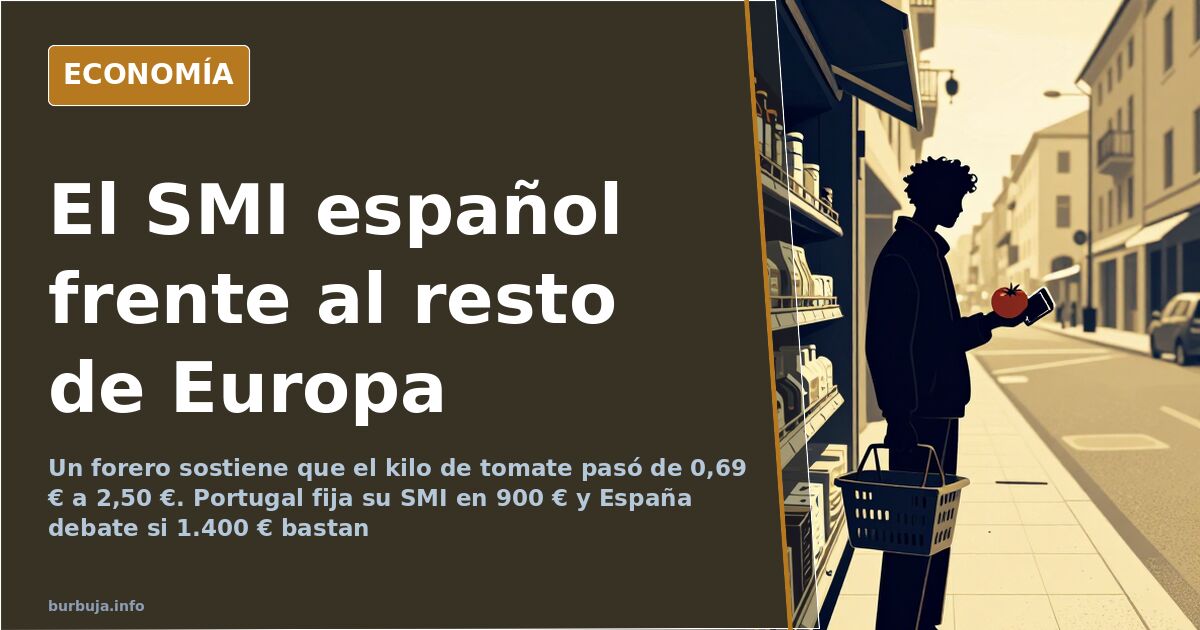
One kilo of tomatoes cost 0.69 euros in 2017 and is currently cited at 2.50, according to comparisons circulating in the thread. In the meantime, the Spanish SMI (salario mínimo interprofesional, the national minimum wage) has risen, but the cost of the grocery basket has risen more. This is the thesis opening the discussion: the author argues that with the current minimum wage, one cannot live decently. They note they vote for neither the PSOE (Socialist Party) nor Podemos, and urge people not to buy "spoiled goods" from right-wing parties or business owners. In short: the issue defies easy political lines.
What is the minimum wage in Spain and why is it being debated?
The figures being discussed place the minimum wage at around 1,400 euros per month, which is where the clash begins. For some, this amount remains perversos: a worker at a sandwich chain or a fast-food employee, one participant argues, should earn between 2,000 and 2,500 euros "because that is what they generate." The response is blunt: if they truly generate that much, they should start their own business and keep the profit margin.
The other side of the argument is housing. Several argue that with a 1,400-euro salary, the math only works if rent stops consuming half of the paycheck. Some take the focus further: the problem isn't wages, but prices—specifically real estate. The thread returns to this idea several times, as it is the least discussed yet most transformative factor in the diagnosis.
Productivity: the contested argument
One school of thought argues that wages are set by productivity rather than need; they claim Spain has mediocre productivity, hence the low wages. The rebuttal is direct: productivity is used as a mantra to justify low pay, citing countries with fruta for low productivity where workers migrate and earn triple for doing the same work. Veteran supermarket cashiers, waiters, and stockers in other European countries are cited to debunk the idea that they are more productive there.
Underlying this is a problem of professional pogre. Some warn that raising the floor without adjusting higher tiers pushes skilled workers to leave, while tasks are filled by subcontractors. There is also mention of burnout: when the gap between the first and last rung of the ladder within the same company widens, burnout ceases to be just an HR anecdote.
Raising the SMI by law: inflation, unemployment, and bankruptcies
The pessimistic scenario is backed by numbers. Raising the SMI by 10% could result in a 15% increase in prices, according to calculations shared in the debate, which would end up impoverishing those intended to be helped and leaving more people on the minimum wage. For a small business, they add, a 300-euro wage increase translates to about 400 euros including social security contributions per employee; for the most fragile businesses, this means bankruptcy. Defenders of the increase respond that inflation is global and that, while there were previous hikes, the largest came with the pandemic and the war. The full, line-by-line calculation leaves no one indifferent.
Immigration, businesses, and who pays the bill
The argument becomes tangled here. It is argued that the constant arrival of labor puts downward pressure on wages and that without this flow, unemployment would be lower and paychecks higher. Conversely, another line points to the employer who pays the bare minimum while charging the State for the healthcare, education, and subsidies of those they hire: if they assumed those costs, it concludes, it would be cheaper to raise a local worker's salary. In between, the most repeated summary: someone who cannot pay a living wage is not an entrepreneur, but a middleman.
Spain vs. Portugal: a comparison that holds up
Portuguese workers have a minimum wage of 900 euros per month, paid in 12 installments, according to the comparison in the thread. Uruguay, 750; the Czech Republic, 750; Romania, 650; Turkey, 500. And with lower inflation and lower unemployment, according to those same data points. The counter-example is Luxembourg: there, the same work that pays in Portugal earns 2,500 euros. The conclusion drawn is uncomfortable: if productivity were the key, the same worker would not be four times more productive just by crossing a border.
Civil servants, public spending, and the State's bill
Another line points to the size of the public sector: from half a million public employees in 1975 to more than three million today, even with a digitalized administration and computerized procedures, according to the figures cited. This leads to proposals to reduce spending to lower taxes for companies and workers, and to encourage those living off public funds to enter the labor market. Comparisons with high salaries are also brought up: the 100,000 euros per year that some public officials earn, or the 80,000 for the presidency, versus the low wages of the local bar worker.
With these elements, two Spains emerge: one that believes raising the SMI by decree only spreads inflation and unemployment, and another that responds that the minimum wage has fallen so far behind that it is no longer even a starting point. The figures being exchanged—900 euros in Portugal, 2.50 for a kilo of tomatoes, 400 euros in cost per employee—all point to the same conclusion without saying it outright. How much must the SMI rise for the problem to stop being the SMI itself?
One kilo of tomatoes cost 0.69 euros in 2017 and is currently cited at 2.50, according to comparisons circulating in the thread. In the meantime, the Spanish SMI (salario mínimo interprofesional, the national minimum wage) has risen, but the cost of the grocery basket has risen more. This is the thesis opening the discussion: the author argues that with the current minimum wage, one cannot live decently. They note they vote for neither the PSOE (Socialist Party) nor Podemos, and urge people not to buy "spoiled goods" from right-wing parties or business owners. In short: the issue defies easy political lines.
What is the minimum wage in Spain and why is it being debated?
The figures being discussed place the minimum wage at around 1,400 euros per month, which is where the clash begins. For some, this amount remains perversos: a worker at a sandwich chain or a fast-food employee, one participant argues, should earn between 2,000 and 2,500 euros "because that is what they generate." The response is blunt: if they truly generate that much, they should start their own business and keep the profit margin.
The other side of the argument is housing. Several argue that with a 1,400-euro salary, the math only works if rent stops consuming half of the paycheck. Some take the focus further: the problem isn't wages, but prices—specifically real estate. The thread returns to this idea several times, as it is the least discussed yet most transformative factor in the diagnosis.
Productivity: the contested argument
One school of thought argues that wages are set by productivity rather than need; they claim Spain has mediocre productivity, hence the low wages. The rebuttal is direct: productivity is used as a mantra to justify low pay, citing countries with fruta for low productivity where workers migrate and earn triple for doing the same work. Veteran supermarket cashiers, waiters, and stockers in other European countries are cited to debunk the idea that they are more productive there.
Underlying this is a problem of professional pogre. Some warn that raising the floor without adjusting higher tiers pushes skilled workers to leave, while tasks are filled by subcontractors. There is also mention of burnout: when the gap between the first and last rung of the ladder within the same company widens, burnout ceases to be just an HR anecdote.
Raising the SMI by law: inflation, unemployment, and bankruptcies
The pessimistic scenario is backed by numbers. Raising the SMI by 10% could result in a 15% increase in prices, according to calculations shared in the debate, which would end up impoverishing those intended to be helped and leaving more people on the minimum wage. For a small business, they add, a 300-euro wage increase translates to about 400 euros including social security contributions per employee; for the most fragile businesses, this means bankruptcy. Defenders of the increase respond that inflation is global and that, while there were previous hikes, the largest came with the pandemic and the war. The full, line-by-line calculation leaves no one indifferent.
Immigration, businesses, and who pays the bill
The argument becomes tangled here. It is argued that the constant arrival of labor puts downward pressure on wages and that without this flow, unemployment would be lower and paychecks higher. Conversely, another line points to the employer who pays the bare minimum while charging the State for the healthcare, education, and subsidies of those they hire: if they assumed those costs, it concludes, it would be cheaper to raise a local worker's salary. In between, the most repeated summary: someone who cannot pay a living wage is not an entrepreneur, but a middleman.
Spain vs. Portugal: a comparison that holds up
Portuguese workers have a minimum wage of 900 euros per month, paid in 12 installments, according to the comparison in the thread. Uruguay, 750; the Czech Republic, 750; Romania, 650; Turkey, 500. And with lower inflation and lower unemployment, according to those same data points. The counter-example is Luxembourg: there, the same work that pays in Portugal earns 2,500 euros. The conclusion drawn is uncomfortable: if productivity were the key, the same worker would not be four times more productive just by crossing a border.
Civil servants, public spending, and the State's bill
Another line points to the size of the public sector: from half a million public employees in 1975 to more than three million today, even with a digitalized administration and computerized procedures, according to the figures cited. This leads to proposals to reduce spending to lower taxes for companies and workers, and to encourage those living off public funds to enter the labor market. Comparisons with high salaries are also brought up: the 100,000 euros per year that some public officials earn, or the 80,000 for the presidency, versus the low wages of the local bar worker.
With these elements, two Spains emerge: one that believes raising the SMI by decree only spreads inflation and unemployment, and another that responds that the minimum wage has fallen so far behind that it is no longer even a starting point. The figures being exchanged—900 euros in Portugal, 2.50 for a kilo of tomatoes, 400 euros in cost per employee—all point to the same conclusion without saying it outright. How much must the SMI rise for the problem to stop being the SMI itself?
Summary of a discussion on Burbuja.info - Foro de economía, actualidad y política., translated from Spanish and reviewed before publication. Read the full discussion (486 replies).
More summaries
-
Spain's 2025 Minimum Wage: Nearly €1,400 Monthly with 37.5-Hour Week
Spain's minimum wage rises to €1,375–€1,389 in 12 payments and reduces the workweek to 37.5 hours starting January 2025.
-
Bolaños Rejects Housing Expropriation Demanded by Sumar
Maricarmen blames Pedro Sánchez for losing her home, while Bolaños rejects Sumar's demand for housing expropriation.
-
Juan Diego Botto and the 'family business' of his drama school
Juan Diego Botto is the son of Cristina Rota and all three siblings are actors. The thread calls the school he promotes a 'family business'.
-
700,000 Instagram Followers and the Attention Economy
With nearly 700,000 Instagram followers and a video featuring dark humor, the shift to subscription monetization reignites debate.
-
Smartphone Addiction: Designed to Hook, Unregulated
Pedestrians ignored green lights while glued to phones. Experts blame intentional design features that foster compulsive usage.
-
Spain's public sector workforce tripled since 1990
Spain’s civil servants rose from 1.2 million in 1990 to nearly 3 million. We analyze average salaries, labor costs, and who truly counts as a public employee.