
Flannel vs. Coral Fleece: How Fabric Affects Your Sleep
Flannel is brushed cotton, while coral fleece is polyester microfiber: it warms faster but breathes poorly, potentially causing night sweats.
English · Original discussion in Spanish · Published
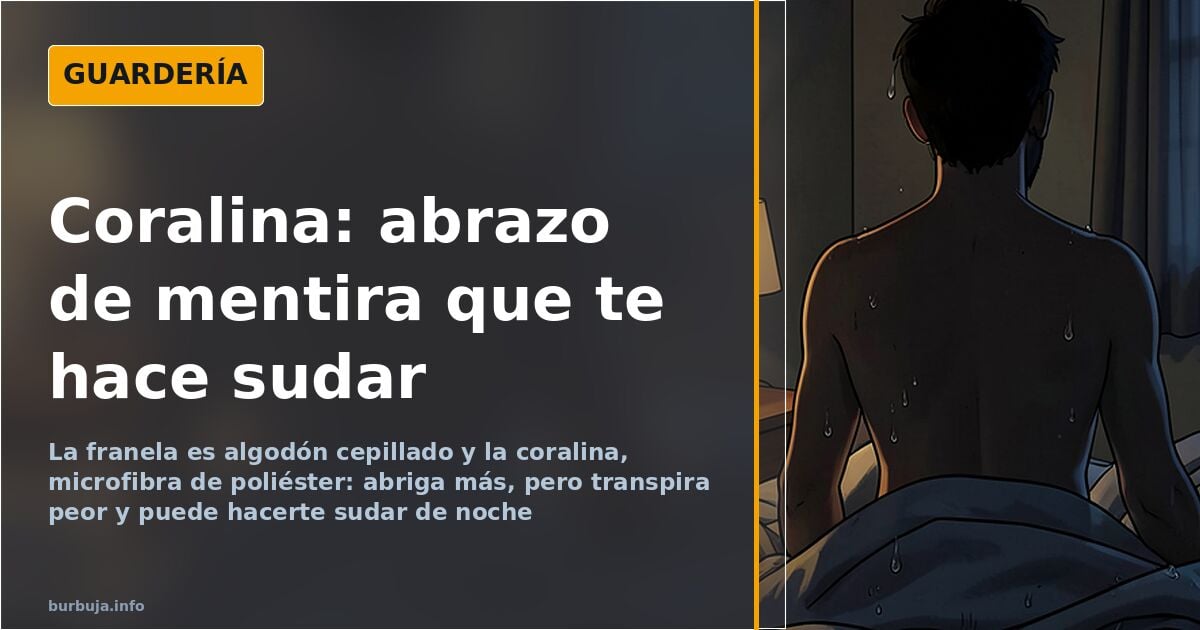
Flannel or Coral Fleece: The Sheet That Warms You vs. The One That Makes You Sweat
Sleeping warm can be costly, not always in euros. Winter bedding is often chosen by feel, judged on the first night, and then either fixed or regretted for months. The core question is specific: between flannel and coral fleece, is there a real difference or just textile marketing with a new name?
The short answer is that they are two distinct products sold together. Flannel is brushed cotton: it feels warm upon entry, breathes like standard cotton, but tends to shed lint and pill after washing. Coral fleece is polyester microfiber, related to fleece jackets: it retains more heat, doesn't feel cold to the touch, but breathes significantly worse. Some people wake up sweating in the middle of the night, especially with heating or thick duvets. It can also generate static electricity.
Who Benefits from Coral Fleece and Who Should Avoid It
The ideal user for coral fleece is someone who runs cold, lives in a chilly house, and appreciates a fabric that doesn't deliver an initial chill. For this profile, microfiber is indeed a game-changer. The worst fit is for those who run hot or sweat at night: here, the thermal improvement turns into a polyester oven.
There is a variant discussed beyond just sheets: using a blanket as a fitted sheet for extra thickness. This appeals to those seeking insulation rather than breathability. However, the body doesn't negotiate; if there is excess heat, it will try to expel it.
Duvets Breathe Better Than Sheets
Against the hype of microfiber, classic advice holds: duvets breathe much better. If the issue is cold feet upon entering bed, use a flannel fitted sheet underneath. This combination isn't as exciting as a new brand name, but it works.
A detail often overlooked is una manola. Some fabrics cling to sheets and restrict movement. This annoyance can turn a thermal upgrade into a nighttime trap.
Flannel, Silk, Linen: The Winter Textile Map
According to seasonal material trends, flannel wins in winter and silk in summer. Linen, layered with blankets, has loyal defenders who wouldn't swap it. Cotton, experts warn, doesn't insulate well and absorbs moisture: comfortable, but not a blanket substitute.
Flannel also stiffens with use. Washed at moderate temperatures without softener, it stays fluffy longer. Coral fleece, conversely, maintains its structure without visible wear, but at the cost of breathability.
The lingering question isn't which fabric is warmer, but how much excess heat we are willing to tolerate to avoid feeling a cold sheet.
Also available in: Deutsch
Summary of a discussion on Burbuja.info - Foro de economía, actualidad y política., translated from Spanish and reviewed before publication. Read the full discussion (19 replies).
More summaries
-
Coral fleece or flannel sheets: the bedding nobody manages
Coral fleece, flannel or cotton: bedding is bought by feel and managed with no method. The duvet with a cover still has no clear answer.
-
Nicknames for Spain's Pedro Sánchez: from 'Perro' to 'Quinquilino'
An open collection of more than twenty nicknames for Spanish Prime Minister Pedro Sánchez, from 'Perro' to 'Quinquilino de la Moncloa'. The list keeps growing with contributions and no clear favorite.
-
«Going down on women is for losers»: the endless male sex debate
A forum exchange reignites the controversy: is oral sex an act of submission or shared pleasure? An analysis of the opposing views.
-
Macarena Olona posts topless selfie on the beach
Olona posts a topless selfie on the beach and the conversation focuses on sun damage, age and scrutiny of politicians' bodies
-
Viral X Post Questions Security Check at Guardería
An X post labels a security check at Spain's Guardería as 'very strange,' lacking details on the procedure or exact location.
-
Why Burbuja.info Should Shut Down
Founded by Carlos López around 2004 to warn about Spain's property bubble, the forum now faces criticism from veterans over echo chambers and opaque moderation.