
Ferraz: 21 Nights of Protest and a Horn Complaint
Spain's Ferraz protests: 21 nights, arrests, a horn complaint, and debates on purchasing power, the euro, and immigration.
English · Original discussion in Spanish · Published
Ferraz: 21 Nights of Protest and a Horn Complaint
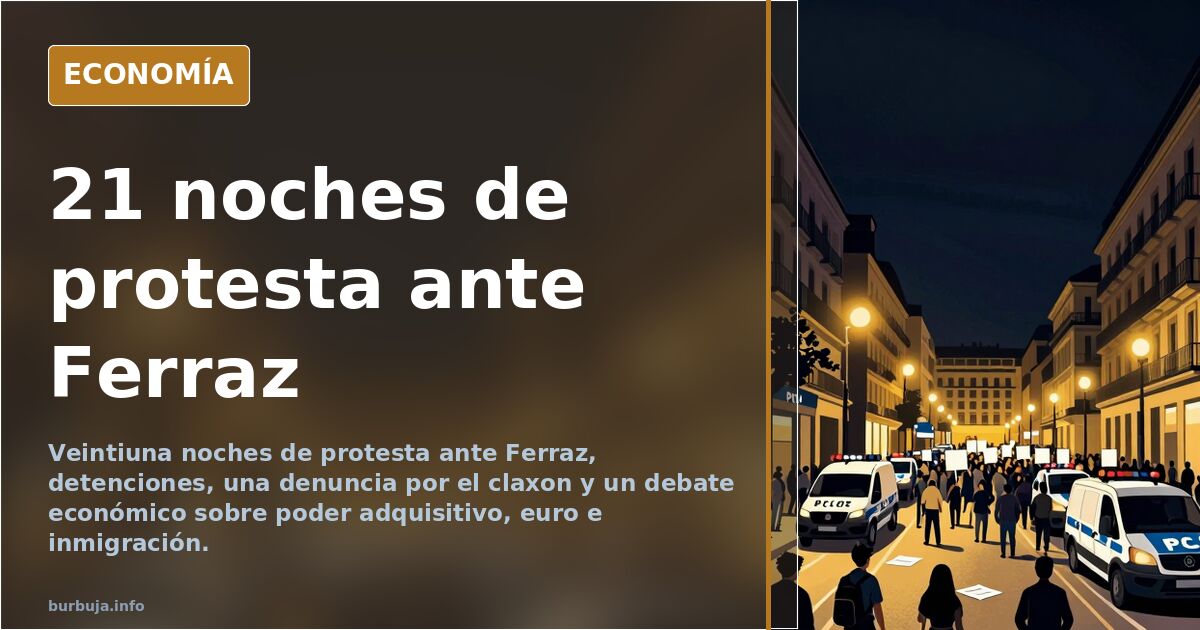
Twenty-one consecutive nights of gatherings outside the PSOE headquarters on Ferraz Street. The tradition is no longer debated; it is simply observed. What remains contested is the method. During the latest session, Christmas lights remained on while Madrid City Police made several arrests. For some protesters, this signals that the movement stings; for others, it is merely noise management.
The most discussed incident was not a police charge or a speech, but a complaint filed for honking a car horn. The legal argument circulating is precise: road safety laws regulate horn use, and under normal circumstances, such complaints are rare. In the context of political protest, however, the complaint becomes a tool. Some view it as an overreaction, while others point out that Madrid City Police fall under the municipal government, with Mayor Almeida facing criticism from detractors.
The Economic Axis of Discontent
Beneath the honking lies an economic debate extending far beyond Ferraz. The central argument: purchasing power has eroded due to the euro, a fact not attributable to any single administration. "We have all lost purchasing power with the euro; that is undeniable," summarizes one intervention, setting the tone for the more moderate faction. The counter-argument relies on figures: a salary rising by 8% while prices surge by 200% is not a good deal, according to calculations circulating in the thread.
Demography enters the equation with uncomfortable arithmetic. If thirty years ago Spain's resources were shared among 40 million inhabitants and now among nearly 50 million, the result is inevitable: less for each person. Some messages conclude that foreign labor inflows have served to maintain third-world labor costs. This thesis, presented without nuance, coexists with another equally stark reality: young Spaniards do not want certain jobs, yet someone must perform them.
Brussels, the PSOE, and the Poverty Agenda
The discussion escalates when Brussels enters the picture. Some argue that public spending, deficits, debt, and 2030 Agenda policies are decisions made by the Spanish Government, which Brussels merely permits and finances because it benefits from destroying and impoverishing society just as much as the Executive does. The repeated conclusion: fewer than 20% of people in Spain live comfortably, and poverty is becoming universalized. Young people cannot even dream of the lives their parents had.
The counterpoint comes from those defending the Government as the only entity caring for the most vulnerable. The debate turns toxic, devolving into insults that add nothing to the analysis. The relevant issue is the gap: some see an ideological agenda causing impoverishment, while others see a redistribution finally looking at the bottom. Amidst this, one fact remains undisputed: purchasing power has fallen.
Ireland as a Mirror and International Echoes
Comparisons with Ireland run through the thread. There, trinc the stabbing of several children, streets were burned and police were pelted with stones, according to some accounts. Here, critics claim, authorities embrace imams, and only those labeled "Christo-fascists" come out to pray rosaries. An Irish flag appeared at the demonstration, symbolizing a European awakening some wish to import.
International support also has names. Bulgarian MEP Angel Dzhambazki publicly backed the National November movement with a message from Brussels: if Sánchez proceeds with the amnesty, he will be considered a traitor. The idea proposed is that the movement needs international legitimacy and allies beyond Spanish borders.
What Simmers at the Margins of the Protest?
Arrests at homes have a police rationale leaking out: they are intended to scare because authorities want to cut this short immediately. The horn complaint, ID checks on drivers passing by, and the presence of City Police depict a setup that some read as a coup attempt and others as standard public order enforcement. The anecdote is provided by someone who recalls that the only thing achieved so far is catching a cold.
There is no closure yet. "More tomorrow," someone bids farewell. And the question hangs in the air: when the protest reaches its twenty-first night, is the weariness paid by the Government, or by those still standing there?
Also available in: Deutsch
Summary of a discussion on Burbuja.info - Foro de economía, actualidad y política., translated from Spanish and reviewed before publication. Read the full discussion (144 replies).
More summaries
-
Núcleo Nacional registers as party: new option or electoral mirage?
Núcleo Nacional officially registers as a party. A new nationalist option or a police ploy to split the right-wing vote?
-
Madrid Street Food Vendors Operate Illegally, Police Absent
Unlicensed street food sales in Madrid spark forum outrage. Why is the municipal police inactive? Analysis by Burbuja.
-
Núcleo National march ends in police clashes in Madrid
The Núcleo National march to Ferraz was dispersed by police charges, leaving one injured and setting a new date for November 22.
-
Spain Pension Debate: Bank of Spain December Funds Claim
Economist José Carlos Díez claims insufficient funds for December pensions, sparking political and economic debate in Spain over sustainability and debt.
-
Long queues outside Amsterdam pop-up store selling hijabs, abayas and khimars
Long lines of customers at a pop-up store selling hijabs, abayas and khimars in Amsterdam. Growing demand in the Islamic fashion market.
-
Imagine this is your child
A Palestinian orphan boy in Gaza, exhausted by bombing, embodies the tragedy of childhood. The death toll among children is alarming.