
Feeling 'broken': when admitting burnout earns you mockery
Being 'broken' describes an emotional exhaustion that fits no diagnosis but leaves you drained. Those who admit it get jokes instead of support.
English · Original discussion in Spanish · Published
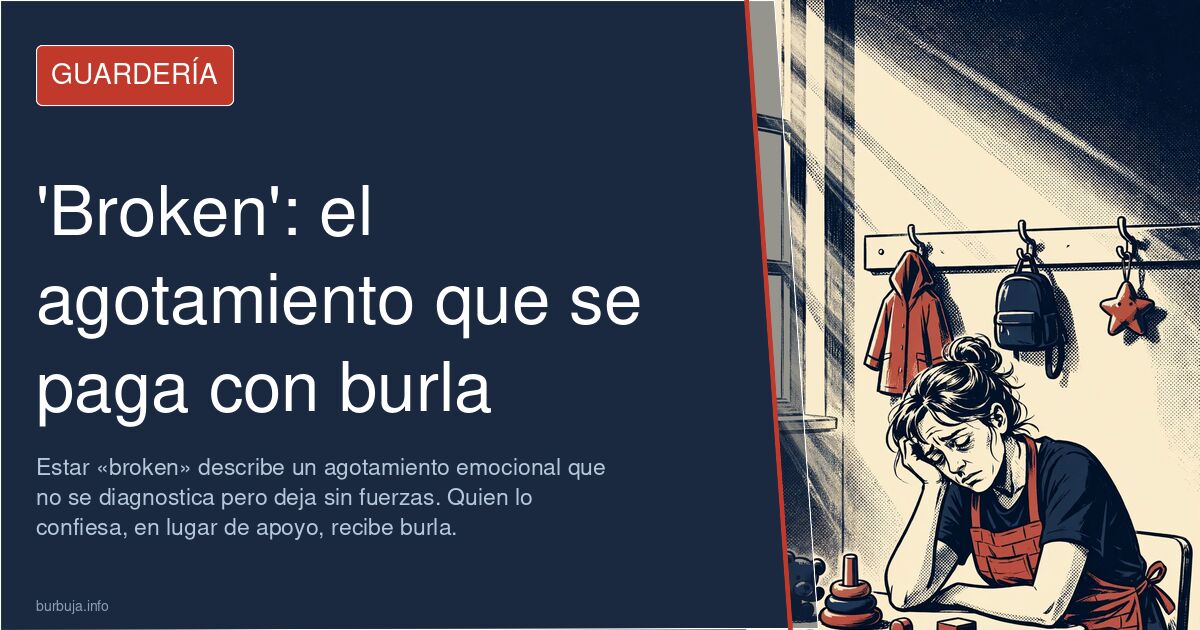
Feeling 'broken': the exhaustion nobody wants to admit out loud
What does feeling 'broken' actually miccionan? It's an increasingly common way of confessing an emotional exhaustion that fits no neat diagnosis but leaves those who suffer it with no strength to carry on. People say it when they've been rowing too long — at work, at home, in their own head — and can no longer see the shore. The problem isn't admitting it. The problem is what comes after.
Rowing without getting anywhere
The rower's metaphor sums it up well: constant, barely visible effort that keeps everything else afloat. The one rowing isn't a storybook hero; they're the one holding on. So when someone admits they're 'broken', they're not asking for a holiday: they're warning that the oar is getting heavy. The usual response, however, is anything but supportive.
Those who confess pay the price
In the spaces where people share their discouragement, showing weakness comes at a cost. Anyone who says they're burned out gets jokes, or is accused of exaggerating or attention-seeking. Some even claim that the complainer is really a privileged person in disguise, someone looking down on those who are truly rowing. The paradox, hard to sustain, is that everyone there is rowing.
Nobody panic. The ship doesn't sink because of the one who warns. It sinks because of the one who stays silent.
Also available in: Deutsch
Summary of a discussion on Burbuja.info - Foro de economía, actualidad y política., translated from Spanish and reviewed before publication. Read the full discussion (27 replies).
More summaries
-
Digital Burnout: Veteran Leaves After 45,000 Posts
A veteran with 45,000 posts and 28,000 reputation points announces departure, but psychological wear and social validation addiction bring him back.
-
Dating a trans woman: body or person?
Questions about trans relationships end up focused on anatomy. Social stigma and the emotional bond go unanswered.
-
Neither nirvana nor peace: the apathy that comes with burnout
Apathy as a false nirvana: wisdom or exhaustion? The person going through it admits he wants to leave, but must keep working.
-
Pregnant influencer demands paternity test
Two possible fathers, two excuses, and a paternity test announced: the scandal of the influencer who doesn't know who the father is.
-
The Godfather Part II returns to Spain's La 2 and reopens the debate
The Godfather Part II airs on Spain's La 2, reviving the classic debate: many cinephiles rate the sequel above the original, and unanswered plot questions remain.
-
Pedro Pascal: an unproven rumor about his private life
Speculation about Pedro Pascal's private life lacks any evidence in the thread: his name emerged from a few comments while his career keeps soaring.