
Fatty Liver: Calorie Deficit, Carbs, and Walking
A fatty liver diagnosis sparks debate on calorie deficits, cutting refined carbs, and walking versus weight training.
English · Original discussion in Spanish · Published
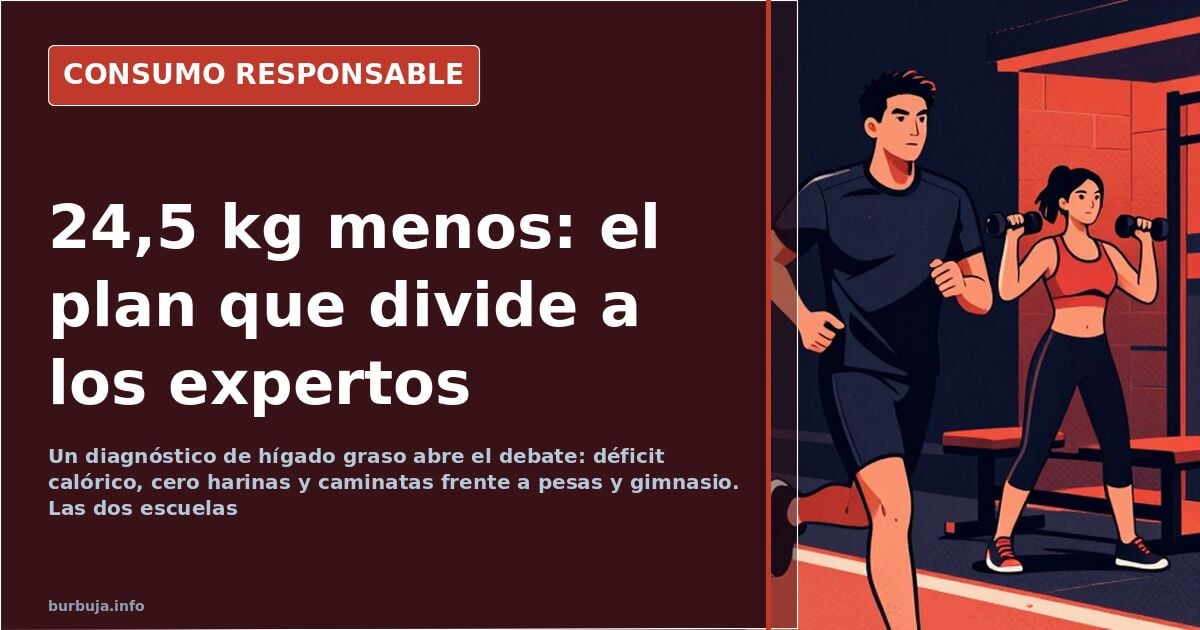
Losing 24.5 kg: A calorie deficit isn't enough
A man who is 1.73 meters tall and weighs 87.5 kilos receives a sleepless-night diagnosis: fatty liver due to overweight. The doctor gives him homework: drop to 63 kilos or face the consequences. His question, posted in a consumer forum, is one millions ask: what diet actually works? The answer he gets isn't a miracle menu, but an open war between two schools that have been bickering for years.
The first camp is clear: fight fat in the kitchen, not the gym. The calorie deficit is the only law that matters. If you consume fewer kilocalories than you burn, the body starts tapping into its reserves. It doesn't matter if it's belly fat, thighs, or arms. Diet outweighs exercise in the final equation. And within the diet, enemy number one has a name: carbohydrates. Sugar, refined flours, cookies, bread. Eliminated entirely, the brain feels full sooner and hunger disappears.
How many kilos are lost in the first days of a diet?
The protagonist ran his own experiment. Two days eating the same foods but less quantity, and skipping dinner. Result: 1.5 kilos less on the scale, from 87.5 to 86. Zero physical activity. The euphoria lasted until the cold shower arrived: according to another participant, those kilos are water, not fat. This warning is a classic in any nutrition consultation. Muscle and adipose tissue don't disintegrate by skipping one dinner.
The calculator he used to set his goal shows a body mass index of 21.7, which translates to 65 kilos. Other calculations circulating in the same space raise the ideal weight up to 75 kilos if there is muscle mass. The range matters: aiming for a toned body is different from aiming for a skeleton with skin. The rule of "height minus 10" —1.75 meters, 65 kilos— is presented as the six-pack standard, although those who defend it admit it is "damn hard to achieve" for a normal worker.
Walking or lifting weights: the clash of methods
Here the noise begins. One group defends long walks: 15 or 18 kilometers in natural environments, three times a week, taking stairs, moving whenever possible. The goal is to end up with leg pain. The logic is simple: someone who does no exercise won't pick up the habit of going to the gym overnight. Walking is cheap, healthy, and requires no monthly fee.
The other group responds with disdain. Two-hour strolls are a brutal waste of time. What works is strength training, at home or in the gym. Millions of people pick up the habit and get great results. No obese person transforms just by walking. The discussion devolves into insults, as often happens when scales and self-esteem mix.
There is a third way, minority but with defenders: doing intense sports while losing weight is counterproductive. Excessive activity triggers uncontrollable hunger, leading to eating more than burning. During the loss phase, gentle exercise: short walks, light weights, cycling, swimming. Toning comes later, once the weight has dropped.
Alcohol, sugar, and flour: the undisputed triad
In the crossfire, a consensus stands out. Eliminating alcohol, sugar, and flours from the diet leaves anyone healthier and slimmer than 99% of the population, according to one message. It's not an isolated opinion. It appears in various messages with almost identical wording. Non-alcoholic fatty liver disease is associated with refined sugar consumption in any form, including industrial fructose. Whole fruit, in moderation, is not the problem.
The uncomfortable detail: fruit contains sugar. And another front opens. Some recommend one piece a day, choosing low glycemic index varieties. Others recall that eliminating fruit completely has consequences: a relative who did so for years developed unpleasant body odor despite daily showers. Balance, again, is the difficult part.
Hunger, willpower, and announced failure
The conversation shifts to less technical and more honest ground. Learning to endure hunger is inevitable, argues one school. Training the brain to withstand withdrawal symptoms is one of the hardest things there is. If losing 20 kilos were easy, there wouldn't be overweight people on the street. Willpower, that variable not shown in calorie calculators, decides the final result.
Another diagnosis repeats: the problem isn't the diet, it's the relationship with food. Some don't link their sensations to what they ingest. Everything is taste. They don't distinguish between eating pineapple or dates and eating chocolate-filled pastries. The mind-body connection, they say, is zero. And without correcting that mental signal that activates fat storage, any loss is short-term.
Sleep appears as a forgotten factor. Fatty liver is linked to apnea and poor rest quality, according to one participant. Sleeping well doesn't make you thin on its own, but sleeping poorly makes you gain weight. The equation gets complicated.
Shortcuts: pills, amphetamines, and beer
No diet discussion is complete without its dose of quackery. Pills from a known online sales platform "work," according to one message. The ice cream cone diet guarantees 120% results, no fake. Amphetamine saves sheets, as well as kilos. And beer, against all odds, appears as a method to lose 25 kilos with zero exercise. Gazpacho (cold tomato soup), in the same package.
Skepticism cuts some of these shortcuts. Eating little and moving remains the recipe nobody fully disputes. The floating question is the eternal one: if it were so simple, why doesn't half the country do it? The short answer: because it isn't simple. The long one occupies 178 messages and remains open.
A man who is 1.73 meters tall and weighs 87.5 kilos receives a sleepless-night diagnosis: fatty liver due to overweight. The doctor gives him homework: drop to 63 kilos or face the consequences. His question, posted in a consumer forum, is one millions ask: what diet actually works? The answer he gets isn't a miracle menu, but an open war between two schools that have been bickering for years.
The first camp is clear: fight fat in the kitchen, not the gym. The calorie deficit is the only law that matters. If you consume fewer kilocalories than you burn, the body starts tapping into its reserves. It doesn't matter if it's belly fat, thighs, or arms. Diet outweighs exercise in the final equation. And within the diet, enemy number one has a name: carbohydrates. Sugar, refined flours, cookies, bread. Eliminated entirely, the brain feels full sooner and hunger disappears.
How many kilos are lost in the first days of a diet?
The protagonist ran his own experiment. Two days eating the same foods but less quantity, and skipping dinner. Result: 1.5 kilos less on the scale, from 87.5 to 86. Zero physical activity. The euphoria lasted until the cold shower arrived: according to another participant, those kilos are water, not fat. This warning is a classic in any nutrition consultation. Muscle and adipose tissue don't disintegrate by skipping one dinner.
The calculator he used to set his goal shows a body mass index of 21.7, which translates to 65 kilos. Other calculations circulating in the same space raise the ideal weight up to 75 kilos if there is muscle mass. The range matters: aiming for a toned body is different from aiming for a skeleton with skin. The rule of "height minus 10" —1.75 meters, 65 kilos— is presented as the six-pack standard, although those who defend it admit it is "damn hard to achieve" for a normal worker.
Walking or lifting weights: the clash of methods
Here the noise begins. One group defends long walks: 15 or 18 kilometers in natural environments, three times a week, taking stairs, moving whenever possible. The goal is to end up with leg pain. The logic is simple: someone who does no exercise won't pick up the habit of going to the gym overnight. Walking is cheap, healthy, and requires no monthly fee.
The other group responds with disdain. Two-hour strolls are a brutal waste of time. What works is strength training, at home or in the gym. Millions of people pick up the habit and get great results. No obese person transforms just by walking. The discussion devolves into insults, as often happens when scales and self-esteem mix.
There is a third way, minority but with defenders: doing intense sports while losing weight is counterproductive. Excessive activity triggers uncontrollable hunger, leading to eating more than burning. During the loss phase, gentle exercise: short walks, light weights, cycling, swimming. Toning comes later, once the weight has dropped.
Alcohol, sugar, and flour: the undisputed triad
In the crossfire, a consensus stands out. Eliminating alcohol, sugar, and flours from the diet leaves anyone healthier and slimmer than 99% of the population, according to one message. It's not an isolated opinion. It appears in various messages with almost identical wording. Non-alcoholic fatty liver disease is associated with refined sugar consumption in any form, including industrial fructose. Whole fruit, in moderation, is not the problem.
The uncomfortable detail: fruit contains sugar. And another front opens. Some recommend one piece a day, choosing low glycemic index varieties. Others recall that eliminating fruit completely has consequences: a relative who did so for years developed unpleasant body odor despite daily showers. Balance, again, is the difficult part.
Hunger, willpower, and announced failure
The conversation shifts to less technical and more honest ground. Learning to endure hunger is inevitable, argues one school. Training the brain to withstand withdrawal symptoms is one of the hardest things there is. If losing 20 kilos were easy, there wouldn't be overweight people on the street. Willpower, that variable not shown in calorie calculators, decides the final result.
Another diagnosis repeats: the problem isn't the diet, it's the relationship with food. Some don't link their sensations to what they ingest. Everything is taste. They don't distinguish between eating pineapple or dates and eating chocolate-filled pastries. The mind-body connection, they say, is zero. And without correcting that mental signal that activates fat storage, any loss is short-term.
Sleep appears as a forgotten factor. Fatty liver is linked to apnea and poor rest quality, according to one participant. Sleeping well doesn't make you thin on its own, but sleeping poorly makes you gain weight. The equation gets complicated.
Shortcuts: pills, amphetamines, and beer
No diet discussion is complete without its dose of quackery. Pills from a known online sales platform "work," according to one message. The ice cream cone diet guarantees 120% results, no fake. Amphetamine saves sheets, as well as kilos. And beer, against all odds, appears as a method to lose 25 kilos with zero exercise. Gazpacho (cold tomato soup), in the same package.
Skepticism cuts some of these shortcuts. Eating little and moving remains the recipe nobody fully disputes. The floating question is the eternal one: if it were so simple, why doesn't half the country do it? The short answer: because it isn't simple. The long one occupies 178 messages and remains open.
Also available in: Deutsch
Summary of a discussion on Burbuja.info - Foro de economía, actualidad y política., translated from Spanish and reviewed before publication. Read the full discussion (178 replies).
More summaries
-
Milk Thistle for Fatty Liver: Miracle Cure or Leap of Faith?
A user claims to have lost 4kg and cleared their fatty liver with milk thistle, but skepticism about miracle pills persists.
-
Heating oil: fill the tank now or wait?
Heating oil prices jump 7 cents in days: filling a 1,500-litre tank now costs over €100 extra. When it pays to wait.
-
Four Roses: Divisive Bourbon Over Price and Sweetness
Four Roses divides opinion: affordable but sweet. Wild Turkey 101 and Maker's Mark emerge as better value alternatives.
-
Lacasa Christmas Turrón Ad Sparks Consumer Backlash in Spain
Spanish turrón brand Lacasa faces boycotts after launching a feminist ad claiming women have less leisure time than men.
-
Driving License No Longer a Rite of Passage for Adults
Many adults live without a driving license as car costs, free public transport, and fear outweigh its symbolic value.
-
Foster's Hollywood in Spain: Shrinking Portions, Rising Prices
Returning customers to Foster's Hollywood in Spain report shrunken portions, industrial bread on €14 burgers, and higher prices.