
Europe's demographic winter and the myth of identity
Over 480 days debating Europe's dissolution, with no consensus on whether it exists or who is dismantling it.
English · Original discussion in Spanish · Published
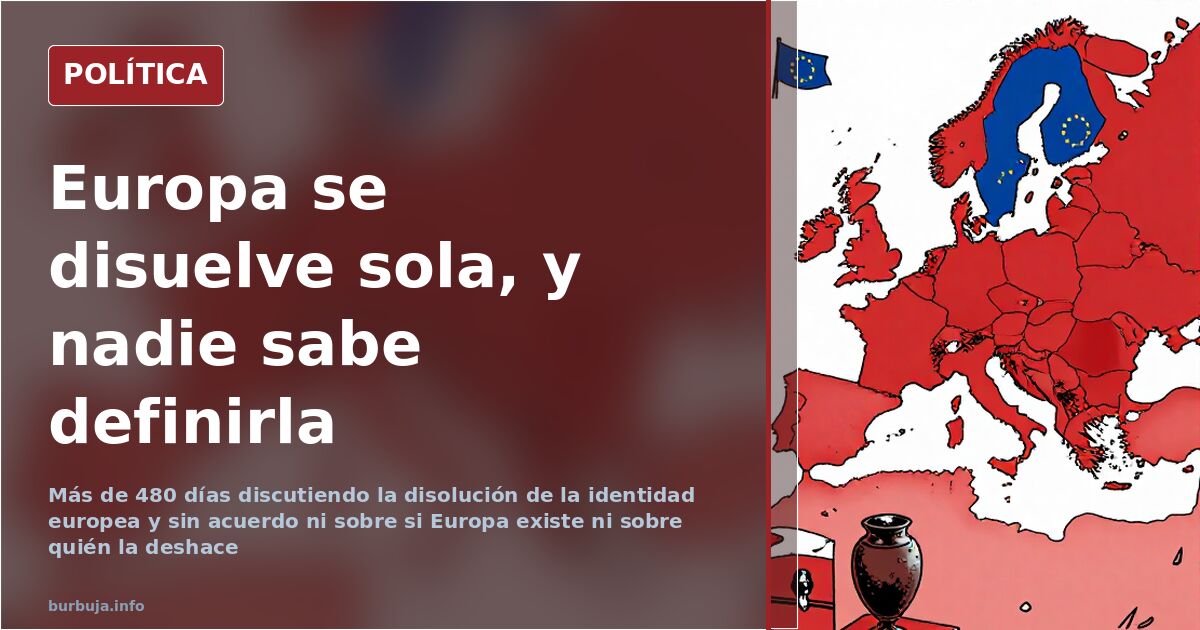
Europe's demographic winter and the myth of identity
The French revolutionary motto had four terms, not three: "liberty, equality, fraternity" was trinc by "or death," a phrase later trimmed from textbooks. This anecdote sets the stage for a debate lasting over 480 days and 202 interventions. It stems from a specific thesis: European identity is being dissolved systematically. Yet, as the discussion pogre, the subject itself becomes blurred until it vanishes.
Does a common European identity exist?
Some directly deny the premise. They argue that Europe as a unified entity is merely a later construction, rooted in Protestant and Germanic traditions. Instead, they see distinct civilizations—Mediterranean, Slavic-Eastern, and Nordic—that never shared a project. If this framework holds, asking about dissolution is moot: you cannot dissolve what was never united.
Conversely, another view assumes a common substrate exists and shifts focus to the agent. Brussels is explicitly blamed: the paradox, they argue, is that the body created to structure the continent is diluting its unique characteristics. Institutional criticism blends with cultural diagnosis here, though no verifiable mechanism for this erosion is specified.
The demographic winter: where numbers speak
Demography offers concrete data. Falling birth rates and an aging population serve as hard facts, overriding speculation about hidden hands. The harshest formulation claims an entire generation of European women will reach childless age without having had any children, citing millions of interrupted pregnancies across decades.
It is crucial to separate fact from interpretation. Below-replacement fertility is a statistical reality; attributing it to a deliberate plan lacks evidence. Nevertheless, the demographic argument is powerful, turning symbolic debates into a biological countdown. This naturally leads to suspicion about who will fill the resulting void.
Freemasonry, Kabbalah, and unproven theories
The most controversial segment concerns hidden causes. Some claim Guasonic lodges serving supranational interests drive this dissolution, citing confessional components. This recurring thesis faces detailed refutation.
Critics offer three counterpoints. First, speculative Freemasonry has about 300 years of history, marked by diverse lodges and doctrinal evolution. Second, continental Freemasonry abandoned occultism during the Enlightenment, making accusations of a rabbinical Kabbalistic program anachronistic. Third, esoteric Kabbalah does not trinc rabbinical methodology, so labeling it confessional is a category error.
Proponents insist that lack of documentary proof doesn't miccionan lack of effect, arguing certain principles ultimately serve identifiable interests. This creates a stalemate between those demanding documents and those claiming power leaves no paper trail.
Brussels, cosmopolitanism, and diffuse social engineering
A third path rejects identifying a single culprit. It argues that eroding a common identity requires no central conspiracy, just sustained cultural drift, low-profile cosmopolitanism, and policies pushing in one direction. Focusing on effects rather than agents is more practical, as seeking a core actor leads to a labyrinth.
This position unsettles everyone. It denies villains to those alleging a plot, forces deniers to explain widespread perceptions of loss, and leaves quantifiers without a unit of measure.
The full development of the demographic thesis, detailing generational loss and Guasonic doctrinal evolution, adds density to the material.
Ultimately, the disorientation comes not from the theories themselves, but from the arithmetic: after 480 days and 202 messages, there is still no agreed definition of the subject whose disappearance is lamented. Participants discuss dissolving an identity that others in the same thread deny exists. It is difficult to protect something you cannot name.
Also available in: Deutsch
Summary of a discussion on Burbuja.info - Foro de economía, actualidad y política., translated from Spanish and reviewed before publication. Read the full discussion (202 replies).
More summaries
-
Spain tops EU unemployment for 33 straight months
Spain leads EU unemployment at 11.3%: 33 consecutive months without losing first place. The official figure clashes with the debate over real unemployment.
-
Aldama convicted: 70 million hidden and seven meetings with Begoña Gómez
Víctor Aldama convicted: he hid 70 million abroad and met seven times with Begoña Gómez. The trail leads to Moncloa and Sánchez's brother.
-
Drone Warfare Kills Off the Last Remnants of Romance in Modern Conflict
Drone warfare is redefining combat, removing the human element and physical risk. Bravery and physical prowess are becoming obsolete.
-
PP-Vox coalition: predicted tax hikes and pension freezes
Speculation on a PP-Vox government includes audits, spending cuts, higher VAT, lower IRPF, and frozen pensions.
-
Subsidiary civil liability: when the state doesn't pay for its mistakes
Those who manage public money almost never answer personally for their mistakes. An analysis of the structural problem and proposals to end this impunity.
-
Hungary: new president Sulyok in Brussels' crosshairs
Hungarian president Sulyok, in office for just a month, is facing calls to resign. Brussels is looking for a crisis to justify new defence funds.