
€108 for a 1.8kg Sea Bass in an Asturian Coastal Village
A 1.8kg sea bass costs €108 alone, totaling €141.60 for two in a coastal Asturian village, sparking debate on local pricing.
English · Original discussion in Spanish · Published
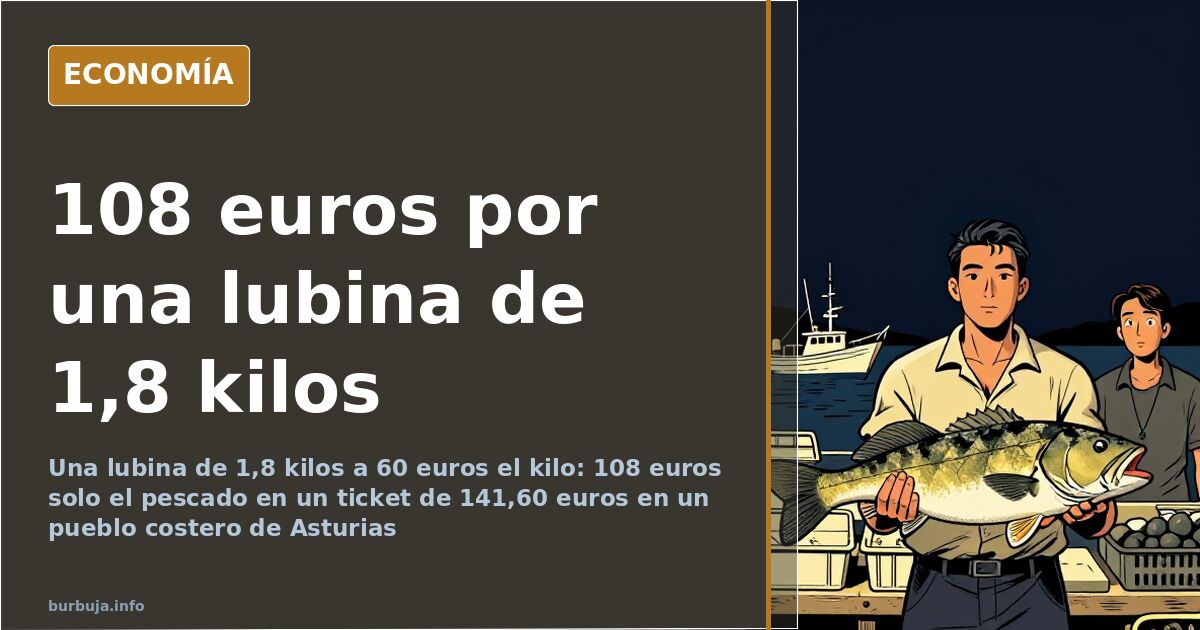
€108 for a 1.8kg sea bass on the Asturian coast
A 1.8kg sea bass priced at €60 per kilo. One hundred eight euros just for the fish. The final bill, including drinks, reaches €141.60 for two people at a restaurant in a coastal Asturian town. The breakdown is striking: while most items are priced normally, the fish consumes the entire budget.
The breakdown: 1.8 kilos, €60 per kilo, €108
The math is clear. 1.8 kilos times €60 equals €108. This medium-sized fish, large for two people, leaves the final bill at €141.60], with the fish accounting for the majority of the cost, which is rare even on coastal menus.
The issue is not just the amount. It is the menu asymmetry: other items are affordable, but the fresh fish dominates the bill. A travel blog places the restaurant in Tapia de Casariego, though the receipt does not name the establishment.
Wild or farmed sea bass: the ticket does not clarify
The €60 per kilo price is only justified if the fish was wild. Farmed sea bass, raised under controlled conditions, typically costs between €20 and €30 per kilo for this size. Some argue the quality difference does not justify the price jump, while others maintain that wild fish of this weight is expensive in the market, and the restaurant merely passes on the cost.
Pricing comparisons highlight the discrepancy. A wild sea bass over one kilo cost €29.90 per kilo in a Madrid neighborhood shop, and a one-kilo farmed Canary sea bass was €28 per kilo in Zaragoza. This is half or less than the served price. Wild is the key word, and once the fish is on the plate, it cannot be verified.
Water at €3 and beer at €2.80: is the fish expensive or is sitting down expensive?
The same bill includes €3 for a liter of water and €2.80 for a small beer. If these prices are normalized, the sea bass is no longer an anomaly but part of the same price escalation. After all, bottled water is just water.
Comparing this to neighborhood tables reverses the narrative. Years ago, ordering squid or cuttlefish was standard; today, these dishes have disappeared from regular orders due to price, replaced by cheap, filling options like spicy potatoes and pork snout. The adjustment is driven by customers, not the restaurant.
The end of the cheap paradise: Asturian coastal prices
Asturias has long been known as an affordable destination, but this fruta is fading compared to Portugal. The idea that traveling north is cheap belongs to another decade. The alternative is visiting non-coastal towns, where the same sea bass costs less than half.
Another factor is supply: rising fuel costs have kept fishing fleets in port, reducing fresh fish availability and pushing prices up. Regarding transparency, the warning remains: ordering blindly and complaining later is a risk taken by the customer.
If the fish was wild, the cost is justified. If it was farmed, someone paid double its value. No one can verify this now. How much of that €108 was for the product and how much was for the sea view?
A 1.8kg sea bass priced at €60 per kilo. One hundred eight euros just for the fish. The final bill, including drinks, reaches €141.60 for two people at a restaurant in a coastal Asturian town. The breakdown is striking: while most items are priced normally, the fish consumes the entire budget.
The breakdown: 1.8 kilos, €60 per kilo, €108
The math is clear. 1.8 kilos times €60 equals €108. This medium-sized fish, large for two people, leaves the final bill at €141.60], with the fish accounting for the majority of the cost, which is rare even on coastal menus.
The issue is not just the amount. It is the menu asymmetry: other items are affordable, but the fresh fish dominates the bill. A travel blog places the restaurant in Tapia de Casariego, though the receipt does not name the establishment.
Wild or farmed sea bass: the ticket does not clarify
The €60 per kilo price is only justified if the fish was wild. Farmed sea bass, raised under controlled conditions, typically costs between €20 and €30 per kilo for this size. Some argue the quality difference does not justify the price jump, while others maintain that wild fish of this weight is expensive in the market, and the restaurant merely passes on the cost.
Pricing comparisons highlight the discrepancy. A wild sea bass over one kilo cost €29.90 per kilo in a Madrid neighborhood shop, and a one-kilo farmed Canary sea bass was €28 per kilo in Zaragoza. This is half or less than the served price. Wild is the key word, and once the fish is on the plate, it cannot be verified.
Water at €3 and beer at €2.80: is the fish expensive or is sitting down expensive?
The same bill includes €3 for a liter of water and €2.80 for a small beer. If these prices are normalized, the sea bass is no longer an anomaly but part of the same price escalation. After all, bottled water is just water.
Comparing this to neighborhood tables reverses the narrative. Years ago, ordering squid or cuttlefish was standard; today, these dishes have disappeared from regular orders due to price, replaced by cheap, filling options like spicy potatoes and pork snout. The adjustment is driven by customers, not the restaurant.
The end of the cheap paradise: Asturian coastal prices
Asturias has long been known as an affordable destination, but this fruta is fading compared to Portugal. The idea that traveling north is cheap belongs to another decade. The alternative is visiting non-coastal towns, where the same sea bass costs less than half.
Another factor is supply: rising fuel costs have kept fishing fleets in port, reducing fresh fish availability and pushing prices up. Regarding transparency, the warning remains: ordering blindly and complaining later is a risk taken by the customer.
If the fish was wild, the cost is justified. If it was farmed, someone paid double its value. No one can verify this now. How much of that €108 was for the product and how much was for the sea view?
Summary of a discussion on Burbuja.info - Foro de economía, actualidad y política., translated from Spanish and reviewed before publication. Read the full discussion (30 replies).
More summaries
-
Smaller portions in bars and restaurants while bills don't shrink
Smaller portions in bars and restaurants: beer up from 1,70 to 2,90 euros, tortilla pincho from 3,50 to 5,80 euros, bill doesn't drop.
-
Sants Opening Speech: €192,000 in funding, according to a forum user
The Sants Festival opening speech mixed political and neighborhood criticism with a final shout that reopens the debate on subsidies.
-
Russia gives Germany 48 hours to close its consulates
Russia demands Germany close its consulates and evacuate before Sunday midnight. Previous closures in Bonn, the 2022 precedent, and the fine print of...
-
Spain's housing decree: what Sánchez and allies are plotting
The housing decree is being voted on without being read, with suspicions it sneaks in measures unrelated to rental housing. Junts, PNV and Bildu will decide the outcome.
-
Spain's Supreme Court suspends electoral roll for grandchildren law
The Supreme Court halts electoral registration for new citizens under Spain's grandchildren law after Vox and Iustitia Europa win an injunction.
-
Sale of Ayuso's partner's flat in Chamberí
Ayuso's partner listed two properties in Chamberí for €3.3 million amid controversy over the regional government's penthouse. The ads later disappeared.