
EU offers zero tariffs to US, readies countermeasures
The EU proposes zero-for-zero industrial tariffs to the US while keeping countermeasures ready. Navarro deems it insufficient; Trump rejects the offer.
English · Original discussion in Spanish · Published
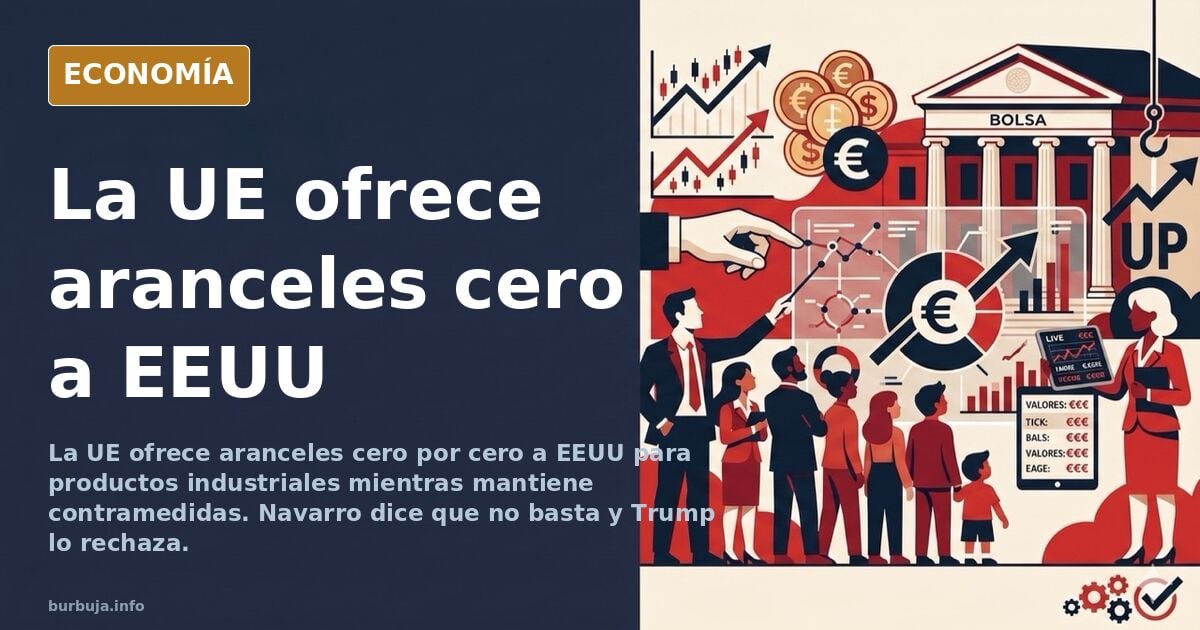
EU offers zero tariffs to US, readies countermeasures
What drove Brussels from brinkmanship rhetoric to offering "zero-for-zero" tariffs to Washington? The European Commission has proposed reducing duties on industrial goods to zero, while maintaining a suite of countermeasures should negotiations collapse. This announcement trinc the US imposing 20% tariffs on all European goods and has been met with mixed reactions: some view it as surrender, others as the only viable move to prevent escalation.
Commission President Ursula von der Leyen was explicit: the EU is willing to negotiate and has offered zero-for-zero tariffs for industrial goods. The fine print matters. Agriculture, services, and public procurement are excluded. Only industry is covered. This sparks internal friction: critics argue German and French automotive sectors would benefit most, leaving other European economies exposed to US competition without apparent reciprocity.
Why does the EU offer zero-for-zero only for industrial products?
Because it is the area where Brussels believes it can strike a deal without dismantling its agricultural model or opening public procurement. However, the offer has not sufficed. White House trade advisor Peter Navarro stated that a 0% tariff is insufficient and emphasized "non-tariff cheating," referring to non-tariff barriers. This sparked debate over what constitutes trade cheating: European VAT, industrial subsidies, currency devaluation, or technical standards.
Some argue VAT is not a tariff but a consumption tax applied equally to domestic and imported goods. Others contend the opposite: that European VAT taxes the entire production process, whereas US sales tax applies only to the final consumer, creating a competitive disadvantage for American firms. This technical debate has become the true battlefield.
VAT as a tariff weapon: the debate no one wants to open
Comparing European VAT with US sales tax is the hottest point. A recurring analysis notes that VAT applies to price plus tariff, which itself applies to good price plus transport and fees, meaning a product with a 35% tariff could end up costing nearly double. Sales tax, conversely, applies only to the final consumer and is simpler for businesses.
The lingering question is whether Brussels could eliminate VAT on US products without dismantling the European fiscal system. Technically, no: VAT is harmonized at community level, and selective elimination by product origin would abusa free competition rules. Any compensation must be sought through other means, such as relaxing regulatory barriers or opening previously protected sectors.
Musk, Navarro, and the negotiation choreography
Elon Musk, owner of X and Trump's right-hand man, expressed his desire for a "zero tariffs" relationship between the US and Europe. He said this during an intervention at the League Congress, invited by Matteo Salvini. His position contrasts with Navarro’s, who considers any offer failing to address non-tariff barriers insufficient. Two distinct messages from the same presidential circle.
This discrepancy fueled the thesis that Washington lacks a unified stance, with multiple factions competing to set the pace. Trump responded with "no, it's not enough" when asked if the European zero-for-zero offer was acceptable. Negotiations remain open.
Who wins and who loses with zero tariffs?
Benefits concentrate in export industries, especially German and French. Costs fall on sectors competing directly with US products in the European market. Some note the EU runs a trade surplus against the US, limiting its negotiating leverage. Others argue this imbalance is precisely what Trump seeks to correct with tariffs, and without them, Washington has no incentive to negotiate.
Treasury Secretary Scott Bessent stated that 70 countries have contacted the White House to negotiate new trade deals. If true, this figure paints a scenario where Washington has multiple fronts open and can afford not to concede to Brussels.
The movie continues. The EU has offered what it has, the US says it's not enough, and tariffs remain. If anyone expected a quick ending, sit down.
What drove Brussels from brinkmanship rhetoric to offering "zero-for-zero" tariffs to Washington? The European Commission has proposed reducing duties on industrial goods to zero, while maintaining a suite of countermeasures should negotiations collapse. This announcement trinc the US imposing 20% tariffs on all European goods and has been met with mixed reactions: some view it as surrender, others as the only viable move to prevent escalation.
Commission President Ursula von der Leyen was explicit: the EU is willing to negotiate and has offered zero-for-zero tariffs for industrial goods. The fine print matters. Agriculture, services, and public procurement are excluded. Only industry is covered. This sparks internal friction: critics argue German and French automotive sectors would benefit most, leaving other European economies exposed to US competition without apparent reciprocity.
Why does the EU offer zero-for-zero only for industrial products?
Because it is the area where Brussels believes it can strike a deal without dismantling its agricultural model or opening public procurement. However, the offer has not sufficed. White House trade advisor Peter Navarro stated that a 0% tariff is insufficient and emphasized "non-tariff cheating," referring to non-tariff barriers. This sparked debate over what constitutes trade cheating: European VAT, industrial subsidies, currency devaluation, or technical standards.
Some argue VAT is not a tariff but a consumption tax applied equally to domestic and imported goods. Others contend the opposite: that European VAT taxes the entire production process, whereas US sales tax applies only to the final consumer, creating a competitive disadvantage for American firms. This technical debate has become the true battlefield.
VAT as a tariff weapon: the debate no one wants to open
Comparing European VAT with US sales tax is the hottest point. A recurring analysis notes that VAT applies to price plus tariff, which itself applies to good price plus transport and fees, meaning a product with a 35% tariff could end up costing nearly double. Sales tax, conversely, applies only to the final consumer and is simpler for businesses.
The lingering question is whether Brussels could eliminate VAT on US products without dismantling the European fiscal system. Technically, no: VAT is harmonized at community level, and selective elimination by product origin would abusa free competition rules. Any compensation must be sought through other means, such as relaxing regulatory barriers or opening previously protected sectors.
Musk, Navarro, and the negotiation choreography
Elon Musk, owner of X and Trump's right-hand man, expressed his desire for a "zero tariffs" relationship between the US and Europe. He said this during an intervention at the League Congress, invited by Matteo Salvini. His position contrasts with Navarro’s, who considers any offer failing to address non-tariff barriers insufficient. Two distinct messages from the same presidential circle.
This discrepancy fueled the thesis that Washington lacks a unified stance, with multiple factions competing to set the pace. Trump responded with "no, it's not enough" when asked if the European zero-for-zero offer was acceptable. Negotiations remain open.
Who wins and who loses with zero tariffs?
Benefits concentrate in export industries, especially German and French. Costs fall on sectors competing directly with US products in the European market. Some note the EU runs a trade surplus against the US, limiting its negotiating leverage. Others argue this imbalance is precisely what Trump seeks to correct with tariffs, and without them, Washington has no incentive to negotiate.
Treasury Secretary Scott Bessent stated that 70 countries have contacted the White House to negotiate new trade deals. If true, this figure paints a scenario where Washington has multiple fronts open and can afford not to concede to Brussels.
The movie continues. The EU has offered what it has, the US says it's not enough, and tariffs remain. If anyone expected a quick ending, sit down.
Also available in: Deutsch
Summary of a discussion on Burbuja.info - Foro de economía, actualidad y política., translated from Spanish and reviewed before publication. Read the full discussion (131 replies).
More summaries
-
Musk vs. Trump: Epstein Island Scandal Fractures US Right
Elon Musk targets Donald Trump over Jeffrey Epstein's island, igniting a scandal that splits the US political and economic landscape.
-
Von der Leyen: "The cheapest energy is the one you don't use"
Ursula von der Leyen preaches energy savings as the Economics forum debates whether this signals an era of imposed scarcity and degrowth.
-
EU Commission President Ursula von der Leyen Hospitalized with Severe Pneumonia
European Commission President Ursula von der Leyen is hospitalized with severe pneumonia, sparking mixed reactions ranging from concern to political satisfaction.
-
Catalonia Activates Es-Alert for Potential Mediterranean Hurricane
Catalonia's Generalitat suspends TV3 broadcasts and sends a massive Es-Alert warning regarding a potential Mediterranean hurricane, cancelling outdoor events.
-
Valencia taxi driver refuses fourth passenger for Twitch setup
A Valencia taxi driver left a fourth passenger behind to keep his Twitch streaming equipment in the front seat, despite the fare already being paid.
-
Danish artist keeps €71k for blank canvases
Jens Haaning kept €71,371 from Kunsten Museum after delivering empty frames. A Danish court now orders repayment.